
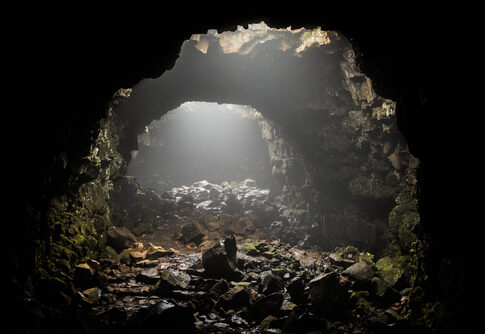
The Hallmundarhraun lava field in western Iceland is a landscape born of volcanic fury, and hidden within its solidified chaos lies Surtshellir—Surt’s Cave. This mile-long lava tube is not just a geological wonder; it is a profound historical artifact, a place where the deep roots of Norse mythology converge with chilling archaeological evidence of outlaw refuge and ritualistic animal mutilations from the Viking Age.
The Giant’s Domain: Mythological Origins
Surtshellir owes its name and mystique to one of the most terrifying figures in the Norse cosmos: Surtr, the fire giant. In the prophecy of Ragnarök (the twilight of the gods), Surtr is foretold to emerge from the fiery realm of Muspelheim, wielding a flaming sword that will consume the world, setting the final, apocalyptic fire.
The cave itself was formed around 880–920 CE during a massive eruption, an event that occurred just as the first Viking settlers were arriving in Iceland. To the early Icelanders, the intense heat, darkness, and vast scale of the lava tube immediately suggested the dwelling of a powerful, primordial entity—a fitting lair for the world-ender, Surtr.
The Archaeology of Outlaws and Rituals
For centuries, Surtshellir was referenced in medieval texts and sagas, often associated with outlaws, ghosts, and general dread. Archaeological interest in the cave intensified in the 21st century, with major surveys conducted by teams led by Kevin Smith and Guðmundur Ólafsson.
The excavations have revealed clear evidence of long-term human use, most notably:
- Viking Age Structures: Inside the cave, archaeologists uncovered stone-built walls and enclosures, suggesting the area was systematically used as a refuge. These were likely the dwellings of the útlagar (outlaws) who sought shelter and secrecy in the remote, harsh terrain.
- Feasting and Survival: Finds include tools, artifacts, and large quantities of animal bones, showing the outlaws used the cave as a base for hunting, cooking, and survival.
However, a more disturbing pattern also emerged. Among the animal remains, researchers found bones with specific cut marks and deliberate arrangements, strongly suggestive of ritual activity.
The Mystery of Mutilation
The most compelling (and debated) findings involve evidence of ritualistic animal mutilation or sacrifice. Archaeologist Kevin Smith suggests that the cave served a dual purpose, functioning both as an outlaw hideout and a place of pagan rite.
One theory posits that the rituals were performed not to appease Surtr, but possibly to propitiate Freyr, the Norse god of fertility, sun, and prosperity. The offerings may have been an attempt by the outlaws to secure luck, safety, or sustenance in their desperate existence. Alternatively, the rituals may have been performed to symbolically confine or control the dangerous elemental power represented by the fire giant Surtr himself.
The debate remains active: was the cave primarily an isolated sanctuary for criminals, or was it a rare, preserved example of deep-seated pagan rituals performed under the intense psychological pressure of isolation and existential threat?
The Enduring Legacy
Today, Surtshellir is protected as an Icelandic heritage site. It continues to attract tourists and scholars alike, drawn by the unique blend of its narrative: a geological feature named after an apocalyptic giant, used by real-life outlaws, and containing physical evidence of Viking Age spiritual practices.