
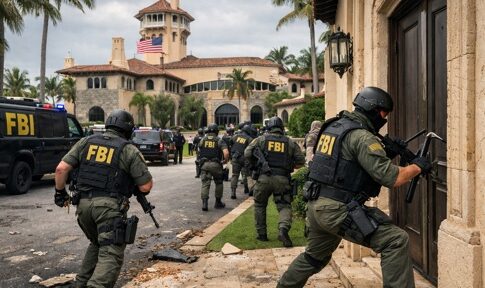
The most powerful law-enforcement agency in America went to a judge swearing it had probable cause to raid a former president’s home—even as some of its own people reportedly doubted the case met that standard.
How a Records Dispute Turned Into an Unprecedented FBI Search
Federal agents did not start with a battering ram; they started with boxes. After Donald Trump left office in January 2021, the National Archives and Records Administration pressed for missing presidential records and finally retrieved 15 boxes from Mar-a-Lago in January 2022, only to discover classified material mixed in with personal items and keepsakes. That finding triggered a formal referral to the Department of Justice a month later and transformed a paperwork tug-of-war into a national security criminal investigation.
Justice Department and FBI officials spent the spring of 2022 working through the familiar playbook: open a criminal probe, issue a grand jury subpoena on May 11 for any remaining classified documents, and send officials to the property on June 3 to collect what Trump’s team said was left. They walked away with 38 more classified documents and a signed certification from a custodian asserting everything classified was now returned. That document would later loom large, not as closure, but as potential evidence of obstruction.
Inside the Legal Build: From Subpoena Frustration to Probable Cause
Federal investigators did not simply rely on assurances; they pulled security footage from Mar-a-Lago and watched boxes move in and out of storage areas after the subpoena.That kind of movement, combined with the earlier discovery of classified records and the certification claiming everything was back in government hands, formed the backbone of DOJ’s theory: more classified material likely remained on site and someone might be trying to hide it. Those facts fed into a sworn affidavit built around the Espionage Act, obstruction, and concealment of records.
The redacted affidavit unsealed weeks later shows the FBI formally telling a magistrate judge it had probable cause to believe classified national defense information and presidential records were still at Mar-a-Lago, and that evidence of obstruction would be found there. The judge said he had carefully reviewed the submission and approved the warrant on August 5, 2022, clearing the way for the August 8 search. That judicial sign-off matters to anyone who cares about common-sense due process: probable cause is not a political slogan, it is a legal threshold a neutral judge either finds or rejects.
What “FBI Doubts” Really Mean—and What They Do Not
Later reporting and commentary point to internal FBI hesitation about whether the case truly justified a search of a former president’s residence, or whether the government should keep negotiating rather than forcing the issue with a warrant. Some personnel reportedly questioned whether the predicate and probable cause were strong enough or worried about the political blowback of such an unprecedented step. Critics now collapse that caution into the blunt claim “the FBI didn’t believe it had probable cause,” treating internal debate as if it were the bureau’s final legal position.
The public record shows something different: once the affidavit went to court, the FBI and DOJ were not expressing doubt; they were swearing under oath that probable cause existed. From a conservative, rule-of-law lens, that distinction is crucial. Healthy institutions should argue internally about evidence and tactics before asking a judge to authorize a search, especially against a former president. The real red flag would be an FBI that never questions itself on the way to wielding its most intrusive powers, not one that does so and then commits to a documented evidentiary record.
Weaponization, Double Standards, and the Conservative Litmus Test
Trump and many on the right see the Mar-a-Lago search as proof of a weaponized justice system that treats one set of political actors with kid gloves and another with handcuffs. They point to the Clinton email case and other classification mishandling episodes, asking why those did not end with a search of a private residence. That skepticism is not paranoia; Americans watched DOJ and the FBI stumble badly in politically sensitive matters over the last decade, and trust is now earned in inches, not miles.
Legal analysts responding to the unsealed affidavit counter that the paper trail here is different: boxes already found with classified markings, a subpoena, partial compliance, a seemingly false certification, and video showing document movements all stacked up in a way not mirrored in earlier cases. From a common-sense conservative perspective, you do not excuse sloppy handling of secrets just because a person used to sit in the Oval Office. The more serious concern is whether that same unforgiving standard is applied to allies of the current administration, or reserved for its chief political rival.
How This Fight Reshapes the Presidency and Law Enforcement
The Mar-a-Lago search has already set an informal precedent: former presidents can have their homes searched under criminal warrant when the government believes sensitive national defense information is at risk. Future administrations will likely implement stricter exit procedures for records and classified material, because no outgoing team wants to be the next to tangle with the Archives, the FBI, and a federal judge. Quiet “gentlemen’s agreements” about presidential papers are gone; formal compliance is the new default.
Inside DOJ and the FBI, the political detonation over Mar-a-Lago will push decision-makers to erect extra internal review layers for politically explosive searches, even though the legal probable cause standard remains the same. That may protect liberty when evidence is thin, but it may also make the government slower to act when genuine national security threats involve powerful figures. For citizens who prize both liberty and order, the real task is not to demand that the FBI never raid a former president, but to demand transparent standards applied evenly, whether the documents sit in Florida, Delaware, or anywhere else.
Sources:
FBI search of Mar-a-Lago – Wikipedia
Mar-a-Lago Search Warrant – Interim Status Report (DOJ)
Legal Sidebar: Probable Cause and the Mar-a-Lago Warrant (CRS)