
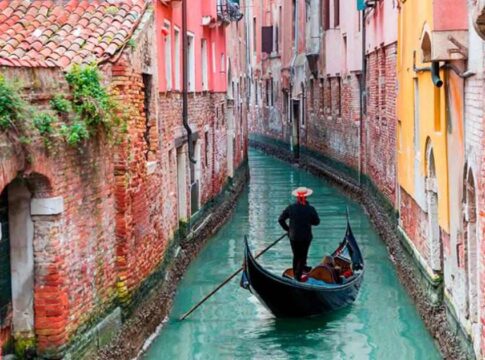
The Brutal History of Venice and its most gripping revelation is that the city’s shimmering beauty was born out of centuries of chaos and sheer desperation, not romantic vision—leaving us to wonder what kind of people would gamble everything to build a home atop shifting water in a time of terror.
Venice: Born from Chaos, Not Romance
Venice’s story doesn’t begin with gondoliers and masked balls. It starts with people running for their lives. As the Western Roman Empire crumbled in the fifth century, waves of so-called barbarian tribes swept across the region, toppling what was left of Roman order. The sack of Rome by the Goths in 410 wasn’t just a footnote—it set off shockwaves that sent desperate refugees searching for a place no invader would want. That place was the Venetian Lagoon, an unwelcoming expanse of mudflats and shifting tides, which on any map looked more like a punishment than a promise. But for those on the run from warlords like Attila the Hun, who loomed as the era’s most notorious terror, the lagoon’s inaccessibility was its greatest asset.
Tradition claims Venice was founded at noon on March 25, 421. Whether or not that exact date holds up to scrutiny, what’s indisputable is that the earliest Venetians weren’t dreamers—they were survivors. They saw opportunity where others saw only hardship. They drove wooden stakes deep into the mud to create artificial islands, building not for comfort but for escape. The lagoon’s brackish waters kept hostile armies and opportunistic raiders at bay. Every brick and piling was a declaration: We will not be conquered. The city’s geography was its armor, and its isolation became its greatest strength.
Defiance, Ingenuity, and Ruthlessness
Survival required more than just hiding; it demanded a whole new way of life. The Venetians adapted with a mix of defiance and ingenuity that bordered on audacious. They invented technologies to hold back the tides, devised clever systems for moving goods by boat instead of road, and established rigid social codes to prevent internal chaos. But this wasn’t the work of saints. Venice’s rise was marked by ruthless ambition. The city’s leaders, wary of both outside threats and internal dissent, built a culture where loyalty to the city trumped everything else. Betrayal was met with swift, often brutal consequences. Venice became a republic not by idealism, but by necessity—a system designed to keep power diffuse and the city’s enemies, both foreign and domestic, at arm’s length.
Over centuries, Venice transformed from a refugee camp into a global trading powerhouse. The same waterways that once protected the city from invaders became superhighways for commerce and wealth. Yet, the city never forgot its origins. Its rituals, laws, and even its architecture bear the scars of a society forged in crisis. Every grand palace stands atop pilings once driven into the lagoon in fear and hope. The city’s splendor is inseparable from its brutality.
The Legacy Beneath the Surface
Modern visitors marvel at Venice’s beauty, rarely suspecting the cost at which it was achieved. The city’s foundations are reminders of a time when survival depended on outsmarting both nature and man. The millions who now flock to its canals tread on ground won by centuries of calculated risk and relentless willpower. Venice is more than a pretty facade; it is a monument to what people will do when pushed to the edge.
The story of Venice remains unfinished. Its history is a warning and a marvel, a testament to the enduring human drive for safety, independence, and identity. The next time you gaze at a postcard of Venice, remember: beneath every reflection in the water lies a legacy carved out by those who refused to surrender—even when the world around them was falling apart.