
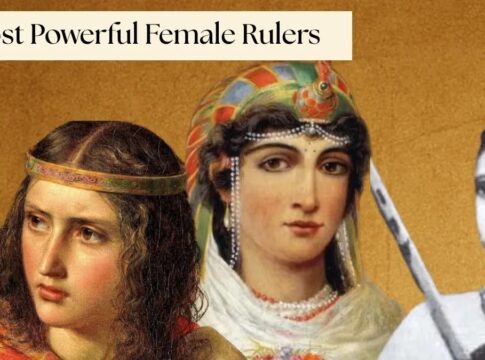
Throughout history, women have risen to power in societies where female leadership was often discouraged or outright forbidden. From ancient Egypt to Victorian Britain, these rulers defied societal norms, wielding authority, enacting reforms, and leaving lasting legacies. Their stories reveal resilience, strategic brilliance, and the ability to navigate political, military, and cultural challenges. Examining their reigns offers insight not just into their achievements, but also into the societies they transformed.
Trailblazers of the Ancient World
Hatshepsut of Egypt, ruling around 1508–1458 BCE, established herself as one of history’s first successful female pharaohs. She secured her authority through monumental building projects, trade expeditions, and military campaigns, projecting power in a male-dominated system. Her reign demonstrated that female sovereignty could not only endure but flourish, setting a precedent for rulers to come.
Wu Zetian, the only female emperor of China, similarly challenged tradition during her reign from 690–705 CE. She expanded the empire, implemented educational reforms, and centralized bureaucratic authority, leaving a legacy that reshaped the Chinese political landscape. Both women illustrate how extraordinary circumstances and determination allowed female rulers to command empires on par with their male counterparts.
Shaping Early Modern Europe
Elizabeth I of England navigated religious upheaval, foreign threats, and internal power struggles from 1558 to 1603. Known as the “Virgin Queen,” she led England to victory over the Spanish Armada and fostered a golden age of culture and exploration. Her reign combined political shrewdness with careful image management, cementing her influence in both domestic and international affairs.
Maria Theresa of Austria and Catherine the Great of Russia further exemplify female leadership in the European context. Maria Theresa advanced education, military, and economic reforms, ensuring the stability of the Habsburg dynasty. Catherine the Great seized power in a coup and modernized Russian administration while expanding territory, blending Enlightenment ideas with political acumen. These women redefined governance in patriarchal societies and demonstrated the far-reaching impact of strong female rule.
Influence in the Modern Era
Queen Victoria, ruling from 1837 to 1901, presided over an era of industrialization, empire, and social reform. Her leadership guided Britain through profound change, and her personal image shaped the moral and cultural tone of the Victorian age. By consolidating power and establishing lasting policies, she left a global imprint that endured well beyond her reign.
Beyond Europe, women rulers across the world have similarly combined authority with innovation, leaving legacies in law, culture, and society. Their stories highlight how female sovereignty, though often exceptional, can be transformative and enduring. These leaders navigated both internal opposition and external challenges to maintain their power and influence.
Enduring Lessons from Women Leaders
The achievements of these rulers show that leadership is not confined by gender but defined by vision, strategy, and resilience. Their reforms, cultural patronage, and military campaigns reshaped nations and empires while inspiring generations to come. Modern scholarship continues to uncover new details about their reigns, providing deeper understanding of how personal agency and circumstance intersected to create historical change.
By examining these powerful women, we gain a richer appreciation of the complexities of governance and the importance of challenging societal limits. Their legacies remain central to discussions of leadership, gender, and statecraft, reminding us that history is shaped not only by men but also by women who dared to rule.