
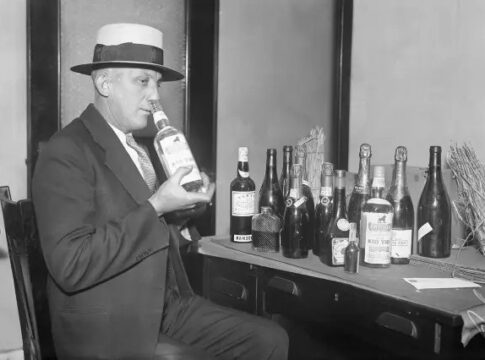
America’s most notorious constitutional experiment reveals shocking truths about government overreach that mirror today’s battles against federal authority and individual liberty.
Constitutional Precedent for Government Failure
The Eighteenth Amendment represents the only constitutional amendment in American history to be completely repealed by another amendment. Ratified on January 16, 1919, and repealed by the Twenty-first Amendment on December 5, 1933, Prohibition serves as a stark reminder that even constitutional mandates can fail spectacularly when they override individual liberty and state authority. This unique constitutional reversal demonstrates that Americans will ultimately reject federal overreach, no matter how it’s packaged.
Medical Exemptions Exposed Government Hypocrisy
While ordinary Americans faced criminal charges for possessing alcohol, a massive loophole allowed doctors to prescribe whiskey for “medicinal purposes.” Physicians wrote millions of alcohol prescriptions during Prohibition, creating a thriving legal market that exposed the arbitrary nature of federal enforcement. This selective application of the law mirrors modern concerns about government officials exempting themselves and their allies from regulations imposed on regular citizens.
Federal Enforcement Bred Corruption and Lawlessness
The Bureau of Prohibition and IRS enforcement units became notorious for corruption, with agents regularly accepting bribes from bootleggers and organized crime. Federal authorities selectively prosecuted cases while turning blind eyes to wealthy connected violators. This systematic corruption undermined public respect for constitutional law and created the very lawlessness Prohibition claimed to prevent. The parallels to modern federal agency overreach and selective enforcement are unmistakable.
Women Led Both Crusade and Its Reversal
The Woman’s Christian Temperance Union and Anti-Saloon League drove the initial push for Prohibition, believing government intervention would protect families from alcohol’s destructive effects. However, when these same women witnessed federal enforcement destroying communities through violence and corruption, many became leading advocates for repeal. Their transformation from supporters to opponents illustrates how principled Americans recognize when government solutions create worse problems than they solve.
Prohibition’s legacy serves as a powerful reminder that constitutional government requires limits on federal power. When Washington overreaches into areas traditionally governed by states and local communities, the results invariably include corruption, selective enforcement, and disrespect for the rule of law that conservatives fight against today.
Sources:
Prohibition | United States history [1920–1933] | Britannica
Prohibition – Chronicling America | Library of Congress
Prohibition in the United States – Wikipedia
Did You Know? – The Mob Museum
Prohibition and Its Effects – Gilder Lehrman Institute