
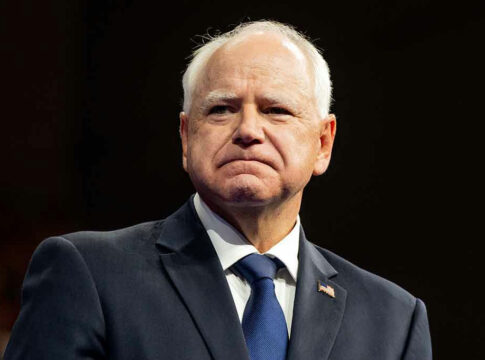
Governor Walz, who previously opposed Trump’s immigration enforcement, suddenly called the White House requesting federal cooperation—a stunning reversal that signals even blue state leaders recognize the necessity of securing our communities from illegal immigration chaos.
Walz Requests Federal Partnership After Minneapolis Crisis
Governor Tim Walz placed a call to President Trump on Monday, January 27, requesting cooperation on federal immigration enforcement matters in Minnesota. Trump announced the conversation on Truth Social, describing it as “a very good call” where the two leaders “seemed to be on a similar wavelength.”
This unexpected outreach from a Democratic governor represents a significant shift in tone, particularly given the previous resistance from blue-state leadership to Trump’s immigration enforcement priorities. The timing coincides with escalating tensions in Minneapolis following a fatal ICE shooting on Saturday.
Border Czar Deployed to Take Direct Control
Following the Walz conversation, Trump immediately deployed Tom Homan, the White House border czar, to Minnesota with a clear operational mandate. Homan’s assignment includes managing ICE operations on the ground and coordinating ongoing fraud investigations across the state.
White House Press Secretary Karoline Leavitt confirmed Homan would report directly to the president on Minnesota operations. Homan was expected to arrive and assume centralized control of enforcement activities. This deployment demonstrates the administration’s commitment to maintaining law and order despite local resistance, establishing federal authority where states have failed to cooperate with immigration enforcement.
Fatal Shooting Ignites Enforcement Controversy
The deployment follows Saturday’s fatal shooting of Alex Pretti, an ICU nurse at the Minneapolis VA Medical Center, during a federal immigration enforcement operation. Federal agents reported that Pretti approached them with a 9mm handgun and resisted disarmament, necessitating the use of deadly force. However, witnesses have cast doubt on whether Pretti genuinely posed a threat to agents, creating a factual dispute at the heart of the controversy. VA Secretary Doug Collins defended the operation, blaming state and local officials’ “refusal to cooperate with the federal government to enforce the law and deport dangerous illegal criminals” for creating the dangerous situation.
"Governor Tim Walz called me with the request to work together with respect to Minnesota. It was a very good call, and we, actually, seemed to be on a similar wavelength… Crime is way down, but both Governor Walz and I want to make it better!" – President Donald J. Trump 🇺🇸 pic.twitter.com/ZjrSDU8uAz
— The White House (@WhiteHouse) January 26, 2026
Minneapolis Officials Demand Federal Withdrawal
Minneapolis Mayor Jacob Frey demanded ICE immediately cease operations and leave the city and state, calling on Trump to “act like a leader” and “put Minneapolis, put America first.” Minneapolis Police Chief Brian O’Hara stated local police would maintain the scene and coordinate exclusively with state and local law enforcement. Protests escalated throughout Sunday, with confrontations between agitators and law enforcement at a hotel leading to an unlawful assembly declaration. This represents the second fatal ICE shooting under the current administration, following the January 7 death of Renee Good, which sparked similar backlash from Democrats, characterizing federal enforcement as government overreach.
Administration Points to Enforcement Successes Nationwide
Trump’s administration has launched aggressive immigration enforcement operations across multiple jurisdictions with reported success. The administration claims “tremendous success” in Washington, D.C., Memphis, Tennessee, and New Orleans, Louisiana, with assertions that crime is “way down” in these areas. The president stated he is “reviewing everything” surrounding the Pretti case but has not indicated whether the shooting agent acted appropriately. This careful approach suggests the administration recognizes the sensitivity of the situation while maintaining its commitment to immigration enforcement. The Minnesota deployment may establish a template for federal intervention in states perceived as uncooperative with immigration law.
Bipartisan Cooperation Signals Shifting Dynamics
The Walz-Trump call represents a potentially significant shift in federal-state relations on immigration enforcement. For a Democratic governor to initiate contact requesting cooperation suggests that even politically opposed state leaders recognize the practical necessity of working with federal authorities to maintain public safety.
This emerging bipartisan framework could reshape how sanctuary cities and states navigate future federal enforcement operations. Minnesota, particularly Minneapolis, hosts significant immigrant and refugee communities that have become focal points of federal immigration enforcement. The cooperation framework may help balance enforcement priorities with community concerns, though underlying tensions persist between federal mandates and local resistance.
Sources:
Minneapolis shooting live updates: Alex Pretti intensifies protests – ABC11
Trump to send border czar Tom Homan to Minneapolis – ABC News