
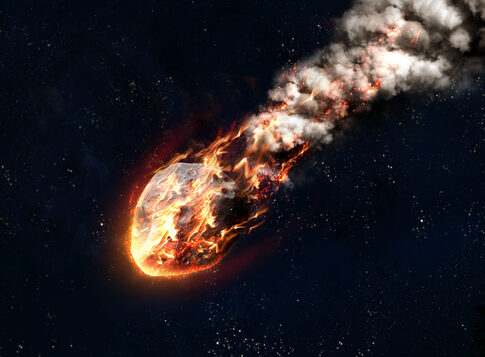
The Geminids are the rare sky show that rewards patience with a steady, almost mechanical flood of “shooting stars” powered by an asteroid, not a comet.
The Geminids’ appeal: reliable timing, big numbers, and a long viewing window
December meteor showers usually compete with holiday schedules, cold air, and early sunsets, yet the Geminids keep winning because they show up on time and throw real volume. Forecasts for 2026 put the strongest activity across the December 13-14 night, with a predicted maximum near 5:44 UTC on December 14. The practical takeaway is simple: start in the evening and stay flexible through late night for the best rates.
Geminids don’t demand a telescope, a subscription, or a degree. They demand darkness and time. Light pollution is the thief here, not technical complexity. Pick a location where the Milky Way looks obvious on a clear night, bring a reclining chair, and plan to stare at the sky in big, uninterrupted blocks. Many people fail by checking the sky like email—two minutes at a time—then declaring it “overhyped.”
Why this shower behaves differently: an asteroid named 3200 Phaethon
The Geminids trace back to 3200 Phaethon, an object classified as an asteroid and discovered in 1983, with an orbital period of about 1.4 years. That detail matters because it breaks the tidy story most of us learned: comets make meteor showers, asteroids don’t. Phaethon’s close solar passes help shed debris that Earth plows through every December, producing a dense, consistent stream that has strengthened over time.
The shower’s history adds to the intrigue. Observers first recognized the Geminids in 1862, and early rates were modest, roughly on the order of a few dozen per hour at best. By the 1990s, reported zenithal hourly rates had climbed dramatically, with top-end forecasts now often reaching around 150 under perfect conditions. That long-term ramp-up points to evolving debris distribution, not a one-off fluke, which is why veterans treat Geminids as the year’s most dependable “big night.”
When and where to look: work with the radiant, not against it
The radiant sits in Gemini at roughly RA 07:28, Dec +33°, rising in the early evening and climbing higher into the night. That geometry buys you something precious: time. As the radiant rises, meteors can appear anywhere in the sky, but you’ll typically see more as the radiant gets higher, often strongest after midnight and toward pre-dawn when your location rotates into the meteor stream more directly. Dress for stillness, not walking.
Expect Geminids to look different from faster showers. With a typical speed around 35 km/sec, many Geminids produce bright, relatively short trails rather than long, delicate streaks. Some years deliver memorable fireballs, the kind that make a whole group gasp at once, and those moments create lifelong converts. Conservative common sense applies here: don’t overcomplicate the plan. Go where it’s dark, look up, and keep your eyes adapted by avoiding bright phone screens.
The underrated factor: moonlight and the myth of “the perfect night”
Moon conditions can ruin a meteor shower by washing out faint streaks, but 2026 looks comparatively friendly around the Geminid peak, with sources describing a low-illumination moon that shouldn’t dominate the sky. That doesn’t guarantee a perfect show, because clouds and haze can still spoil the night, and rates vary by latitude and local conditions. It does mean your biggest enemy is likely artificial light, which is something you can actually control.
Another overlooked reality is the shower’s long active span. Listings commonly place Geminids active from roughly late November into late December, with a narrower “core” period in mid-December where activity is strongest. That spread creates an insurance policy for adults with jobs and families: if the exact peak night turns ugly, you can still catch a strong showing on nearby nights, especially from December 11-16, when many guides expect elevated activity.
How to watch like a grown-up: set expectations, then let the sky surprise you
Plan for two different wins: quantity and quality. Quantity comes from time under dark skies during the late-night hours. Quality comes from comfort and discipline: a chair that supports your neck, layered clothing, and a simple rule that you won’t “just check” notifications. Many people chase meteors with binoculars or point cameras too narrowly; the smarter move is to watch wide, then photograph once you understand where meteors are appearing in your sky.
Geminids offer a rare blend of science and humility: an asteroid masquerading as a comet-source, a stream that has intensified over decades, and a peak that arrives with calendar-like reliability. That reliability can feel almost moral in a culture that breaks promises casually—show up, do the prep, and the universe tends to pay you back. When the first bright Geminid cuts across Orion’s neighborhood, it won’t feel like luck. It will feel earned.
Carry that mindset into the post-peak period. Some guides emphasize you can still see Geminids through about December 25 from truly dark locations, just at lower rates. That’s the quiet advantage: most people stop trying once the headline night passes. If you’re the person who goes out anyway—after the hype, after the weekend—you often get the cleanest sky, the least competition, and the most memorable fireball of the whole season.
Sources:
https://earthsky.org/astronomy-essentials/everything-you-need-to-know-geminid-meteor-shower/
https://www.space.com/stargazing/meteor-showers/meteor-showers-2026
https://www.svbony.com/blog/meteor-shower-guide-2026
https://www.amsmeteors.org/meteor-showers/meteor-shower-calendar/
https://in-the-sky.org/news.php?id=20261214_10_100
https://www.timeanddate.com/astronomy/meteor-shower/geminids.html%5D
https://www.imo.net/resources/calendar/