

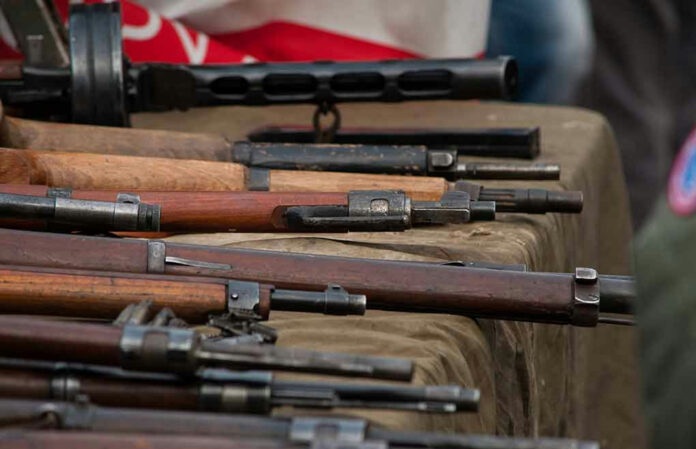
Revolutionary War-era muskets remain largely untouched by modern federal gun control laws, a little-known exemption that preserves Second Amendment history while sparking debate over whether antique firearm classifications create regulatory loopholes or protect constitutional heritage.
Federal Exemptions Protect Historical Firearms
Federal law under 18 U.S.C. § 921(a)(16) explicitly exempts firearms manufactured before 1899 from most gun control regulations. This includes the Brown Bess muskets and similar weapons carried by American patriots during the Revolutionary War. Black powder replicas that do not use fixed ammunition also qualify for exemption, allowing historical reenactors and collectors to legally own functional period weapons without background checks or federal licensing. The National Firearms Act of 1934 and Gun Control Act of 1968 established these categories, recognizing the historical and educational value of antique weapons while focusing regulatory efforts on modern firearms.
Colonial America Had Extensive Gun Regulations
Contrary to modern assumptions, colonial America maintained comprehensive firearm regulations that predated the Constitution. The 1645 Massachusetts Order required trained band members to carry serviceable muskets at least 3 feet 9 inches long. Most colonies mandated gun ownership for able-bodied males aged 16-60, requiring citizens to maintain firearms in continual readiness with specified ammunition quantities of 10 pounds of gunpowder and 40 pounds of bullets. Church officers and magistrates enforced compliance, with exemptions granted only to Quakers, physicians, lawyers, millers, and those physically incapable. These historical precedents demonstrate that firearm regulation is not a modern invention but rather a longstanding American practice balancing individual rights with community safety.
State-Level Variations Create Legal Uncertainty
While federal exemptions remain clear, state regulations increasingly diverge from federal standards. California and New York treat functional replicas more like modern firearms, imposing stricter background check and registration requirements. Texas and Florida maintain more permissive interpretations aligned with federal law. This regulatory fragmentation affects an estimated 4.5 million firearms collectors and over 100,000 historical reenactors nationwide. The antique firearms market generates between $500 million and $1 billion annually, with the reenactment industry contributing an additional $200 million. Legal uncertainty surrounding replica firearms using modern components has prompted multiple court cases examining whether state restrictions conflict with federal exemptions and Second Amendment protections.
Emerging Challenges for Antique Classifications
The Bureau of Alcohol, Tobacco, Firearms and Explosives faces growing challenges distinguishing legitimate historical replicas from modern weapons disguised as antiques. The rise of 3D-printed firearms and advanced manufacturing techniques has created new classification dilemmas. ATF guidance issued between 2024 and 2025 clarified that firearms using black powder substitutes may still qualify as antique if they do not use fixed ammunition, but concerns remain about ghost guns exploiting definitional gaps. Congressional debates continue over whether functional capability should override manufacturing date in determining regulatory status. Law enforcement advocates support clearer definitional standards while firearms collectors emphasize preserving access to historical weapons for educational purposes.
Muskets like those from 1776 are mostly exempt from today’s gun laws https://t.co/i1nCYj82iK
— Local 4 WDIV Detroit (@Local4News) May 14, 2026
The antique firearm exemption reflects fundamental policy considerations balancing constitutional protections with public safety. Limited evidence exists of widespread criminal misuse of legitimately classified antique firearms, supporting arguments that collectors and reenactors pose minimal public safety risk. However, gun control advocates argue that functional capability rather than historical classification should determine regulation. The Trump administration faces decisions on whether to pursue federal clarification of antique firearm definitions or maintain flexibility for state-level enforcement priorities. These exemptions preserve Americans’ ability to connect with Revolutionary War heritage while respecting the Second Amendment rights our Founders fought to establish.
Sources:
A Revolution in Arms: Weapons in the War for Independence – American Revolution Institute
Colonial Firearm Regulation – PatCosta.com