

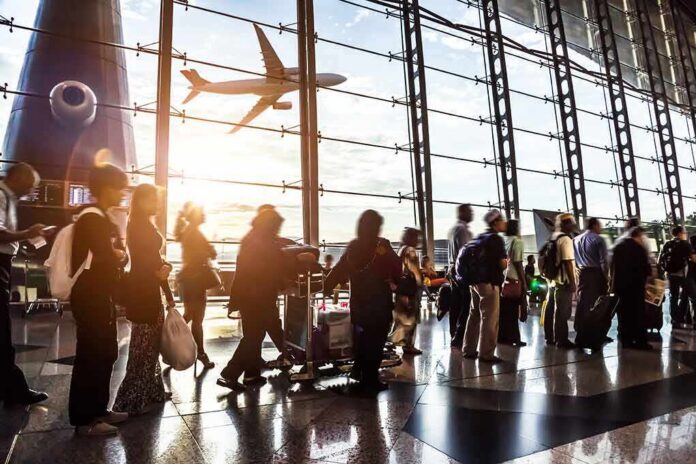
Volcanic ash from Anak Krakatau shut Jakarta’s main airport and stranded tens of thousands as 209 flights were suspended.
Story Snapshot
- Jakarta’s Soekarno-Hatta Airport halted flights as ash drifted over runways and airspace.
- Authorities detected ash early Sunday and warned of health risks from fine particles.
- Airlines rerouted or canceled routes across western Indonesia and nearby hubs.
- Officials raised monitoring and urged caution as eruptions continued through the weekend.
Airport shutdown and the chain reaction it triggered
Soekarno-Hatta International Airport in Jakarta suspended flight operations after ash from Anak Krakatau reached the capital’s airspace. The airport announced on social media that the halt, first set to end at 5:30 a.m., extended to 9:30 a.m., tightening the squeeze on weekend travel. Grounded jets clogged gates. Crews timed out. Baggage piled up. Each new delay forced airlines to reset crews and aircraft across their networks, which amplified the disruption well beyond Jakarta.
Indonesia’s transportation officials reported ash detection near the airport early Sunday, linking it to eruptions that began late Friday. Aviation managers pivoted to safety protocols built for ash events: hold departures, divert arrivals, and keep turbines away from abrasive dust. Public advisories flagged health risks from fine ash, which can irritate lungs and eyes. Travelers faced long lines and quick rebooking choices. Many chose ground transport where possible, but roads into Jakarta also slowed.
Why volcanic ash shuts airports fast
Volcanic ash is not smoke; it is microscopic glass and rock. Jet engines can melt that glass, which then re-hardens inside turbines and can cause engine failure. Cockpit windows can cloud. Sensors can foul. Even light ash can degrade safety margins. That is why international guidance leans to “avoid all ash” when possible. The United States Geological Survey and other authorities document dozens of ash encounters with aircraft over decades, many with serious damage. The lesson is simple: do not test the odds in the sky.
Runways and taxiways also suffer when ash falls. Braking action drops. Ground crews need masks. Airport fire and rescue gear requires special cleaning. These steps slow operations even after the plume passes. Air traffic control then sequences a careful restart. That reset takes time. Airlines must inspect engines for residue and may swap planes. Passengers feel every step of that timeline through cascading delays and missed connections. The caution costs hours, but the alternative can cost lives and aircraft.
How far the disruption spread and who felt it
Regional routes across western Indonesia and popular links to Singapore and Kuala Lumpur saw reroutes and cancellations as carriers avoided the ash corridor. Some schools and fishing activity paused near the affected zones, showing how ash intrudes on daily life as well as travel. The aviation playbook for this region already includes rerouting around active volcanoes, and agencies have used it before when Anak Krakatau raised alerts and forced airspace shifts. This event fit that known pattern and scale.
Travelers bore the brunt. Families slept in chairs. Workers missed shifts. Cargo backed up, which strained just-in-time supply runs. Airlines staffed help desks and pushed alerts, but gate changes moved faster than people. That chaos is common in ash events. Authorities prefer over-caution because the downside risk is catastrophic, and public memory of past ash incidents backs that stance. Conservative choices align with safety-first common sense that most travelers share when stakes are this high.
When flights return and what to watch next
Airport managers restart operations when satellite tracks, pilot reports, and ground sensors show safe ash levels. That clearance can come in waves as winds shift. The airport’s timed suspensions signaled a rolling review window, which is standard during ongoing eruptions. Indonesia’s volcanology agency kept Anak Krakatau under tight watch, following earlier periods when the volcano reached high alert levels and forced wide flight reroutes. Travelers should expect schedule churn until seismic activity and winds calm.
Anak Krakatau just grounded Jakarta’s main airport.
Ash shut ~209 flights. 22,000+ people stranded. Routes to Singapore, Doha, Sydney hit. No tsunami this time.
Last time this volcano went big: Dec 22, 2018. A chunk of it collapsed into the sea and a tsunami killed 400+ along… pic.twitter.com/EnFZHl9KZe
— PSB (@PSBVireon) September 6, 2026
Several facts matter for the next 48 hours. Winds can loft ash high and far, even after lava output drops. Light ash still harms engines, so pilots will avoid even faint plumes when possible. Airlines may thin schedules to rebuild buffers. Passengers should keep phones charged, check airline apps often, and accept midday rebooks to dodge peak queues. Safety crews will move fast, but the ash sets the pace. The volcano, not the timetable, runs the show today.
Sources:
mirror.co.uk, bbc.com, reuters.com, gov.uk, aviation-professionals.co.za, skybrary.aero