
A remarkable cache of 170-year-old Aboriginal stone tools is being hailed as proof of planning, trade, and ingenuity—but it also raises sharp questions about how modern elites rewrite history while ignoring today’s threats to national identity and Western heritage.
Archaeologists Discover a Buried Toolkit from Australia’s Colonial Frontier
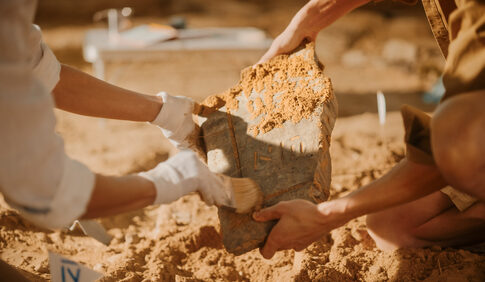
Archaeologists from Griffith University, working alongside Pitta Pitta Traditional Owners and local station landholders, recently excavated a deliberately buried bundle of around 60 large stone woodworking tools, known as tulas, near a remote waterhole north of Boulia in Central West Queensland. The tools were found tightly clustered in hard, arid soil, forming a single intact cache. Scientific dating places their burial between 1793 and 1913, squarely within Australia’s early to mid-colonial period.
Each tula was carefully flaked from quality stone and appears unused, suggesting they were manufactured in advance and stockpiled rather than discarded. Researchers interpret the cache as a stored toolkit or trade stock, deliberately stashed for later retrieval that never happened. Because the tools were still sharp and unworked, the assemblage functions as a time capsule of pre-use technology, revealing how people in this harsh environment planned for future needs and opportunities.
Evidence of Trade Networks, Planning, and Surplus Production
The Boulia cache is not an isolated curiosity. In 1988, another buried bundle containing 34 tulas and numerous flakes was excavated only a few miles away, but at the time some experts viewed it as a possible one-off. The new discovery confirms that deliberately burying packets of finished tools was a repeated cultural practice in this landscape. Together, the two sites show that Aboriginal groups in inland Queensland were producing surplus tools and caching them as part of a broader economic strategy.
Tulas were hafted onto wooden handles and used for demanding woodworking tasks such as shaping boomerangs, shields, clapsticks, and carrying dishes. Their wide distribution across most of the continent points to technological spread and long-distance exchange. Inland peoples like the Pitta Pitta participated in large trade networks that moved goods—including stone tools, ochre, and the valuable nicotine-rich plant pituri—over hundreds of miles. The Boulia caches provide rare physical proof that finished tools themselves were likely important trade items.
A Harsh Landscape, a Strategic Location, and a Disrupted Retrieval
The cache lay buried near a permanent or semi-permanent waterhole, a logical hub in an otherwise unforgiving, arid landscape. Water points served as nodal junctions in Aboriginal travel and trade routes, enabling gatherings, exchanges, and ceremonial activity. Storing high-value tools at such a node made sense: the waterhole would reliably draw people back, and a buried bundle kept essential equipment or trade goods secure until needed, much like a remote supply cache supporting movement through difficult terrain.
Researchers remain cautious about why the cache was never recovered. The burial date overlaps with rapid European pastoral expansion, frontier conflict, and the introduction of metal tools. These disruptions likely reshaped local economies, movements, and safety, and could have prevented the original owners from returning. While the exact cause cannot be pinned down, the untouched tools silently testify to a moment when Indigenous planning met the turmoil of colonization and was abruptly interrupted.
Collaboration, Heritage Control, and How the Story Is Framed
The project is presented as a close collaboration between Griffith archaeologists, Pitta Pitta Traditional Owners, and station owners, reflecting a broader trend in Australian archaeology toward shared decision-making. Pitta Pitta now hold legal Native Title over the area, giving them recognized rights in managing the site and its story. University researchers still control most of the technical work and publication, but they emphasize consultation and cultural authority, aligning the study with current global expectations around Indigenous heritage.
Media coverage of the discovery highlights Aboriginal innovation, planning, and resilience, challenging outdated stereotypes of “simple” hunter-gatherers. The narrative stresses that careful resource management and cooperation allowed people to thrive in extreme conditions and sustain trade even as colonial pressures mounted. For readers concerned about how history is increasingly used to push ideological agendas, this case illustrates both the real sophistication of Indigenous economies and the modern tendency of institutions to reframe past societies to fit contemporary political debates.
Beyond the scientific headlines, the cache underscores an enduring truth conservatives recognize: human survival in hard country depends on foresight, self-reliance, and respect for local knowledge, not on top-down bureaucracy. These stone tools were made, stored, and traded by people who understood their land intimately and organized their lives around practical needs. As modern policymakers debate land use, heritage law, and national identity, this 170-year-old toolkit quietly reminds us that planning, responsibility, and rooted communities are what keep a civilization standing.
Sources:
Rare stone tool cache in Australia
Rare stone tool cache found in Australian outback tells story of trade and ingenuity
Aboriginal stone tools cache: trade and ingenuity
Rare stone tool cache tells story of trade and ingenuity
Stone Tool Cache Uncovered in Australia
Australia’s oldest occupied ice age cave found at high elevation in Blue Mountains
Australian archaeology – Australian Museum