
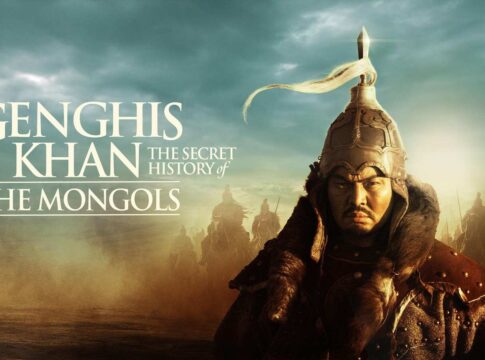
A 13th-century Mongol conqueror implemented progressive policies that modern historians are only now recognizing as remarkably ahead of their time, challenging everything you thought you knew about one of history’s most misunderstood leaders.
Fratricidal Origins Shaped a Conqueror
Temüjin, later known as Genghis Khan, committed his first recorded act of violence as a child when he killed his half-brother Bekhter in a dispute over food and family leadership. This shocking act occurred during the family’s darkest period, after Temüjin’s father was poisoned and their tribe abandoned them to poverty. The fratricide revealed the cold calculation that would later define his approach to power, demonstrating that even family bonds meant nothing when survival and dominance were at stake.
Merit-Based Leadership Revolution
Genghis Khan shattered Mongol tradition by appointing leaders based on ability rather than bloodline, a radical departure from the kinship-based power structures that had governed steppe societies for centuries. He elevated talented individuals from humble backgrounds to positions of authority while demoting incompetent nobles, creating a meritocracy that fostered unprecedented loyalty and military effectiveness. This revolutionary approach to governance helped unite fractured tribes under a single banner and became a cornerstone of Mongol administrative success across their vast empire.
Unintentional Climate Engineering
The Mongol conquests under Genghis Khan inadvertently triggered the world’s first recorded instance of human-caused climate change by killing an estimated 40 million people across Eurasia. The massive depopulation led to the abandonment of vast agricultural lands, which rapidly returned to forest, absorbing enormous amounts of atmospheric carbon dioxide. Scientists have measured this reforestation effect in ice core data, showing a measurable drop in global carbon levels during the 13th century, demonstrating how warfare can have unexpected environmental consequences on a planetary scale.
Champion of Religious Freedom
Contrary to his reputation as a destroyer of civilizations, Genghis Khan actively promoted religious tolerance and intellectual debate throughout his empire. He organized formal theological discussions between Christians, Muslims, Buddhists, and traditional animists, encouraging peaceful dialogue among different faiths. This policy of religious freedom attracted diverse populations to Mongol territories and helped stabilize conquered regions by respecting local customs and beliefs, proving that tolerance could be as powerful a tool of empire-building as conquest itself.
The Ultimate Historical Mystery
Nearly eight centuries after his death in 1227, both the cause of Genghis Khan’s demise and the location of his burial remain complete mysteries that continue to baffle historians and archaeologists. Theories about his death range from battlefield injuries during the Western Xia campaign to various illnesses, but no definitive evidence exists for any explanation. His burial site was deliberately concealed according to Mongol custom, with legends claiming that his funeral procession killed anyone who witnessed it to preserve the secret, making his final resting place one of archaeology’s greatest unsolved puzzles.
Sources:
Top Ten Little-Known Facts About Genghis Khan
Genghis Khan: Five Facts About the Mongol Leader
This was standard for the Ottoman Emperor, all the younger brothers were stangled with a golden cord and considering the size of the harem, this could result in a few dozen deaths.