Indiana’s lieutenant governor did not just say he hates Islam; he is now pushing to silence mosque loudspeakers that broadcast the Muslim call to prayer in public spaces.
Story Snapshot
- Micah Beckwith wants Indiana to ban mosques from broadcasting the Muslim call to prayer over loudspeakers.
- His push follows weeks of controversy over remarks calling Islam a “demonic death cult” and urging people to “hate again.”
- Muslim and interfaith groups say his proposals attack religious freedom and equal treatment under the First Amendment.
- Other American cities have moved the opposite way, protecting amplified calls to prayer under neutral noise rules.
Lieutenant Governor’s Public Call For A Ban
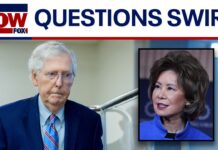
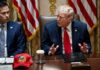
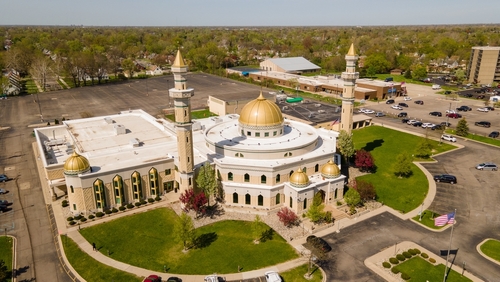
Indiana Lieutenant Governor Micah Beckwith used a conservative podcast in June 2026 to argue that mosques should not be allowed to broadcast the Muslim call to prayer over loudspeakers. He framed the issue as a basic standard for public life, saying amplified adhan, the Arabic term for the call to prayer, is unacceptable in Indiana communities. Soon after, Beckwith turned that argument into a direct policy demand, saying the state should move to ban public broadcasts of the call to prayer.
Beckwith did not soften his stance on social media. In a widely shared post on July 11, 2026, he declared that he “100%” supports banning mosques in America from “blaring” the Muslim call to prayer through loudspeakers. He presented the proposal as a defense of public order and American values, framing it as common sense rather than religious discrimination. That post triggered a wave of criticism and put his views on Islamic practice at the center of a national debate.
A Pattern Of Escalating Rhetoric About Islam
These loudspeaker comments did not come out of nowhere. They followed earlier remarks where Beckwith told a Christian web show audience, “I hate Islam,” calling it a “demonic death cult” and saying Americans need “permission to hate again.” He later repeated that he loves Muslims but believes Islam itself is evil and dangerous. That language moved beyond policy into theology, casting the religion as something to oppose on principle, not just to regulate in public space.
Beckwith’s rhetoric also sparked tension with Jewish leaders in Indianapolis. After an interfaith group condemned his “hate” language, he attacked them online as “deeply misguided.” He quoted Islamic texts to argue that his warnings about Islam’s danger are justified. That back‑and‑forth set the stage: Beckwith was already casting himself as a truth‑teller about Islam, rejected by elites but backed by many conservative Christians. The mosque loudspeaker ban fits into that wider campaign, not a one‑off comment.
Muslim And Civil Rights Groups Push Back
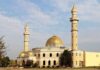
Muslim advocacy organizations responded quickly. The Council on American‑Islamic Relations and Indiana Muslim leaders accused Beckwith of spreading anti‑Muslim hate and fueling fear of their communities. They warned that his call for a ban targets a core religious practice, the public call to prayer, and sends a message that Muslims are not welcome in Indiana. For many Muslims, the sound of the adhan marks belonging and spiritual life, not noise to be erased.
Civil rights advocates have raised constitutional concerns as well. The First Amendment protects both freedom of religion and freedom of speech, blocking government from singling out one faith’s practices for punishment. Groups point out that church bells, outdoor worship music, and public Christian rallies use amplified sound every week in American towns. If the state bans only the Muslim call to prayer, it risks crossing the line from neutral noise control into government hostility toward a specific religion, which courts have repeatedly rejected.
How Other American Cities Handle Religious Sound
The fight in Indiana sits inside a larger national pattern around religious sound in public spaces. Other cities have faced the same complaints about mosque loudspeakers and have chosen a different path from Beckwith’s ban idea. In 2022, Minneapolis changed its noise ordinance to allow mosques to broadcast the call to prayer over speakers outdoors, treating it like church bells as long as the sound stays within volume and time rules. City leaders framed that move as expanding religious freedom while keeping peace for neighbors.
Hamtramck, Michigan, also revised its rules to permit amplified calls to prayer during set hours, again placing them alongside church bells and other religious announcements. Legal scholars note that American courts generally allow regulation of sound levels, times, and locations, but only if those rules apply equally to all speakers. From a conservative, common‑sense view, that equal‑treatment model makes sense: keep noise fair for everyone, but do not let government pick winners and losers among faiths. Beckwith’s approach, aimed only at mosques, moves away from that neutrality and toward state judgment about which religion may be heard.
What Is At Stake For Conservatives And Communities
Many conservatives care deeply about public order and cultural cohesion. They worry that rapid change, especially driven by elites, can erode shared norms. Beckwith taps that concern by painting mosque loudspeakers as one more step toward a country they no longer recognize. The question is whether his answer—targeted bans on a specific religious sound—honors or violates the constitutional framework that protects their own church bells, Christian festivals, and public preaching.
American conservative principles usually stress limited government, equal rules, and strong protection for religious life. Neutral noise ordinances that treat church bells, mosque calls, and other religious sound the same fit those values. They let local communities set fair limits on volume and timing without turning the state into an umpire of theology. Beckwith’s proposal, focused only on Muslim practice, invites bigger government and more cultural fights, not less. That is why this local noise dispute feels like a test of what kind of conservatism will guide the country’s next chapter.
Sources:
twitchy.com, wfyi.org, indianacitizen.org, instagram.com, en.wikipedia.org, facebook.com, yahoo.com, cair.com, newsfromthestates.com, acluaz.org, youtube.com, themarginaliareview.com, religioussounds.osu.edu