When a bill that promises “no voter ID, no republic” dies in a Senate controlled by the same party that wrote it, Americans on both the right and the left are left wondering who is really running the show.
Story Snapshot
- The SAVE America Act would require documentary proof of citizenship and voter ID for federal elections, going far beyond current law.
- The House passed the bill, but a group of Republicans joined Democrats in the Senate to block it, despite heavy White House pressure.
- Supporters say the bill is essential to stop noncitizens from voting; opponents say it would block millions of eligible Americans from the ballot.
- The fight exposes a deeper crisis of trust: many voters now suspect both parties use election rules as weapons, not safeguards.
What the SAVE America Act Would Actually Do
The SAVE America Act, branded by the White House as a “common sense” election integrity measure, amends the National Voter Registration Act to require every applicant to provide documentary proof of United States citizenship before being registered for any federal election.[4] The bill’s text makes clear that states may not process a registration unless the person presents proof such as a passport or birth certificate, paired with a valid identification document.[4][5] The proposal also directs states to remove noncitizens from voter rolls and imposes voter identification requirements for casting ballots in federal races.[2][4]
Critics across the political spectrum agree on the core mechanics while sharply disagreeing on their impact. Policy analysts at the Bipartisan Policy Center, civil rights organizations, and voting-rights advocates all describe the SAVE Act and related bills as “documentary proof of citizenship” mandates that apply whenever Americans register or update their registrations.[3][5] Legal and advocacy groups warn that millions of citizens lack ready access to these underlying documents, especially low-income renters, seniors, people with disabilities, and many in minority communities, and would therefore face new hurdles to participation.[1][2][3]
Why the Senate Stopped the Bill
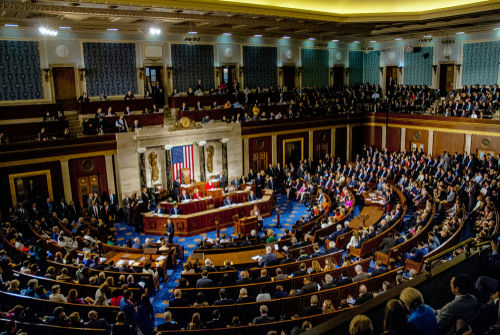
The House of Representatives passed the SAVE America Act after an intense push from the White House, which argued that only American citizens should decide American elections and that the bill simply enforced that principle.[2][4] When the measure moved to the Senate, however, it stalled after several Republican senators joined Democrats to block cloture, preventing final passage.[1][2][6] Advocacy groups celebrated the failure as a “victory for voters,” describing the bill as one of the most restrictive federal voting proposals in modern history that would have dramatically narrowed how Americans register and cast ballots.[1][6]
Opponents, including nearly sixty bipartisan local election officials and the United States Conference of Mayors, argued that federal law already makes it illegal for noncitizens to vote and requires applicants to swear under penalty of perjury that they are citizens.[1][3] They warned that the SAVE Act would add heavy paperwork burdens without clear evidence of widespread noncitizen voting, effectively turning rare problems into a justification for sweeping new controls over ordinary voters.[1][2][3] Their letters to Congress emphasized the chaos that could follow from constant list purges, new documentation checks, and the threat of civil or criminal penalties for honest administrative mistakes.[1][2]
Supporters’ Concerns About Election Integrity
Supporters of the SAVE America Act see the bill very differently, framing it as a straightforward safeguard: if only citizens can legally vote, then government should require hard proof of citizenship before anyone is added to the rolls.[4] The White House presentation insists that requiring a valid identification document and proof of citizenship is no more radical than showing identification to board a plane or open a bank account.[4] It argues that directing states to remove noncitizens from voter rolls is an essential step to restore confidence in federal elections after years of disputes, recounts, and accusations of fraud.[4]
From this perspective, the Senate’s refusal to advance the bill looks like a betrayal of a basic promise: that the system will verify who is voting before ballots are counted. Some conservatives now accuse “Republicans in name only” of siding with Democrats and unelected bureaucrats to keep the status quo, where verification rests largely on self-attestation and database checks that many voters no longer trust.[2][4] For Americans already convinced that a permanent political class protects its own power first, the collapse of the SAVE Act confirms that even election rules are negotiated above their heads.
A Deeper Fight Over Who Gets Shut Out
Beneath the slogans, this battle fits a familiar pattern in election law: one side emphasizes security and citizenship verification, while the other emphasizes access and the risk of shutting out eligible voters.[3][5] Voting-rights researchers estimate that more than twenty-one million Americans lack immediate access to a passport or birth certificate, meaning that strict documentary proof requirements could block or delay their registration.[2][3] Critics argue that these burdens would fall hardest on citizens already struggling with housing instability, medical costs, and low wages, increasing the sense that the system works only for the well-organized and well-off.[1][2][3]
Supporters counter that the right to vote is too important to be based on trust alone and that any inconvenience is a fair trade for protecting the integrity of the ballot box.[4] Opponents reply that proven cases of noncitizen voting are rare compared with the number of eligible citizens who would be entangled in new paperwork demands, investigations, or wrongful purges.[2][3][5] Both narratives tap into a shared fear: that those running the country are treating citizens as either suspects or pawns, not as the owners of a self-governing republic.
Sources:
[1] YouTube – “No Voter ID, No Republic” – SAVE Act FAILS After RINOs Turn On Trump
[2] Web – Nearly 60 bipartisan election officials express their opposition to …
[3] Web – House Passes New Version of the SAVE Act
[4] Web – Five Things to Know About the SAVE America Act
[5] Web – The SAVE America Act – The White House
[6] Web – In Victory for Voters, the SAVE America Act Fails in the Senate