
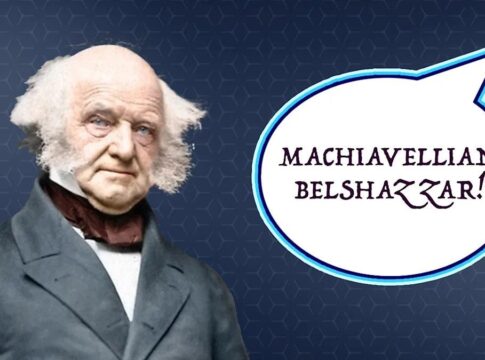
Every U.S. President has a moniker, but for every “Honest Abe” or “Silent Cal,” there is a nickname so bizarre, obscure, or politically charged that it offers a rare, unfiltered glimpse into the man and his era. These are not the flattering labels of campaign posters, but the strange, quirky, and sometimes venomous titles whispered by political rivals or pinned on them by an irreverent public. This exploration delves into ten of the oddest presidential nicknames, revealing the peculiar historical contexts, physical traits, and political battles that gave birth to these monikers.
The Physical and the Avuncular
Sometimes, the simplest observation about a president’s stature or demeanor was enough to generate a nickname that stuck, often highlighting traits the president might have preferred to downplay.
John Adams: His Rotundity The second president earned this rather unkind designation not just for his portly figure, but for his insistence on formal, almost monarchical titles for the executive office. Political opponents used the nickname to mock his perceived pomposity and size, contrasting his desire for formality with his ample girth.
James Madison: Little Jemmy Madison, the Father of the Constitution, was also the smallest U.S. president, standing only 5’4”. His slight build and short stature led to the simple, slightly patronizing nickname of “Little Jemmy,” used often by those in his political circle.
Thomas Jefferson: Long Tom In stark contrast to Madison, the statuesque Jefferson stood 6’2.5”, an unusual height for his time. The nickname “Long Tom” simply and accurately referenced his impressive height.
Grover Cleveland: Uncle Jumbo Cleveland was known for his massive frame and somewhat avuncular, or uncle-like, demeanor. “Uncle Jumbo” was a nickname that captured both his large size and the friendly, if somewhat oversized, image he projected to the public.
The Politically Charged and the Bitter
Other nicknames were not just descriptive; they were weapons. Coined by opponents, these monikers encapsulate the most contentious and controversial moments in a president’s career.
John Tyler: His Accidency Tyler became president in 1841 upon the sudden death of William Henry Harrison, the first Vice President to assume the office without having been elected President himself. Many in Congress and the public viewed his accession as illegitimate or accidental, begrudgingly referring to him as “His Accidency.” The name stuck as a bitter commentary on the unexpected nature of his presidency.
James Buchanan: Ten-Cent Jimmy As the crisis over slavery intensified before the Civil War, Buchanan made a tone-deaf and ill-fated comment that ten cents a day was a fair wage for a working man. This instantly solidified his image as a politician out of touch with the common person, and the derisive “Ten-Cent Jimmy” became a symbol of his economic insensitivity.
Rutherford B. Hayes: His Fraudulency Few nicknames carry the sting of “His Fraudulency.” This title emerged directly from the infamous and highly disputed 1876 presidential election. The outcome hinged on highly contested electoral votes in several states, which were ultimately awarded to Hayes through a Congressional commission. Critics, who believed the election was stolen from Democrat Samuel Tilden, refused to acknowledge Hayes’s legitimacy and branded him “His Fraudulency.”
The Obscure and Historically Ironic
Finally, some nicknames are fascinating because they capture unique historical practices or personal characteristics that are now lost to common knowledge.
George Washington: American Fabius This is a high-minded, rather scholarly nickname. Washington was likened to the Roman General Quintus Fabius Maximus Verrucosus, known for the “Fabian strategy” of delaying, harassing, and avoiding decisive battle until the timing was perfect. For his patient, strategic military approach during the Revolutionary War, Washington earned the revered, if obscure, title of “American Fabius.”
James Monroe: The Last Cocked Hat Monroe served during a period of transition in American style. He was the last President to wear the three-cornered, 18th-century cocked hat in public, an act that signaled the final passing of the Founding Fathers’ generation and its distinctive fashion.
Abraham Lincoln: The Ancient One While “Honest Abe” endures, a more intimate nickname used by White House insiders was “The Ancient One.” This referred not to his age, but to his perceived wisdom—a depth of insight and weariness that seemed to place him outside of normal time.
These strange presidential monikers serve as enduring linguistic fossils, preserving the political, physical, and cultural idiosyncrasies that defined the men and the tumultuous eras in which they governed. They remind us that political discourse has always been defined by wit, mockery, and the desire to reduce a complex leader to a simple, memorable label.