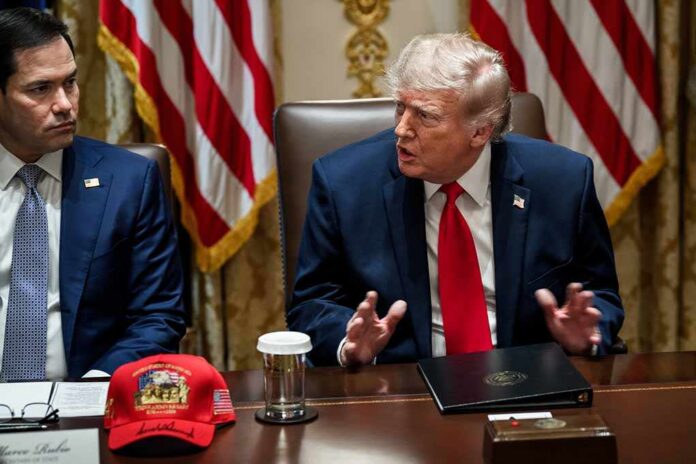
President Trump says CNN, MS NOW, and Politico are banned from the White House, effective immediately.
Story Snapshot
- Trump announced a White House ban on three outlets over what he calls “fake news.”
- The White House now runs a “Media Offenders” site to catalog disputed stories.
- Press freedom groups argue viewpoint-based bans violate the First Amendment.
- The move fits a long pattern of “access retaliation” fights over press credentials.
What Trump Announced And Why It Matters
President Trump said he is banning CNN, MS NOW, and Politico from the White House right away. He accused them of writing fiction and lies about his administration and promised more bans could follow. The announcement came by social post, not a formal briefing. The message did not define the scope: credentials, events, or working access. News reports framed the step as a direct confrontation with press freedoms and a likely legal fight over access.
The administration’s push comes alongside a new official tool: the White House “Media Offenders” page. The site calls itself a record of false and misleading stories flagged by the administration. It includes features that spotlight alleged bias and error claims. This is not a one-off swipe at a headline. It is a system that labels entire outlets as repeat offenders. That framing sets the stage for a broader access battle, not just a single dust-up.
The Legal And Constitutional Fight Taking Shape
Press advocates say the government cannot punish a newsroom over viewpoint. The Reporters Committee for Freedom of the Press has argued that excluding an outlet because of its editorial judgments violates the First Amendment. The Knight Institute has pressed the same point in recent access cases. They argue the rule is simple: the government can set neutral rules, but it cannot reward praise and punish criticism with access. Courts take that claim seriously.
Commentators also point to a long-standing legal line: government may manage space and security, but cannot single out dissent. Freedom Forum explains that access limits cross the line when tied to viewpoint. That means a White House can organize who sits where and how many get in. It cannot say, “Your stories anger us, so you are out.” That test often decides these fights in court. It also shapes how any new bans will be judged.
How This Fits A Known Pattern Of Access Retaliation
Scholars describe a recurring tactic in modern politics: access retaliation. A leader controls a scarce resource—proximity, questions, and follow-ups—and uses it to reward friends and freeze out critics. This is not formal censorship. It is a signal about who gets to ask the first, second, or any question at all. The threat alone can chill reporting. Newsrooms must choose between softening coverage or losing a front-row seat. That pressure has real effects beyond the headline.
Prior fights over credentials show how this usually unfolds. An administration announces a limit or ban. The targeted outlet objects. Advocacy groups file briefs. Judges ask whether the rule is neutral, clear, and applied fairly. If the answer is no, access gets restored. If the government shows a clear, security-based reason that is viewpoint-neutral, it can win. Those are the rails this dispute will likely run on. The facts and paperwork will matter more than the rhetoric.
The Conservative Case For Clear, Neutral Rules
Limiting chaos in the briefing room makes sense. The White House should not have to host disruptors, grandstanders, or serial fabricators. But the standard to exclude must be clear, neutral, and due-process based. Bans grounded in viewpoint invite abuse by any future administration. Today it may target outlets the right distrusts; tomorrow it could target outlets the left dislikes. The steady rule of law guards everyone’s microphone, not just today’s allies.
Common sense suggests a cleaner path. Set transparent credential rules that focus on conduct, accuracy corrections, and security—not editorial stance. Enforce them evenly, document violations, and offer an appeal. That keeps order without chilling tough questions. It also strengthens the administration’s hand if a dispute hits court. A process that treats critics and fans the same builds credibility, which is the currency any White House needs with the public and the press.
What To Watch Next
Watch for whether the White House formalizes the ban into credential policy. Look for letters, revocation notices, or updated rules. Expect legal filings from advocacy groups if the ban blocks pool access or briefings. Track whether the “Media Offenders” database becomes evidence to justify bans, or stays a messaging tool. The fight here is not only about three outlets. It is about whether access is a privilege for praise or a duty of office amid tough, sometimes unfair, coverage.
Sources:
cbsnews.com, timesnownews.com, staradvertiser.com, rollingstone.com, thewrap.com, dailysignal.com