
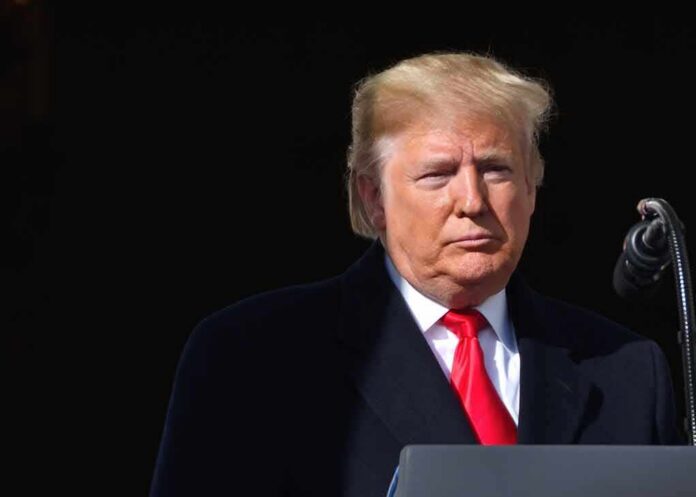
Donald Trump says Iran wants him dead—and if they succeed, he wants Iran’s military hit back, hard.
Story Snapshot
- Israel shared intelligence that Iran devised a new plan to assassinate President Trump
- U.S. agencies saw a drumbeat of threat chatter and boosted Trump’s security in response
- Trump publicly claims he left instructions to bomb Iranian targets if he is assassinated
- The warning lands in a world already shaken by rising political violence and deep polarization
New Intelligence, An Old Enemy, And A Very Personal Threat
Israeli officials recently gave United States leaders fresh intelligence that Iran was working on a new plan to assassinate President Donald Trump. Reports say the information described Iranian officials considering a direct move against Trump himself, not just vague talk about revenge. Iran’s rulers have vowed for years to strike back for the 2020 drone attack that killed General Qassem Soleimani, one of their top military figures. That long-standing promise now appears tied to a specific threat aimed at one man.
Sources told American media that this warning arrived as the latest ceasefire between the United States and Iran collapsed and both sides traded military strikes. One source said United States intelligence had already picked up weeks of chatter about possible plans to kill Trump, but the Israeli tip pointed to a more focused plot. Another said Iran’s intentions are not new, but the tone and detail of talk among Iranian hardliners raised alarms inside allied services.
Washington’s Guard Goes Up Around Trump
The United States Secret Service, which protects presidents and former presidents, responded by increasing security around Trump. A congressional document notes that agents surged resources and assets once intelligence reached them about an Iranian plan, including information from a human source. Protection for Trump was already tight after previous attempts on his life, but this new warning pushed the government to treat the threat as more than online noise or political bluster.
Security officials did more than add extra bodyguards. Reports describe changes to Trump’s travel plans, including switching the aircraft used for some flights as a precaution. That move did not come from a single clear plot with names and dates but from the sense that Iran, or its partners, were actively exploring ways to strike. From a common sense and conservative viewpoint, this is exactly why you maintain strong borders, serious counterterror work, and a defense posture that treats foreign regimes like Iran as hostile until they prove otherwise—which they have not.
Trump’s Own Response: A Dead Man’s Switch Aimed At Iran
Trump has not stayed quiet about the danger. At a recent gathering in Turkey, he told reporters he is “No. 1 on the kill list for Iran” and said he had seen intelligence that he appears on every list of targets drawn up by Iranian officials. He framed the threat as proof that Iran fears his policies and that his past decisions, including killing Soleimani, still shape how Tehran views the United States.
Trump has gone even further by claiming he left written instructions for the United States military to bomb Iran if he is assassinated and the attack is traced back to Tehran. That idea is simple and blunt: kill an American president, and your regime pays in blood and steel. From a conservative vantage point, this aligns with the belief that peace is kept by clear red lines and real consequences, not by polite speeches or endless “dialogue” with a revolutionary government that chants “Death to America.” Whether such instructions would be followed in practice is another matter, but the signal is meant for Iran to hear now.
Intelligence Games, Political Fire, And The Risk Of Overreach
Not everyone inside the United States government sees the Israeli warning as purely neutral intelligence. Some officials told reporters they suspect Israel also wants to shape Trump’s choices as he weighs deeper military strikes against Iran. Another report from Israel-based outlets notes American officials believe similar threat information has been passed along before, sometimes in general terms, sometimes in more focused form, often right when decisions on Iran policy are on the table.
The Israeli/US intelligence cooperation shared the most recent reported Iranian plot to assassinate President Donald Trump comes from intelligence shared by Israel with the U.S. in the past week (around July 9, 2026).
According to reports from The Wall Street Journal and CNN… pic.twitter.com/sJteNFyAJb
— RealPastorMark (@mark_pasto64312) July 10, 2026
Critics worry that foreign partners may use Trump’s personal safety as leverage, knowing that threats to his life stir his instinct to hit back. A serious conservative reading of this concern does not deny the danger from Iran. Instead, it asks for disciplined judgment: punish real plots, but do not let any ally tug the United States into wider war based on unvetted reports. Strength means both readiness to strike and refusal to be played by anyone, friend or foe.
A Deadly History And A Polarized Present
Direct assaults on American presidents and candidates have happened 15 times in history, and five of those attacks were fatal. Today’s environment is not calmer. Studies show political assassinations are more likely when a country is deeply polarized and its politics feel unstable. Recent efforts to track political violence in the United States found hundreds of threatening incidents in just a few years, many aimed at high-profile conservative figures.
Trump himself has already survived multiple attempts on his life, including a shooting at a campaign event that forced agents to rush him offstage and into medical care. Analysts at centers that study terrorism say politically motivated murders are still rare compared to overall crime, but the trend line is moving in the wrong direction. That reality makes this alleged Iranian plot more than a distant spy story. It sits at the crossroads of foreign hatred, domestic rage, and a political climate where killing a leader feels, to a growing fringe, like a way to make a point. That is why Trump’s warning, and his promised response, should grab every American’s attention.
Sources:
townhall.com, cnn.com, timesofisrael.com, wsj.com, youtube.com, facebook.com, fox32chicago.com, common.usembassy.gov, pbs.org, brookings.edu, cato.org