
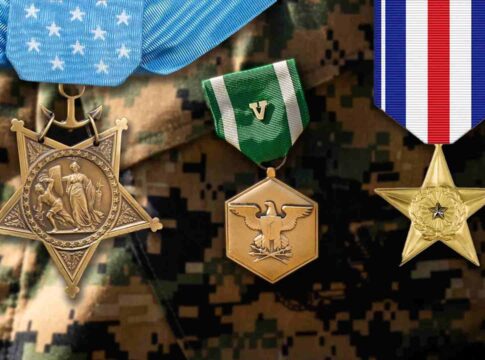
While the Purple Heart—awarded for wounds sustained in combat—is perhaps the most recognized symbol of sacrifice, the U.S. military’s system of decorations extends into a strict hierarchy of awards for extraordinary heroism, leadership, and meritorious service. These honors, approved by the Department of Defense and often presented by the President or Congress, represent the nation’s highest formal recognition of duty and valor.
Here are seven of the most distinguished U.S. military honors, ranked by general precedence, that recognize acts far exceeding the call of duty.
1. Medal of Honor (MoH)
- Established: 1861 (Civil War)
- Criteria: The nation’s highest military decoration for valor. It is awarded for conspicuous gallantry and intrepidity at the risk of life above and beyond the call of duty while engaged in action against an enemy of the United States. The act must be witnessed and involve a degree of risk and self-sacrifice so high that it clearly distinguishes the recipient.
- Significance: Because it requires an act “above and beyond the call of duty,” it is the only award that does not require the recipient to be actively engaged in combat at the moment of the action.
2. Service Crosses (Army, Navy, and Air Force)
The second-highest military decoration, awarded by each respective military branch.
- Distinguished Service Cross (Army)
- Established: 1918 (WWI)
- Criteria: Extraordinary heroism in connection with military operations against an armed enemy force. The required level of heroism is slightly below that required for the Medal of Honor, but still recognizes profound courage.
- Navy Cross (Navy and Marine Corps)
- Established: 1919
- Criteria: Extraordinary heroism while serving in a combat area, which can include operations not involving direct conflict with an enemy but still involving military actions.
- Air Force Cross (Air Force and Space Force)
- Established: 1960
- Criteria: Extraordinary heroism in military operations involving conflict with an opposing foreign force.
3. Silver Star Medal (SSM)
- Established: 1918 (WWI)
- Criteria: Awarded for gallantry in action. The heroic act must be performed with marked distinction and must be significantly greater than that required for the Bronze Star Medal. It is the third-highest military combat decoration and is often awarded for bravery in the heat of battle.
4. Distinguished Service Medal (DSM)
- Established: 1918 (WWI)
- Criteria: Awarded for exceptionally meritorious service to the government in a duty of great responsibility. Unlike the MoH or Service Crosses, the DSM recognizes extraordinary service and achievement, typically at the highest echelons of command, rather than direct combat heroism.
5. Legion of Merit (LM)
- Established: 1942 (WWII)
- Criteria: Awarded for exceptionally meritorious conduct in the performance of outstanding services and achievements. It is a highly prestigious award often given for outstanding non-combat duties, strategic leadership, and administrative excellence over a period of time, and is frequently presented to foreign dignitaries and military leaders.
6. Distinguished Flying Cross (DFC)
- Established: 1926
- Criteria: Awarded for heroism or extraordinary achievement while participating in aerial flight. This decoration recognizes the risks and specialized acts of bravery unique to aviation, whether the action is a combat mission or a dangerous non-combat flight.
7. Bronze Star Medal (BSM)
- Established: 1944 (WWII)
- Criteria: Awarded for heroic achievement, heroic service, meritorious achievement, or meritorious service in a combat zone. It is the fourth-highest combat award and the ninth-highest military award overall. It can be awarded either for a specific heroic act (with a “V” for Valor device) or for continuous meritorious service in a hostile area.