
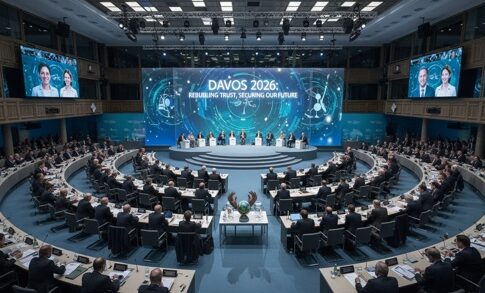
Amidst a chaotic gathering, Al Gore’s vocal criticism of U.S. Commerce Secretary Howard Lutnick has reignited debates over climate policy and international diplomacy.
Diplomatic Discord at Davos
During a high-profile dinner at the World Economic Forum in Davos, U.S. Commerce Secretary Howard Lutnick faced public heckling from attendees, including former Vice President Al Gore. The incident occurred as Lutnick promoted the Trump administration’s economic agenda. The disruption became evident when Gore and others voiced their disapproval of Lutnick’s remarks on European energy policies, leading to a dramatic walkout by Christine Lagarde, president of the European Central Bank.
The dinner, hosted by BlackRock CEO Larry Fink, was abruptly called off before dessert. The tension at the event underscores the ongoing friction between the U.S. and European allies, particularly regarding climate action and energy strategies. President Trump, who arrived in Davos the following day, continued to criticize Europe’s energy policies, further straining diplomatic relations.
Clashing Perspectives on Energy and Climate
The incident at Davos reflects broader conflicts between the Trump administration’s nationalist economic policies and the globalist agenda championed by European leaders. Lutnick’s criticism of Europe’s energy transition strategy, which he argues over-relies on renewables and China, directly challenges the climate policies advocated by Al Gore and other international figures. Lutnick’s remarks, published earlier in an op-ed in the Financial Times, set the stage for the evening’s contentious atmosphere.
Al Gore, known for his climate activism, defended the net-zero energy transition strategies and dismissed the Trump administration’s approach as reckless. His reaction at the dinner was a culmination of long-standing tensions between U.S. policies and global climate initiatives. Meanwhile, European leaders, like French President Emmanuel Macron, continue to advocate for coordinated international action, emphasizing the importance of multilateral cooperation over nationalist policies.
Implications for International Relations
The fallout from the Davos dinner illustrates the significant diplomatic challenges facing the Trump administration. The public nature of the heckling incident has amplified media coverage, highlighting the discord between the U.S. and its European allies at a time when international cooperation is crucial. This event raises questions about the ability of forums like the World Economic Forum to maintain their role as neutral spaces for elite dialogue.
Al Gore heckles Commerce Secretary Howard Lutnick during dinner in Davos: Reports https://t.co/5rYnyrYOTW
— Just the News (@JustTheNews) January 22, 2026
As the Trump administration continues to challenge international institutions and prioritize America-first policies, the strain on transatlantic relationships is likely to persist. The incident at Davos serves as a reminder of the deep ideological divides that characterize current global politics, with climate and energy policy at the forefront of these debates.
Sources:
New Republic: Donald Trump, Howard Lutnick at Davos
The Daily Beast: Trump Goon Blasted with Heckles and Jeers
Washington Times: Al Gore Davos Yesterday