
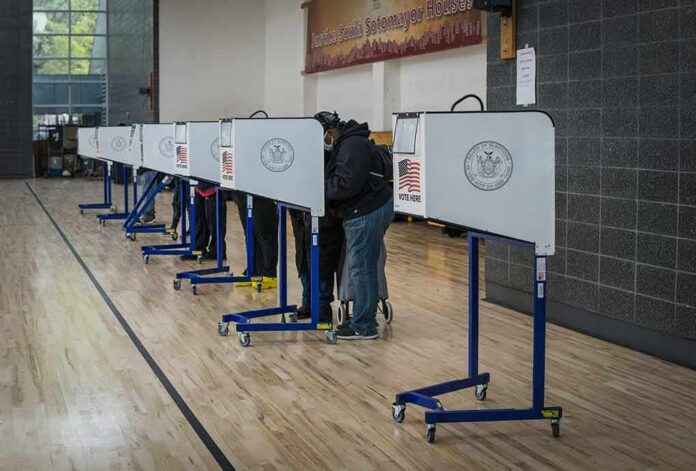
Trump turned one primary night into a bragging right, and the headline was blunt: his endorsed candidates kept winning.
Quick Take
- Trump said his backed candidates posted a near-perfect night, and allies framed it as proof of his grip on Republican voters.
- NBC News reported that Trump-endorsed candidates won or advanced in 37 Republican primary races overnight.
- The result included a mix of major races and a familiar Trump wrinkle: loyalty tests that reward candidates who stay close to him.
- Political research says endorsements can help in primaries, but they usually work best when the race already leans that way.
A Night Built for Trump’s Message
Trump used the election-night results to sell a simple story: his endorsements still move Republican primaries. The biggest number driving that message was 37, the count of candidates who won or advanced in Republican primaries overnight. NBC News said those victories underscored Trump’s continued influence over Republican voters.
The political value of that kind of night is less about one race than about the pattern. Trump has long treated endorsements as a scoreboard for power inside the party. When the winners pile up, he gets to say his grip is not fading, even when the party keeps changing around him.
Why the Trump Endorsement Still Matters
Trump’s support does not guarantee victory by itself, but it remains a serious boost in Republican primaries. Research on endorsements finds that they are predictive, especially in intraparty contests, even if they are not the only force shaping results. That matters because primary voters often use endorsements as a shortcut for judging who belongs in the party’s lane.
That is also why Trump’s record gets so much attention. His backing can signal who is loyal, who is acceptable, and who can survive a fight with the party base. In a crowded primary field, that signal can matter as much as money or name recognition. It is not magic. It is leverage.
What the Numbers Really Show
The clean sweep language can be persuasive, but it needs context. Some victories come from strong candidates who were already well positioned. Other wins come from open races, weak opposition, or districts that lean heavily to one side. In other words, the endorsement often rides on top of a race that already had a clear shape before Trump ever weighed in.
That is why the smartest reading of the night is not that Trump can wave a wand and decide every outcome. It is that he remains the most powerful single voice in the Republican primary ecosystem. His endorsement can lift a candidate, scare off rivals, and push party activists toward a side that already has momentum.
The Bigger Republican Story
For Republicans, the deeper issue is not just whether Trump wins often. It is whether his influence now defines the party’s center of gravity. The overnight results suggested that candidates still have a strong reason to seek his blessing and avoid his anger. That is especially true for candidates who want to look like true believers to the MAGA base.
After democratic socialist candidates won primaries in NY, CO & beyond, Trump dusted off the oldest playbook in American politics: call them communists. This label is historically wrong and politically calculated… read more: https://t.co/EtHCxvDSg6
— DCReport (@DCReportMedia) July 15, 2026
That dynamic explains why Trump can turn a primary night into a loyalty parade. His endorsements are not just about picking winners. They are about setting the terms of belonging. For a party still organized around his brand of politics, that may be the most important victory of all.
Sources:
mediaite.com, wabcradio.com, usatoday.com, forbes.com, facebook.com, studocu.com, washingtonpost.com