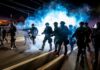


Seven gunshots tore through a family car on a busy New York block, and the fallout now stretches from a traumatized street to the White House.
Story Snapshot
- New York City’s mayor condemned an Immigration and Customs Enforcement shooting as “unconscionable.”
- Early reports said a five-year-old was inside the car when agents opened fire.
- Witnesses described four to seven rapid shots in a crowded Marble Hill area.
- Homeland Security says agents targeted a Dominican national with a prior conviction.
What happened on that Marble Hill block
Federal immigration agents moved on a car around 4 p.m. in Marble Hill and opened fire. New York City Mayor Zohran Kwame Mamdani called the scene “an unconscionable and incredibly serious situation” and said early reports placed a child in the car with the man who was shot. The New York Police Department said the wounded man was conscious and receiving care at a local hospital. Bystanders described a fast burst of gunfire on a public street lined with neighbors and stores.
Homeland Security’s account focused on the target. The agency said Immigration and Customs Enforcement officers were running a “targeted enforcement operation” to arrest a Dominican national with a grand larceny conviction and several prior arrests, when an officer fired and wounded the man. Officials said agents rendered aid and the man survived. That claim does not answer the core neighborhood question: why did agents fire into a vehicle in a crowded area at that hour.
Was a child in the car and why that changes everything
Multiple reports, starting with City Hall, said a five-year-old child was in the vehicle when shots were fired. Some witness accounts are less firm and mention only a visible baby seat. That detail matters more than any talking point. If a child sat inside, every bullet risked a needless tragedy. It also undercuts any claim that the tactic kept the public safe. The mayor’s push to move immigration arrests away from schools, hospitals, and sidewalks flows from this risk.
Witnesses told local television they heard four to seven rapid shots without clear commands first. That lines up with familiar use-of-force concerns in urban stops. Quick volleys, tight space, and unclear lines of fire add up to danger for bystanders. The standard in American law enforcement is simple to state and hard to honor under stress: use deadly force only to stop an immediate threat to life. That standard does not bend because the target has a record.
The accountability gap and why speed of facts matters
The first hours after a shooting set public belief. Here, City Hall spoke fast, witnesses spoke faster, and federal immigration officials spoke late and narrowly. The delay left room for outrage to harden. A bystander video reviewed by The New York Times showed city officers carrying the wounded man toward hospital care while federal agents stood back. That image travels faster than a memo and shapes how people judge motive, risk, and basic competence.
On Thursday, October 8, 2026, around 4 p.m. ET, an ICE officer shot and wounded a man during a targeted enforcement operation in New York City’s Marble Hill neighborhood (near West 225th Street and Marble Hill Avenue, described in reports as Upper Manhattan / the Bronx).
The man,…— @SpiceRunner (@Truth_Sniper_) October 9, 2026
Past patterns make this more than a one-off. Investigations and tallies show immigration agents have used firearms in public spaces again and again over the past decade. The counts vary, but the picture is steady: shootings near traffic, stores, and homes, with bystanders close. Even a senior Department of Homeland Security official has emphasized training that warns against shooting at vehicles or creating frontal approaches. Policy says one thing; streets often show another.
Where common sense and conservative values converge
Limited government means force with limits. Law and order means order first. Shooting into a car on a neighborhood block violates both if no immediate threat to life exists. Conservatives also stress family and the safety of children. If a child was inside that car, every justification must clear an even higher bar. The right fix is not a press release. Release the body-camera and dash video, the radio logs, and the use-of-force review. Meet facts with facts.
What answers New Yorkers still need
Key questions remain. Did the driver present a clear, immediate threat that could not be stopped by boxing in the car or using less-lethal tools. Where was the child seated and was the line of fire safe for that seat. Who gave the go signal to fire and did that match written policy. The city and federal government can settle this fast with records, video, and a plain-language timeline. Until then, the street will believe what it saw and heard.
Sources:
mediaite.com, yahoo.com, cbsnews.com, aljazeera.com, nbcnewyork.com, nytimes.com, abc7.com, criminallegalnews.org, pbs.org