
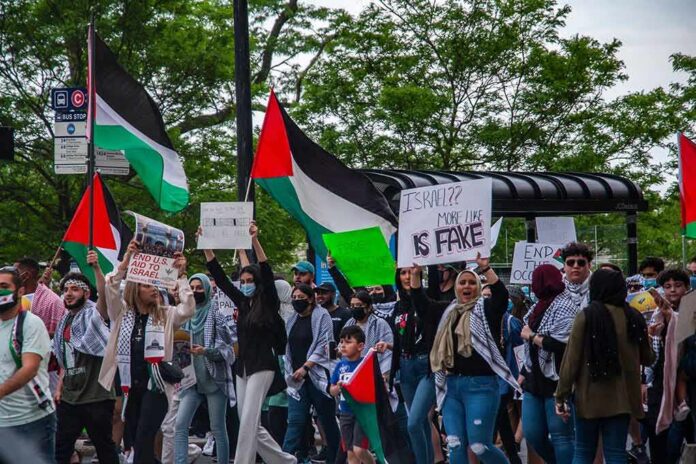
Hundreds of activists surged into a candlelight vigil at Union Square and turned mourning into a melee.
Story Snapshot
- Reports say pro-Palestinian protesters swarmed seats and disrupted the vigil.
- Chants and crowd pressure clashed with a planned quiet memorial.
- Police presence grew as dueling groups converged at Union Square.
- Prior Union Square vigils showed a calmer, cease-fire tone.
What unfolded at Union Square and why it matters
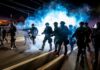
New York City’s Union Square hosted a planned candlelight vigil to mourn those killed on October 7, held by Israelis for Peace and allied groups. As attendees gathered, a large pro-Palestinian march moved from City Hall to the plaza. Reporters on scene said more than 200 demonstrators flooded the area and took over seating meant for mourners, upending the solemn plan and triggering chaos. Local television updates also framed the march as aimed at the vigil’s location.
Police vehicles and officers were already nearby as both pro-Israel and pro-Palestinian crowds converged. Coverage described a tense setting, with authorities preparing for conflict as emotions ran high. The meeting of two opposed groups in one tight space raised the risk of intimidation, even without mass arrests or serious injuries reported. The mix of flags, signs, and competing chants overwhelmed the vigil’s quiet format and left many attendees boxed in or shouted down, according to contemporaneous reports.
Chants, crowding, and the line between protest and coercion
Disruption at a memorial hits differently than a rally on a corner. Courts and campus rules often treat surrounding people, occupying reserved spaces, or drowning out speakers as a harder line than parallel protest nearby. Legal scholarship points to that line: chant all you want in a public space, but do not surround or commandeer a planned event or those attending it. That standard aligns with basic civics and common sense. Free speech thrives when each side can speak without crowd pressure forcing silence.
Advocacy groups tracking antisemitic incidents also warn that certain slogans and behaviors at demonstrations can morph into harassment when aimed at Jewish events. Their audits have flagged that high-intensity protest activity often correlates with Jewish attendees feeling targeted and unsafe, especially when rhetoric links Jewish identity to collective blame. The Union Square episode fits that risk pattern: a memorial space got absorbed by a counter-march, and the grief ritual was disrupted, not merely debated.
Claims of “peace vigil” and the reality of the 2026 disruption
Coverage from past Union Square gatherings showed a different vibe. In 2024, speakers at a similar location called for a cease-fire, a hostage deal, and restraint, while a mixed crowd maintained a solemn tone. Those scenes prove New York can hold hard conversations with decency. But the 2026 reports describe something else: a swarm, chanting, and a takeover of vigil seating, which undercut the event’s core purpose. A protest beside a vigil is one thing; a protest inside the vigil is another.
NYC Mayor Zohran Mamdani first seen arriving at Peace Vigil at 7:38 PM (0:24.5 of video) with Palestinian supporters separated by NYPD police, security and steel barriers, Union Square, Manhattan, NYC, Wednesday, October 7, 2026.
THREAD
1/ pic.twitter.com/QwcbNZTcfe— DataInput (@datainput) October 8, 2026
Local dispatches also noted political crosscurrents as public figures arrived and faced jeers amid the din. That drama, while newsworthy, is not the main point. The main point is the standard we set for civic space. Let people mourn their dead in peace. Hold protests where all can speak, not where one crowd’s volume and mass overwhelm the other’s right to assemble. New York can protect both rights at once, but it requires firm lines, fair enforcement, and shared norms.
What New York should do next
City leaders and police should clarify time, place, and manner rules for overlapping events. Keep buffer space that preserves access to memorials. Post clear perimeters and protect entry and seating. When a counter-march arrives, redirect it to an adjacent zone with full amplification and visibility. These content-neutral steps are lawful and effective, and they honor both protest rights and the dignity of mourning. New Yorkers know how to crowd a sidewalk; we can also respect a candle’s light.
Sources:
redstate.com, nytimes.com, abc7ny.com, columbianewsservice.com, amny.com