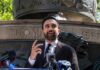
Senator Jon Ossoff of Georgia just topped a national poll of 2028 Democratic presidential contenders, edging out Kamala Harris and Alexandria Ocasio-Cortez in a survey released this week.
Story Snapshot
- Emerson College Polling’s national survey of 1,000 registered voters, taken November 14-16, 2026, put Ossoff first among named Democrats at 17 percent.
- Ossoff led in both versions of the question: the open-ended format and the closed-ended list of named candidates.
- Harris trailed closely behind at 16 percent in the closed-ended question, with Ocasio-Cortez and Pete Buttigieg not far off the pace.
- The result spread fast across multiple outlets within days, fueling chatter about Ossoff as a fresh face for a party still searching for direction.
A Freshman Senator Jumps To The Front Of The Pack
Ossoff has barely settled into his second Senate term, yet he now sits atop a national primary poll most Americans didn’t know existed two weeks ago. Emerson College surveyed 1,000 registered voters and found Ossoff drawing 17 percent support, ahead of every other name tested in the Democratic field.
The poll tested the field two separate ways. In the open-ended question, where voters named a candidate without prompting, Ossoff led with 17 percent, followed by Ocasio-Cortez at 12 percent, Gavin Newsom at 8 percent, and Harris at just 6 percent. When pollsters read off a list of names instead, the race tightened considerably, with Ossoff at 17 percent and Harris right behind at 16 percent.
Why The Margin Matters More Than The Headline
That one-point gap over Harris sits inside the poll’s margin of error of plus or minus 3 percentage points. Statistically, Ossoff and Harris are in a dead heat, not a blowout. Several headlines still described Ossoff as surging past the field, a framing the underlying numbers only partly support.
Buttigieg landed at 14 percent in the closed-ended question and Newsom at 11 percent, meaning four candidates bunched within six points of each other. That kind of clustering is common in early polling, where voters are reacting to familiar names rather than developed platforms or campaign promises. Crowded fields like this one tend to shift fast once candidates start actively campaigning.
The Obama Comparison Deserves A Reality Check
Pundits have started drawing parallels between Ossoff and Barack Obama, a young senator who seemed to come from nowhere to win the nomination. History actually cuts the other way on early polling. Obama trailed Hillary Clinton in nearly every pre-primary survey through 2007 and didn’t pull ahead until after Super Tuesday in 2008.
Political scientist William Mayer’s research backs up that caution. He found that candidates polling above 34 percent the September before the election won their party’s nomination six times out of eight. Everyone below that mark, in his review, lost. Seventeen percent is a long way from 34, and Ossoff’s lead is a single poll, not a pattern across a field of surveys.
Other Polls Tell A Different Story Entirely
Not every survey agrees with Emerson’s snapshot. A Verasight poll taken around the same window showed Harris leading the Democratic field outright at 18 percent, with Ossoff well behind her. On Point Polling’s mid-November survey had Harris at 31 percent, more than double Ossoff’s share. Those conflicting numbers underline a basic truth about primary polling this far out: question wording, candidate lists, and sample composition can swing results dramatically from one pollster to the next.
Emerson College
11/14 – 11/16
489 RVPresident Primary Ballot Test
🔵 Jon Ossoff — 16.79%
🔵 Alexandria Ocasio-Cortez — 12.09%
🔵 Gavin Newsom — 8.39%
🔵 Kamala Harris — 6.12%
🔵 Pete Buttigieg — 6.08%
🔵 Andy Beshear — 4.0%
🔵 Mark Kelly — 2.58%
🔵 Josh Shapiro — 2.04%…— DDHQ Data (@DDHQdata) November 19, 2026
No campaign apparatus, fundraising operation, or formal declaration has surfaced to suggest Ossoff is preparing a 2028 run. He just finished a Senate re-election fight in Georgia, and his name recognition from that race likely explains part of his showing here. Voters often default to familiar names in early surveys, long before any candidate has built a national organization or laid out a policy agenda.
What Comes Next For A Party Still Searching
Democrats face a genuinely open field heading into 2028, with no incumbent and no obvious heir apparent after Harris’s 2024 loss. That vacuum invites exactly this kind of speculative polling, where media outlets and prediction markets chase headlines on numbers that remain fluid for years. Conservative voters watching the scramble might reasonably conclude the party still lacks a clear direction or a unifying figure. Whether Ossoff becomes a serious contender or fades like countless early frontrunners before him will depend on what he actually builds, not on one November poll.
Sources:
thegatewaypundit.com, newsobserver.com, x.com