
Trump landed in Manila and immediately unveiled a U.S.–Thailand trade breakthrough aimed at slashing Thai barriers for American goods.
At a Glance
- White House said U.S. and Thailand reached “substantial conclusion” on a reciprocal trade agreement
- Framework targets Thai tariffs and non-tariff barriers for U.S. autos, food, medical gear, and drugs
- Trump cited an estimated $2.6 billion in added Thai purchases of U.S. farm products
- Announcement came at the ASEAN summit in Manila with key regional leaders present
Trump Uses Manila Stage To Lock In a Concrete Trade Framework
The White House said the United States and Thailand had reached “substantial conclusion” on an Agreement on Reciprocal Trade. President Trump and Thai Prime Minister Anutin Charnvirakul issued a joint statement in Manila, committing both governments to complete internal steps for signature and entry into force. The statement positioned market access for American exporters at the center. It reflected months of bilateral talks and followed a 2025 framework that set the runway for a final package.
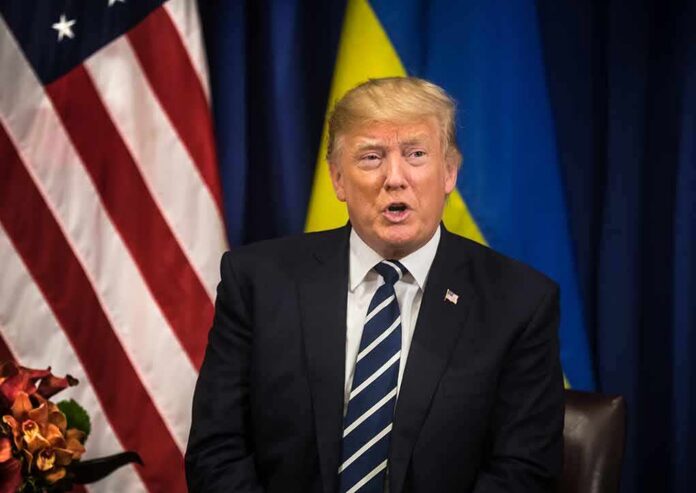
Trump detailed the deliverables at the signing event. He said Thailand would remove tariffs on U.S. exports and reduce “substantial” non-tariff barriers affecting American vehicles, medical devices, pharmaceuticals, ethanol, and poultry. He also said Thailand would buy about $2.6 billion more in U.S. farm goods. He framed these steps as quick wins for American workers and farmers, while both sides moved toward formal signature in the coming weeks.
What “Reciprocal” Means In Practice For U.S. Exporters
The reciprocal label points to matched openings rather than one-sided concessions. The White House said the framework centers on two-way market access that favors American industry through tariff removal and regulatory fixes. Reporting noted that Thai barriers would ease on most American goods, including autos and food products, plus health-related items where standards often bite exporters the hardest. This mix mirrors modern trade deals, where the real choke points are rules and customs, not only posted tariffs.
Farm and factory sectors stand to gain first if cuts bite quickly. Automakers want fewer certification hoops and faster port clearance. Medical device and pharmaceutical firms look for predictable standards and approvals. Ethanol and poultry benefit from science-based health rules and transparent quotas. Each win unlocks orders, shifts shipping schedules, and tells investors the route is open. That is why leaders announce headline terms early: it signals to buyers to start planning loads now while lawyers finish the fine print.
Why Announcing At ASEAN Matters Geopolitically
The timing and the venue sent a wider signal. Trump unveiled the deal on day one of his Asia trip at the ASEAN summit in Manila. He also met with leaders from India, Japan, and Australia in the Quad format. The choreography showed that economic statecraft and coalition building travel together. It told partners that the United States will pair security talks with real market openings that reward countries that engage on fair terms. That blends influence with immediate commercial upside.
Thailand sits at a key junction in Southeast Asia’s supply chains. Better access there can radiate across the region, from auto parts to agri-food processing. For American conservative common sense, the logic is plain: sell more, depend less on rivals, and cut the red tape that blocks honest trade. Deals that pry open markets beat lectures. They also set a benchmark other partners must meet if they want closer ties with Washington and American buyers.
Next Steps: From Ceremony To Shipments
Both governments now turn to the steps that make the agreement live: legal scrub, tariff schedules, regulatory notices, and domestic procedures. The joint statement flagged that internal processes must finish before signature and entry into force. Trump said the final text would come in the weeks ahead, keeping the pressure on agencies to deliver promptly. That sequence is standard in trade diplomacy. Markets hear the direction of travel and begin to price in new access while paperwork catches up.
The bottom line is straightforward. Washington and Bangkok used the Manila spotlight to lock in a reciprocal trade framework aimed at cutting Thai tariffs and barriers on a broad set of American goods. The package highlights concrete sectors, puts numbers on farm demand, and links trade with a wider regional push. The result is a clear economic play at the start of a high-stakes Asia trip, with follow-through now moving from podium to port.
Sources:
redstate.com, whitehouse.gov, npr.org, charlotteobserver.com