Controllers told the UPS crew to yield; minutes later, two jets touched wingtips and metal in Miami.
Story Snapshot
- FAA said controllers instructed the UPS pilots to give way to the Copa jet.
- Copa’s 737 wingtip struck the nose of a UPS 767 while taxiing, causing minor damage.
- ATC audio captured “Somebody hit us,” and UPS replied, “Yeah, we went too far”.
- Airport officials set the time around 9:15 p.m. at a taxiway intersection.
What Happened On The Ground In Miami
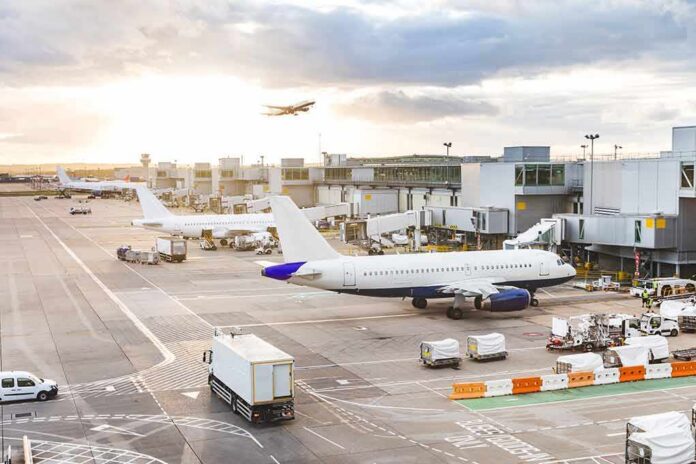
Two aircraft made contact at Miami International Airport around 9:15 p.m., according to the airport’s communications director. The incident occurred at the crossing of two taxiways, not on a runway, which limited speeds and likely reduced risk. The Federal Aviation Administration reported that air traffic controllers had instructed the UPS cargo crew to yield to the Copa Airlines passenger flight before the contact occurred. The Copa Boeing 737’s wingtip struck the nose of the UPS Boeing 767 as both planes taxied for their next movements.
Radio calls caught the moment. A Copa pilot reported, “Somebody hit us,” moments after the contact. A UPS pilot then said, “Yeah, we went too far, and then he, he clipped us with the wing”. These short exchanges match the physical description the Federal Aviation Administration shared: a wingtip-to-nose strike during low-speed taxi. Media outlets reported two injuries tied to the event, though early airport messaging first said none were reported. Investigators continued routine checks on both aircraft and the taxi route.
Why Controllers, Crews, And Concrete All Matter
Surface events like this are rarely about one switch flipped wrong. They arise from human workload, cockpit task saturation, and complex airport geometry. Federal safety bulletins cite human limits, situational awareness, and confusing taxiway layouts as frequent factors in runway and taxiway incidents. The Department of Transportation’s inspector general reported that pilot deviations made up nearly 62 percent of runway incursions in fiscal year 2024, showing how often small human slips can set the stage for risk on the ground. Those patterns help explain, not excuse, what happens on busy ramps.
Taxiway conflicts are a known slice of surface risk. A Federal Aviation Administration technical study recorded hundreds of taxiway incursions within a larger pool of surface events, underscoring that danger exists off the runway as well. At major hubs, crossing points can stack moving aircraft, ground vehicles, and radio calls. When a controller tells one aircraft to give way, the burden shifts to that crew to hold short, slow, or stop in time. That is simple in theory and tricky in tight geometry with heavy workloads.
The Working Narrative From Records So Far
The Federal Aviation Administration’s statement placed the yield instruction with the UPS crew before contact occurred. The physical damage lines up with that account: the Copa wingtip met the UPS nose during taxi. The short radio exchange adds a plain-language thread: one pilot said they had been hit, and the other said they went too far. Each piece builds a coherent picture that the UPS aircraft moved into or remained in the conflict zone as the Copa aircraft passed. Officials had not yet issued a final cause at the time of reporting.
Two planes collided on the tarmac at Miami International Airport, a day after a nationwide ground stop triggered widespread chaos and left hundreds of thousands of passengers stranded at airports across the US. The collision occurred when the wingtip of a Copa Airlines Boeing 737… pic.twitter.com/1ZFjjA6zme
— JioNews (@JioNews) November 15, 2026
Common sense lines up with this early record. If a controller assigns you to give way, you stop short and keep space. Personal responsibility and order on shared surfaces prevent harm, the same as at a four-way stop. That said, conservative prudence accepts facts as they are proven, not guessed. Teams will review audio, radar, and cockpit reports to confirm the exact clearances, speeds, and stopping points—standard due process before any formal blame.
Why This One Taxiway Tap Matters Nationwide
Large-airport ground safety depends on layers that catch small slips before they become big hits. Federal guidance urges airports and airlines to tame high workload, reduce cockpit interruptions, and fix confusing geometry because those issues repeat across events. The inspector general’s numbers show why: most incursions trace back to human performance at the edge of attention. When those layers work, an instruction to yield is clear, crews read it back, and everyone holds their place. When one layer breaks, metal meets metal.
Sources:
mediaite.com, abcnews.com, cnn.com, en.cibercuba.com, endtimeheadlines.org, aol.co.uk