
Marco Rubio followed a security rule that forbids him from flying commercial, yet the football trips still left taxpayers with a big bill.
At a Glance
- Rubio is barred from commercial flights and must use government planes, even for personal trips.
- State officials cite secure communications and continuity of government to justify aircraft use.
- The department logged at least 23 Gainesville trips; 15 were purely personal.
- Reimbursement equals an economy ticket, far below reported aircraft operating costs.
What Happened And Why It Hit A Nerve
The State Department confirmed that Secretary of State Marco Rubio used government aircraft to travel to Gainesville at least 23 times since taking office, with 15 trips categorized as solely personal. Officials said Rubio is prohibited from commercial air travel for security reasons. They also said he must have secure communications and continuity of operations at all times. Rubio attended multiple University of Florida games where his son played, a detail that made the story stick for critics and supporters alike.
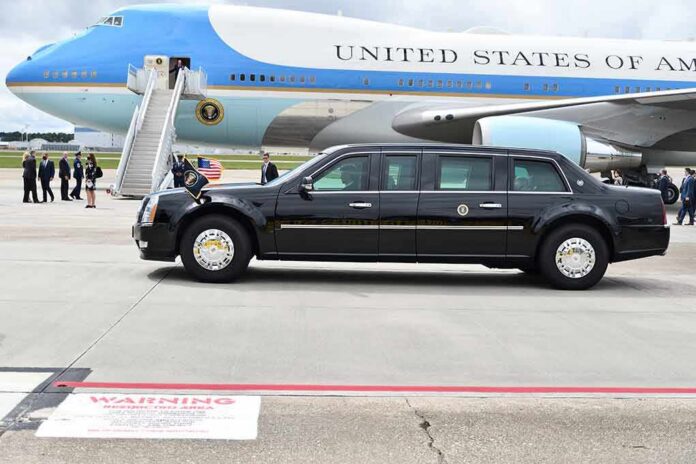
Washington focused on cost. Reporters cited Defense Department rates of about $9,000 per flight hour for a C-37A and about $18,600 for a larger C-32A. Coverage tallied more than $1.2 million in taxpayer costs tied to these trips. The State Department said Rubio reimburses the government at the equivalent of an economy ticket for personal segments, which is standard under federal policy for required-use travelers. That gap between cost and payback fueled the backlash.
The Security Rule That Drives The Flights
Cabinet-level officials often fall under a “required use” standard. That status means the government directs them to use government aircraft for all travel when security and secure communications demand it. The Government Accountability Office has documented the same rule for the Attorney General and the Director of the Federal Bureau of Investigation, including on personal trips, with reimbursements made per federal requirements. The national security logic is clear: keep the principal reachable, protected, and connected, even on weekends.
Rubio’s case mirrors that pattern. A State Department official said the flights ensure continuity of government and access to secure communications at all times. That explanation answers the “why the jet” question but not the “how often” question. The department’s own records show 15 trips were solely personal. The lack of a trip-by-trip public justification left space for skeptics to say the security rule became a standing perk rather than a narrow exception.
The Family Angle, The Football Schedule, And The Optics
Rubio’s son plays at the University of Florida. Rubio attended at least 10 Gators games while in office. No one disputes a parent’s pride or the desire to be present. The controversy turns on who pays the true cost when a top official is barred from commercial flights. The economy-ticket reimbursement meets the letter of policy, yet the aircraft cost is far higher. Critics cast this as a personal benefit on the public’s dime, even if it followed the rules.
Media framing sharpened this contrast. Headlines led with the football and the $1.2 million figure. Commentators argued that security needs do not cancel basic fairness tests. They noted the jet’s hourly cost and said taxpayers absorbed the spread between reimbursement and real expense. That claim lands with people who juggle budgets and see no similar break in their own lives. It is less about law than about judgment and restraint.
What Conservative Common Sense Says Should Happen Next
Taxpayers should not pay luxury prices for personal travel, even when rules make a jet mandatory. The fix is not outrage; it is math and sunlight. First, publish the governing directive that bars commercial flights for the Secretary of State, including who approves personal trips and why. Second, release aggregated trip data each quarter: aircraft type, flight hours, purpose code, and reimbursement totals. Third, set a supplemental surcharge so reimbursements better reflect actual costs when travel is solely personal.
Secretary of State Marco Rubio has used taxpayer-funded military jets to travel to at least 10 University of Florida football games. Sally Jenkins writes that the message he’s sending is “This administration doesn’t serve you. You serve it.” https://t.co/hz4l81wqqe
— The Atlantic (@TheAtlantic) November 13, 2026
Congress should require an annual audit across all required-use officials, not just one office. The Government Accountability Office has long reviewed such use at the Department of Justice. Expand that model and set benchmarks that cap frequency of solely personal trips or require combined purpose where practical. None of this weakens security. It restores trust. People accept special rules for safety. They will not accept blank checks tied to family calendars, no matter who holds the job.
Sources:
people.com, theatlantic.com, worldattention.com