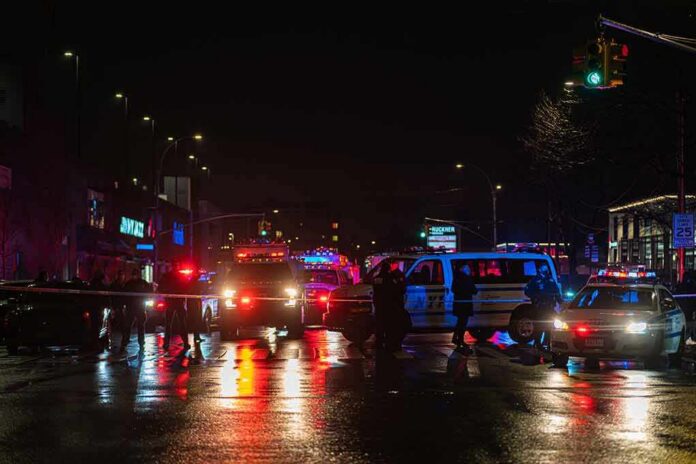
Prosecutors say a minivan jumped a North Hollywood sidewalk and killed three longtime street vendors, and the driver now faces three murder counts.
Story Snapshot
- Los Angeles County prosecutors charged three counts of murder and two alcohol-related offenses.
- Officials allege the driver’s blood alcohol level was more than three times California’s limit.
- The vehicle allegedly left Lankershim Boulevard near the Metro station and struck vendors.
- The accused appeared in court and remained jailed on about $6.1 million bail.
Charges Filed After Deadly Sidewalk Crash
The Los Angeles County District Attorney’s Office charged Ihor Demianenko with three counts of murder after a crash that killed three women near the North Hollywood Metro Station. Prosecutors also filed two alcohol-related driving counts. The case filing states the driver was suspected of being far above the legal alcohol limit at the time of the crash. Officials said the decision to seek murder charges reflects the seriousness of the conduct and the loss of life tied to one event.
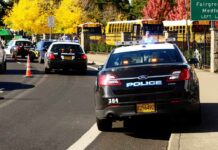
Police and prosecutors described a single minivan, a Toyota Sienna, that left Lankershim Boulevard near Chandler Boulevard, went onto the sidewalk, and hit vendors and pedestrians by the station entrance. Reporting from the scene said three women died there. Coverage identified them as Francesca Krystine Esker, 39, Teodora De Jesus Villalobos, 57, and Maria Angelica Peck, 73. Authorities booked the driver after the crash and turned the case over to county prosecutors for review and filing.
Alleged Intoxication And Bail Status
The District Attorney’s Office alleged Demianenko’s blood alcohol concentration was more than three times California’s legal limit of 0.08 percent. That claim, repeated by several local outlets, framed the state’s view that extreme impairment caused the loss of control. After charges were filed, Demianenko made a first court appearance. A judge kept bail at about $6.1 million and set a later arraignment date, which kept the defendant in custody while the case proceeds.
Local outlets reported the same core facts: suspected impairment, the vehicle’s path onto the sidewalk, and three deaths near the Metro stop. Those reports mirrored the filing details and described a crowded vendor area during the evening hours. While the charges are allegations until proven in court, the state’s filing moved the case from early police inquiry into formal prosecution, which triggers discovery, hearings, and a full review of evidence.
How Prosecutors Reach Murder In A DUI Case
California law allows a murder charge when a driver acts with implied malice. Courts have held that a person can show implied malice by knowing the deadly risk of driving while impaired and choosing to drive anyway. This is often called a “Watson” murder based on a 1981 California Supreme Court decision that set the rule used by prosecutors today. That doctrine explains why some fatal crashes lead to manslaughter charges and others to murder.
This North Hollywood case also fits a wider safety problem. Federal highway data show alcohol-impaired driving accounted for about 30 percent of traffic deaths in 2024, with 11,904 people killed nationwide. California felt that burden as well. Those numbers show the harm is common, even if murder filings remain less frequent and depend on specific facts. Cases like this draw intense public focus because the victims were well known in the neighborhood vendor community.
Community Impact And What Comes Next
Vendors and commuters gathered at the site to mourn the three women, who had served customers near the station for years. The crowd response points to a theme many Americans share across politics: everyday people face danger while the system argues over accountability. Street vendors often work long hours with little protection. A crash like this wipes out lives and family incomes in seconds. The court process will decide guilt, but the loss is already permanent.
Next steps include the arraignment, the release of more evidence through court filings, and possible hearings on bail and admissibility. Prosecutors will need to back the alcohol claim with lab records and connect the driving to the deaths under state law. The defense can test that evidence and raise other causes if supported. For now, the state’s case centers on a simple charge: a driver who should not have been on the road took three lives.
Sources:
nypost.com, spectrumnews1.com, abc7.com, foxla.com, latimes.com, cbsnews.com, kttc.com