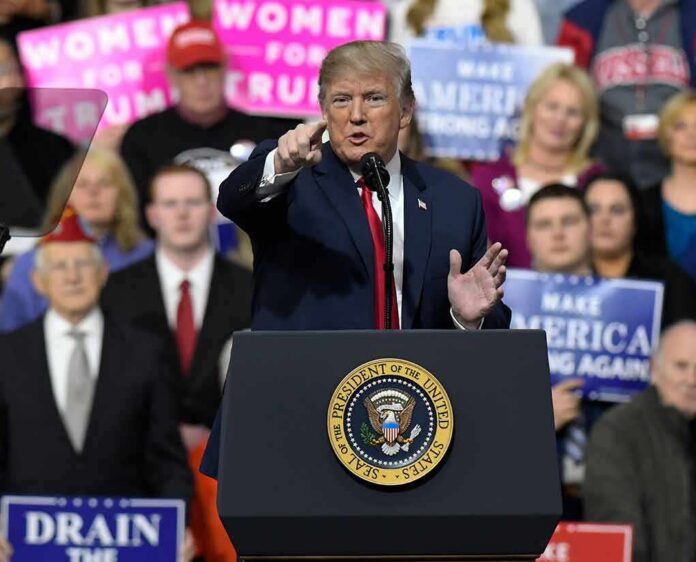
President Trump’s San Antonio rally erupted into stop-and-start chaos as hecklers cut in again and again, and he blasted them as “paid by enemies of our nation.”
Story Snapshot
- Trump’s speech paused many times as protesters were escorted out.
- Trump said the interrupters were “paid protesters” and tied them to hostile forces.
- Matching signs and shirts were cited by Trump as signs of coordination.
- A rallygoer was filmed yanking a protester’s hair during an ejection.
A Rally Meant To Boost Paxton Turned Into A Test Of Control
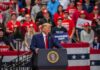
President Trump took the stage at San Antonio’s Freeman Coliseum to rally support for Texas Senatorial candidate Ken Paxton. The plan gave way to a rolling series of disruptions. At least several individuals interrupted the speech from the stands, prompting security to escort people out as the crowd booed and chanted. Trump paused, resumed, and paused again. Reporters on site counted numerous stoppages, with some tallies reaching near double digits before the event wound down.
Trump did not treat the disruptions as random outbursts. He told the crowd that “many” were paid to be there and claimed they were funded by “enemies of our nation.” He urged, “If there are any more paid protesters, please raise your hand and get the hell out of here.” The line drew cheers and hardened the mood. It also set a frame for the rest of the night: not protest as dissent, but protest as a hostile operation inside the venue.
Claims Of Coordination Centered On Identical Signs And Repeated Timing
Trump pointed to what he called telltale signs. He described protesters wearing crisp shirts and holding identical, professionally printed signs. He said the repetition showed planning, not spontaneity. Reporters described visible similarities in some materials and noted the repeated pattern of interruptions through the speech. Those observations supported the idea of organized disruption at least in timing and appearance, though they did not show who planned or financed it.
Law enforcement and venue security kept a steady pace. Officers and staff moved across aisles, located the latest interrupter, and walked them up the steps to the exits. The crowd often rose to boo, chant, or record the removals on phones. The spectacle fed Trump’s case that the event was under targeted pressure. It also handed him moments to riff, jab at the interrupters, and rally his base around order, loyalty, and resolve in the face of noisy opposition.
A Flashpoint In The Stands Adds Heat And Raises Stakes
A separate moment drew its own headlines. Video showed a man in a red hat grabbing a heckler by the hair as security removed him. The pull lasted only a moment, but it was sharp, public, and caught on camera from more than one angle. Coverage flagged the scene as an assault. The incident underscored how fast a tense crowd can tip from jeers to contact, even when police and staff are already handling an ejection.
Conservatives value free speech and the rule of law, which includes holding rallies without disruption and removing those who break the rules. They also value personal responsibility. On that score, a supporter putting hands on a protester is a mistake. Let the officers do their jobs. When a crowd stays disciplined, it denies agitators the viral clip they want and keeps attention on the message, not the meltdown.
The Broader Playbook: Delegitimize The Disruption, Lock In The Base
This episode fits a familiar pattern in modern politics. Leaders under protest often argue the opposition is staged, funded, or shipped in. That framing rallies allies, casts dissenters as fake, and shrinks the space for debate. Fact-checkers and researchers frequently find most protesters are local and unpaid, even when trained organizers and printed materials are present. The base rate says mass dissent often looks organized because organization is how groups show up on time and in force.
Trump’s choice of words—“enemies of our nation”—pushes beyond routine campaign spin. It paints a clear us-versus-them line and invites supporters to see hecklers not as neighbors with a sign, but as instruments of a hostile machine. That framing boosts urgency and turnout. It also raises the temperature in the room. When the temperature rises, the margin for error shrinks. Smart campaigns plan for both: swift removals, clear instructions to supporters, and attention kept on the stump, not the scuffle.
Sources:
rawstory.com, aa.com.tr, newsweek.com, ny1.com, politifact.com, npr.org