
The president of the United States quietly changed planes in Turkey because U.S. security officials believed Iran and its proxy forces might try to kill him mid‑flight.
Story Snapshot
- Trump flew into Turkey on the flashy new Qatar-gifted Air Force One, but left on the older, more battle-hardened jet.
- U.S. intelligence picked up what officials called a “credible threat” from Iranian proxy forces aimed at Trump and his aircraft.
- The Secret Service and security team pushed for the older plane, which carries hardened defenses and proven command systems.
- Trump publicly downplayed security worries, saying he sent the new jet ahead so troops could see it, while still stressing Iran wants him dead.
A last-minute switch that was anything but routine
President Trump arrived in Ankara on the gleaming, Qatar-gifted Boeing 747 that he has touted as the new Air Force One, but he did not leave on it. Multiple reports say U.S. officials picked up intelligence pointing to a credible threat by Iranian proxy forces targeting both Trump and his aircraft as he departed Turkey, a flight path that would run within range of Iranian weapons systems and regional assets. The quiet result was a sudden change to the older, better-armored Air Force One.
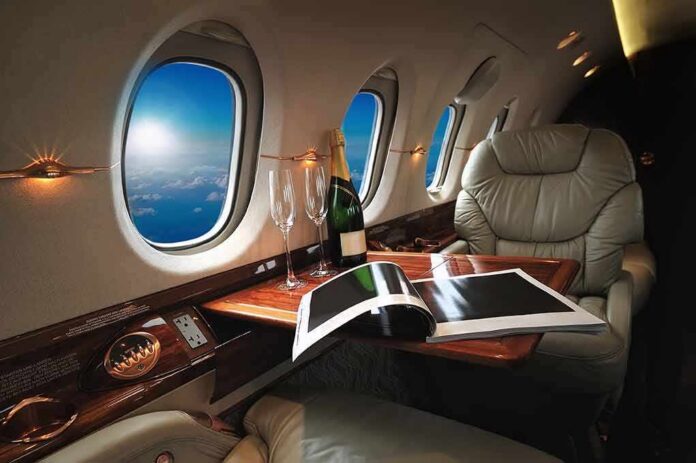
The older blue-and-white jet is not just sentimental Cold War décor. It is a flying bunker with hardened communications, defensive countermeasures to confuse incoming missiles, and a proven command-center package designed for wartime use. Reports say the Qatar jet, while luxurious, still lacked some of these mature defensive upgrades and certifications. In plain language, when serious people started to talk about Iran and missiles, the security professionals wanted the president in the plane built to take a punch.
How Iran’s threats turned a prestige plane into a question mark
The timing of the switch was not random. As the NATO summit wrapped up, the United States and Iran had slipped back into open confrontation, with new strikes and renewed rhetoric about revenge. Western intelligence, according to follow-on reporting, picked up indications that Iranian-linked operatives saw Trump’s trip through Turkey as an “opportunity” to act. Even if all details remain classified, that kind of language is exactly what protective teams are paid to treat as deadly serious, not as a talking point.
From a common-sense conservative view, this is the security version of locking your doors in a rough neighborhood. You do not gamble the life of a sitting president on an unproven aircraft profile when the adversary has missiles, drones, and a public blood feud. You default to the known-hard target. That is what the Secret Service and military aides reportedly did: they urged an eleventh-hour switch, and Trump boarded the old jet while the new one flew a different route.
Trump’s public story, the security story, and the gap between them
Trump told reporters and posted online that the switch had “nothing to do” with security and that he simply wanted American troops in Britain to be able to tour the new aircraft, saying he took the old plane “for old time’s sake.” At the same time, when pressed on whether Iran threats played a role, he did not give a straight denial. He said instead that he was “number one on the kill list for Iran,” a striking statement that underlined the danger while dodging the yes-or-no.
That mix of answers creates the political fog around the event. On one side, you have unnamed but consistent reporting that the Secret Service and other security officials pushed the older plane based on new Iran-linked intelligence. On the other side, you have Trump’s public spin that centers on optics and troop morale. From a conservative standpoint, it is easy to believe both pieces at once: the professionals made a hard call, and the president chose not to advertise to the world that Iran had just forced his hand.
What this reveals about power, secrecy, and trust
This episode fits a pattern we see often in modern presidential security. The public sees a visible change — a different plane, a rerouted motorcade, a canceled stop — and gets two partial stories. One comes from anonymous officials quoting classified threat assessments. The other comes from the president, who usually has reasons not to say, “Yes, terrorists just scared us off our plan.” Neither side can lay all its cards on the table, because doing so would expose sources and tactics or admit vulnerability.
President Trump flew home from Turkey on an older Air Force One due to a credible threat from Iran. The newer Qatari-gifted jet lacks advanced defenses, prompting the switch. The Secret Service advised the change for safety, highlighting ongoing … https://t.co/VMFXw7zKRF pic.twitter.com/Dvf5fXMtj9
— NewsRadio WKCY – 107.9 FM (@newsradiowkcy) July 25, 2026
For citizens who care about both strength and truth, the question is not whether there was any risk at all. Of course there was; Iran has said out loud it wants Trump dead. The real questions are how specific the threat was, how much the new jet still lags in defenses, and whether the security call was purely tactical or also a quiet rebuke of a prestige project that moved faster on luxury than on armor. Until Congress forces more disclosure, the clearest signal is the one that matters most: when it got serious, the professionals put their president back in the toughest plane they had.
Sources:
cbsnews.com, nytimes.com, theguardian.com, youtube.com