

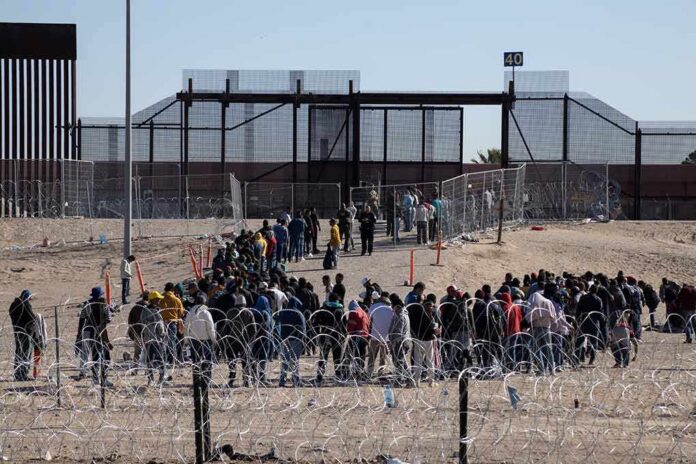
Almost 49,000 people rushed Spain’s tiny enclave of Ceuta in a single day, and then, almost as fast, Spain and Morocco slammed the door shut.
Story Snapshot
- About 49,000 to 60,000 people crossed from Morocco into Ceuta in barely 24 hours.
- Spain deployed troops and extra police while Morocco sent riot units and water cannon to the border.
- Both governments moved quickly to seal the fence and push most of the migrants back into Morocco.
- The surge exposed how fragile Europe’s outer border is and how much it depends on non European Union partners.
A day when Ceuta’s border seemed to vanish
Spanish officials say roughly 49,000 people entered Ceuta from Morocco in about 24 hours, with some estimates reaching 60,000 over two days. Many climbed border fences or squeezed through gaps; others swam around breakwaters or used cheap inflatables to reach Tarajal beach. This is a city of about 80,000 residents. When half that number arrives in a single day, it is not a border incident. It is a shock to the system.
The sudden rush quickly turned deadly. Authorities reported at least 18 to 34 deaths, many from drowning at sea and others from crush injuries near the breakwater fence. Reuters and other outlets described bodies in the water and a burned bus and cars near the border, signs of clashes between crowds and security forces. For people watching from a distance, it looked like a chaotic wave. For those on the ground, it felt like the border had simply broken.
Spain and Morocco move from chaos to control
Ceuta’s local leaders demanded help from Madrid as police warned they were overwhelmed and close to collapse. The Spanish government responded by sending military units, extra Civil Guard officers, and naval assets to reinforce the enclave. Troops patrolled beaches and key roads, backing up exhausted border police. Spain’s Interior Ministry stressed that Morocco was “closely cooperating” and that both governments were working together to stop new crossings and start fast returns of illegal entrants.
On the other side of the fence, Moroccan authorities rolled out their own heavy tools. Security forces near Fnideq and other border points used riot gear, tear gas, and water cannon trucks to disperse large crowds and push people away from crossing gates. Reuters reported Moroccan units physically pushing people back at the gates into Ceuta as the countries reinforced the border fence and “appeared to have halted mass crossings.” For European voters who expect firm borders, this is exactly the kind of state response they assume is possible, and demand when chaos breaks out.
Returns, court limits, and the politics of ‘border rejection’
Spain did more than just plug the leak; it started sending people back fast. Authorities announced plans to expel those who entered illegally as quickly as possible, even as a recent court ruling put new limits on the special “border rejection” process. That ruling said migrants who arrive by sea cannot be pushed back without due process, unlike those who climb the fence on land. The distinction matters: in practice, it creates two tracks and raises questions about equal treatment and incentives for risky sea crossings.
A large group rushed toward the Beni Ansar border crossing in Morocco near Spain's Melilla, prompting a security response. Spain reinforced Ceuta with military units as migrant crossings surged. Officials said 18 people died attempting to enter Ceuta.#spain #morocco #ceuta… pic.twitter.com/UFkZ7q4LAt
— The Federal (@TheFederal_News) July 31, 2026
To speed things up, Spain and Morocco agreed to urgent returns and closer coordination on procedures. Spain’s interior ministry said both countries would work “for the return, as soon as possible, of all the people who entered Ceuta illegally.” By Friday afternoon, officials said tens of thousands who had crossed had already gone back to Morocco. From a conservative, common sense view, this shows that when a government is willing to act decisively, mass illegal entry does not have to become permanent settlement.
A familiar warning for Europe’s border and its politics
Ceuta has seen this kind of crisis before. In 2021, about 8,000 people entered in a single episode; most were returned within days. The European Union now treats the Western Mediterranean route as a standing concern and backs Spain with border operations and funding. Yet the 2026 surge was far larger and faster, with up to 60,000 people crossing in just two days. That scale turns a technical border issue into a political flashpoint across Europe.
Far right parties quickly seized on the numbers, warning that Europe’s external border is only as strong as its last diplomatic deal with countries like Morocco. They argue that if tens of thousands can move in hours, then Europe’s asylum and border system invites pressure and testing. Looking at the facts, that argument has weight. The surge ended only when both Spain and Morocco flooded the frontier with force and made clear that illegal entry would lead to quick return, not a guaranteed path deeper into Europe.
Sources:
youtube.com, reuters.com, theguardian.com, euronews.com, bbc.com, en.wikipedia.org, lemonde.fr