
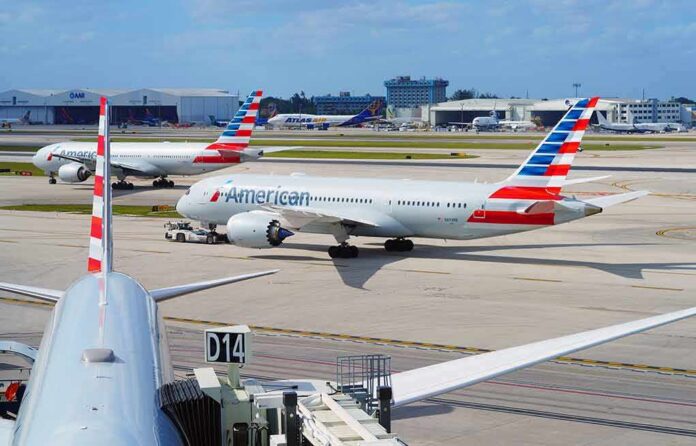
An American Airlines jet returned safely to Myrtle Beach after a bird strike sent smoke, sparks, or flames from its engine during takeoff.
Quick Take
- The flight was headed to Charlotte and turned back shortly after takeoff from Myrtle Beach.
- American Airlines said the aircraft landed safely and went out of service for inspection.
- Airport officials said no one was hurt, and passengers deplaned normally at the gate.
- Reports differ on the visual effect, with some describing smoke and others describing flames or sparks.
Bird Strike, Safe Return
The incident began Monday morning when an American Airlines flight bound for Charlotte struck birds soon after departure from Myrtle Beach International Airport. The crew reported an engine issue and turned the plane back, and the aircraft landed safely after a short return flight. Airport officials said the jet taxied to the gate on its own and no injuries were reported.
The most important fact is simple: this was a serious cockpit event, not a disaster. American Airlines said the aircraft was taken out of service for inspection by its maintenance team, and the Federal Aviation Administration said it would investigate. That is the normal path after a bird strike that raises concern about engine damage, even when the landing ends safely.
What Witnesses Saw
Public reporting gives a vivid picture, but not a fully identical one. ABC News reported that a nearby pilot told air traffic control he saw smoke coming from the left engine after the bird strike, while CNN described flames erupting from an engine during takeoff. One passenger told ABC News he heard “a loud bang and some rumbling,” which fits the kind of jolt people notice when an engine ingests birds.
That gap matters because early aviation reports often mix fast-moving eyewitness accounts with short official statements. In this case, the shared facts are steady: birds were struck, the flight returned, and the plane was inspected. The exact visual effect, whether smoke, sparks, or flame, is less settled in the public record than the safe outcome.
Why This Story Got So Much Attention
Bird strikes happen often enough in U.S. aviation that crews train for them, but they still get attention when flames or smoke are visible. The Federal Aviation Administration has said wildlife strikes are reported in the tens of thousands each year, with birds making up most of them. That makes the Myrtle Beach event part of a familiar pattern: a sudden hit, a cautious return, and a maintenance check before the plane goes back to service.
The drama came from the camera-friendly part of the event, not from the final outcome. The aircraft landed safely, passengers got off normally, and the airline said it found no fire or leaks during inspections after landing. Those details matter because they separate a frightening moment in the air from the actual result on the ground.
American Airlines Declares Mayday And Returns To Myrtle Beach As Flames Shoot From Aircraft Engine Over Bird Strike #Travel #traveling #travelblogger #vacationmode https://t.co/KrDSMDmaEw
— TheTravel_com (@TheTravel_com_) August 11, 2026
There is still one open question in the public record: how much engine damage the bird strike caused. The airline’s statement is clear that the jet was removed for inspection, but the released reporting does not include a maintenance log, borescope results, or a technical finding that explains the engine behavior in detail. For now, the safe return is confirmed, and the rest waits on the investigation.