

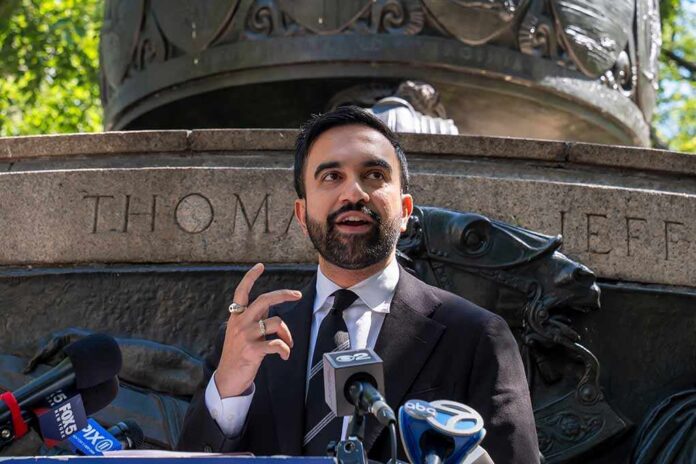
New York’s mayor turned a holiday greeting into a legal lifeline—and lit a fuse with federal authorities.
Story Snapshot
- Mamdani urged immigrants to use a city-run legal hotline open seven days a week.
- ICE and the Department of Homeland Security (DHS) blasted city sanctuary policies and tied them to violent crime cases.
- City letters and briefings claim ICE’s tactics scare residents away from city services.
- The clash centers on whether limiting local cooperation helps trust or harms public safety.
What Mamdani Said, And Why It Set Off A Firestorm
Mayor Zohran Mamdani posted a Thanksgiving-week message that did not tell people to hide. He told New Yorkers to call the city’s Immigration Legal Support Hotline or dial 311 and ask for immigration legal help. The city said the hotline is free, confidential, and now open seven days a week. The Mayor’s Office of Immigrant Affairs expanded the hotline to fight wage threats and frauds that target immigrants, according to a city release.
Mamdani’s office has argued for months that Immigration and Customs Enforcement uses city property in ways that scare residents away from services. In a November 2 letter to the Department of Homeland Security, Mamdani warned that use of city lots can endanger people who need schools, clinics, and shelters. He pledged to use lawful tools to protect access to those places without fear.
ICE’s Blistering Response And The Cases They Point To
The Department of Homeland Security answered with a public broadside. The agency highlighted a homicide case and said New York released Alexander Florentino-Maldonado seven times this year, including five times after detainers, before the alleged murder of a 62-year-old woman. Earlier, DHS said New York released a person arrested for attempted murder, assault, and other crimes after refusing a detainer from Rikers Island custody. These are allegations and do not decide guilt, but they are specific and serious.
DHS framed the city’s rules as a shield for violent offenders. The statements claim New York’s refusal to honor detainers lets people with violent records go back onto the streets instead of into federal custody. That charge lands hard because it joins a clear story line to a human tragedy. When agencies name a case with dates and claims, readers expect a point-by-point city rebuttal with records. That has not been provided in the materials here.
The Stakes: Trust, Safety, And Who Decides
Mamdani’s core case is about trust in city spaces. He says New Yorkers deserve safety, whether born here or elsewhere, and that the city will not help federal immigration enforcement inside city systems. The hotline push fits that policy. It connects people to licensed help, deters scams, and can keep a worker from losing wages to a bad boss. That is common sense city governance. But it does not, on its own, answer the public-safety challenge raised by DHS in those named cases.
Conservative readers will ask a plain question: if someone is charged with violent crimes and the federal government wants custody, why release him to the street? On the facts presented, DHS offers more case detail than the city does in public. That makes DHS’s claim feel stronger in the court of common sense. The city can argue about legal warrants and limits on detainers, but families grieving a victim want outcomes, not process.
What To Watch Next
Two tests will decide who wins this fight with the public. First, produce outcome data on the hotline: calls, referrals, real cases stopped from fraud or wage theft, and any situations where counsel led to a safe, lawful resolution. Second, provide records on the named DHS cases: arrest dockets, detainers, release orders, and communications. If the city followed state law and court orders, show it. If DHS offered custody with proper paperwork, show that too. Facts, not slogans, will carry this debate.