
A family memorial trip on the Volare ended in cold, dark water, a suspended search, and unanswered questions about who gets to decide when hope runs out.
Story Snapshot
- Twenty people boarded a 49-foot cabin cruiser for a memorial near Alcatraz; it capsized in rough Bay seas, leaving one confirmed dead and three missing.
- Rescuers pulled sixteen people from 62-degree water, then the Coast Guard covered about 950 square nautical miles before suspending the search at sunset.
- Officials say survival odds dropped near zero, while families face the reality of “presumed dead” without their loved ones’ bodies or a clear cause.
- Questions now focus on why a large cruiser failed in “navigable” conditions and whether future vessel recovery and forensics will challenge the official story.
A memorial voyage into one of the Bay’s most dangerous stretches
The Volare was supposed to be a place for closure, not a crime scene. The 49-foot tri-level cabin cruiser left Angel Island carrying twenty adults, mainly family and close friends, to spread a relative’s ashes near Alcatraz Island. That patch of water sits in a known danger zone, where strong tides and winds collide and build short, steep waves that can pound even big boats. Past disasters there show the Bay can turn from postcard to deadly trap in minutes.
Witnesses and survivors say the boat took on heavy water and then rolled and sank in rough afternoon seas. Officials described the incident as a sudden capsizing, likely after a large wave overtook the vessel, but they also admit they do not yet know the exact failure point. The Volare had three enclosed decks, which means people below could have been trapped as water crashed in and lights went out. That scenario haunts every family waiting for answers.
Rescue chaos, heroic bystanders, and confusing early numbers
Once the Mayday went out, help came from every direction. Commercial fishermen Mike Montoya and Justin Marcelin raced their boat toward the sinking cruiser and pulled nine people from the water before most officials arrived. The San Francisco Fire Department, San Francisco Police Department, Oakland Police Department, and United States Coast Guard then joined the rescue, throwing lines, hoisting shivering survivors, and working to keep people from slipping under the chop.
In that chaos, early reports were messy. Some outlets said nineteen people were on a “triple-deck pontoon boat,” with one dead and two missing. Later briefings corrected the count to twenty people aboard a 49-foot tri-level cabin cruiser, with sixteen survivors, one confirmed fatality, and three missing. That kind of confusion is common in fast-moving disasters, but for many readers it triggers doubt about how firmly authorities have their arms around the whole story.
Cold water, brutal math, and why the Coast Guard stopped the search
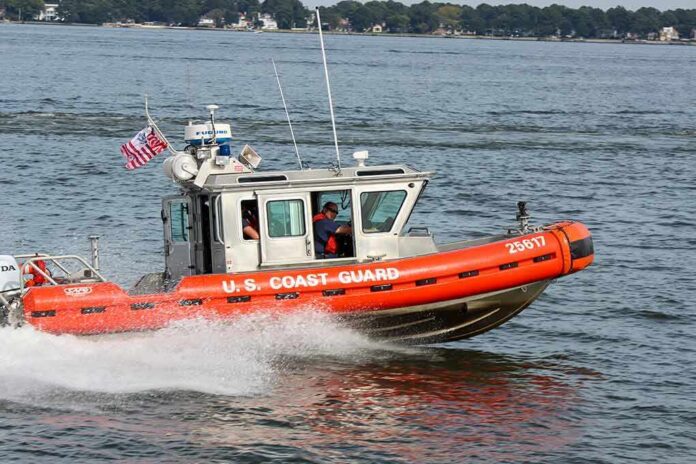
After the first frantic hours, this turned from rescue to race against hypothermia. Water in the Bay hovered near sixty-two degrees, cold enough that an adult without proper gear can lose muscle control in less than an hour. Coast Guard aircrews and boats ran search patterns through the night, using thermal imaging cameras, tide-modeling tools, and drift predictions to decide where to look next. By the next day, they had covered roughly 950 square nautical miles.
United States Coast Guard Captain Jared Toczko put it bluntly: despite that extensive effort, crews found no additional survivors. Commanders faced a hard line between slim hope and fantasy. Survival tables and experience said that anyone still in the water after that much time was almost certainly dead. The Coast Guard suspended active search at sunset Wednesday, with Toczko calling that choice “one of the most difficult things we do as Coast Guard commanders.”
Families, “presumed dead,” and the emotional politics of closure
On paper, the numbers are clear: sixteen rescued, one man dead, three missing. The medical examiner identified the deceased as seventy-nine-year-old Clifford Joseph Boisa, a former sheriff’s deputy from Sutter County. His younger brother, John Boisa, owned and captained the Volare. Family members say Clifford’s wife Jackie and their sister Carol are among the missing, which makes this not just a boating accident, but a concentrated family tragedy.
U.S. Coast Guard Capt. Jarod Toczko said at a news conference Wednesday afternoon that officials had not yet determined what caused the Volare boat to capsize in the San Francisco Bay.
Live updates >> https://t.co/RQiqwIsWg3
— San Francisco Chronicle (@sfchronicle) July 15, 2026
Headlines calling the three “presumed dead” landed like a punch. Legally and operationally, that phrase matches what the survival math shows. But from a conservative, common-sense view that respects the value of each life, it also feels harsh when no bodies have been recovered and the vessel itself still sits on the Bay floor. Many Americans look at that and ask why government agencies can declare an end while families remain stuck between hope and grief.
Unanswered questions about the Volare and what comes next
For now, there is no strong public “Side B” accusing the Coast Guard of clear wrongdoing or coverup. Reporters and relatives mostly accept that continuing to search surface waters after so many hours would not change the outcome. But that does not mean hard questions are off the table. We still do not know whether the missing are in the shipping channel below, trapped in cabins, or lost at sea. No official dive report has yet confirmed anything inside the wreck.
Vessel recovery is the hinge. The Volare reportedly sank in water close to 120 feet deep, in a busy commercial lane that complicates salvage work. When it is finally raised, marine forensic engineers can inspect the hull, engines, and stability systems, looking for signs of structural failure or poor maintenance. That could either back the “large wave” theory or reveal deeper problems, like design flaws or neglected repairs, which might shift the story from tragic accident toward preventable failure.
What this disaster says about risk and responsibility on the Bay
This crash is not a freak event in a safe harbor. San Francisco Bay has a long record of recreational boats flipped, flooded, or sunk where tides and wind stack waves into tight, dangerous walls. For boat owners, this is a sober reminder that a big hull and tall decks do not cancel physics. For agencies, it raises pressure to give plain warnings about risk zones and to document clearly how they decide when to stop looking for survivors.
From an American conservative lens, the core values here are simple: protect life, tell the truth, and own mistakes if they appear. For now, the Coast Guard’s decision to suspend the search lines up with cold survival facts and decades of rescue data. The honest next step is not to spin that choice, but to recover the Volare, reveal exactly how it died, and give families something firmer than “presumed” as they try to say goodbye.
Sources:
military.com, cbsnews.com, theguardian.com, reuters.com, youtube.com, abc7news.com, sfchronicle.com, yahoo.com, instagram.com, ussailing.org, yachtingworld.com, ktvu.com