

The largest doomsday bunker community in America was built to outlast nuclear war, but its real stress test is trust, not fallout.
Story Snapshot
- A former U.S. Army munitions depot in South Dakota is now marketed as a 575‑bunker survival community for 5,000 people.[2][3][6]
- Buy‑in runs tens of thousands of dollars plus ongoing fees, yet most interiors start as empty concrete shells.[3][4][6]
- Residents have taken the owner to court over leases and missing amenities, challenging the project’s consumer‑protection claims.[4][6]
- The clash reveals a deeper question: is this genuine preparedness or fear-driven real estate dressed in camo?[1][2][3][4][6]
A buried weapons depot reborn as a civilian ark
Southwest of the Black Hills, near Edgemont, South Dakota, a retired U.S. Army munitions depot has been rebadged as Vivos xPoint, a private survival community on roughly 18 square miles of off‑grid prairie.[1][2][3][6] The military built the site during World War II to store bombs and other munitions, leaving behind hundreds of arched, blast‑resistant bunkers lined up across the grasslands.[3][4] Vivos markets those hardened igloos as the backbone of “the world’s largest survival shelter community,” promising refuge from nuclear war, pandemics, and social collapse.[2][3][4]
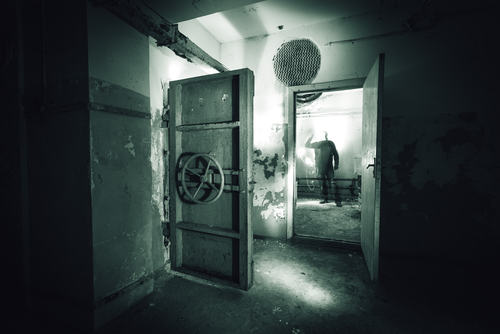
The core sales pitch is simple and powerful: 575 concrete and steel bunkers, each roughly 2,100 to 2,200 square feet, designed to take enormous internal blast loads and buried under earth berms for added protection.[1][2][3][5][6] Company materials describe elliptical concrete shells with thick front bulkheads and heavy steel blast doors meant to seal against air, gas, and water.[2][3] The bunkers are spaced around 400 feet apart, laced by about 100 miles of private roads, and positioned far from coastal population centers or obvious nuclear targets.[1][2][3]
The promise of off‑grid comfort and community
On paper, each bunker can house 10 to 24 people with enough supplies to live inside for a year or more without going topside.[2][3] Vivos literature describes potential fit‑outs with water‑filtration and pump rooms, power rooms and generators, air‑filtration systems, and storage for long‑term food and fuel.[2][3] Promotional write‑ups point to deep wells for water and even simulated daylight with light panels, framing the experience as more self‑contained condo than survival cave.[1][2] The broader complex is advertised with 24/7 security, a general store, restaurant and bar, gym, theater, and medical center for residents.[1][3]
For people who do not trust government competence in a major crisis, that bundle of features hits every psychological button. A remote location, hardened structure, and like‑minded neighbors sound far better than hoping the Federal Emergency Management Agency gets the logistics right next time. The company leans into that distrust by framing xPoint as a rare chance to take responsibility for your family’s survival rather than rely on bureaucrats or fragile urban infrastructure.[2][3] That plays directly to conservative instincts about self‑reliance, private property, and limited government.
What it really costs to buy “peace of mind”
The affordability story, however, deserves a closer reading. Vivos’ own materials describe xPoint as “affordably priced” and insist that “virtually anyone” can secure a bunker.[2][3] Yet entry involves a one‑time payment of about $55,000 for a long‑term ground lease, plus roughly $1,091 in annual ground rent.[3] Reporting from South Dakota adds that some residents paid between $25,000 and $55,000 for 99‑year leases, then faced additional amenity or common‑area charges.[4][6] Interiors are delivered as bare concrete shells, leaving tenants to spend up to six figures more on build‑outs.[3][4]
That structure looks less like buying a simple preparedness tool and more like stepping into a specialized real‑estate product. A separate listing for a resale bunker lease at xPoint advertised a 2,120‑square‑foot unit with a 99‑year transferable lease for $45,000, confirming there is an aftermarket in these rights rather than traditional fee ownership. Vivos now also promotes an option to buy a bunker and surrounding land outright for $75,000, promising fee ownership “forever,” which signals a quiet shift from pure leasehold toward more conventional property language.[3] Either way, this is not a casual purchase for most households.
When the apocalypse business meets the courthouse
The biggest clouds over xPoint do not come from mushroom‑cloud scenarios but from county‑level legal filings. South Dakota News Watch reports that residents filed a class‑action lawsuit alleging deceptive and misleading statements about leases and amenities.[5][6] According to that reporting, a circuit court judge agreed with the core contention that the lease form was illegal and unenforceable, a ruling now on appeal to the South Dakota Supreme Court.[4] Plaintiffs also claim that most of the promised shared facilities—like those restaurants, stores, and medical services—never materialized at the level advertised.[4][6]
Residents interviewed by South Dakota media describe more modest, unfinished realities: bunkers that still lack basic residential systems, security questions, and uncertainty over who controls what if conflict erupts inside the gates.[4][6] Some tenants say they moved in hoping for a functioning, mutually supportive community but encountered internal politics and disputes with ownership instead.[6] That gap between glossy survival brochures and on‑the‑ground experience is what now drives both litigation and a broader backlash against the project.
Preparedness, fear, and the conservative common-sense test
From a conservative perspective, the concept of a hardened, privately controlled refuge has legitimate appeal: decentralization, personal responsibility, and insulation from federal failure during catastrophe all make intuitive sense. The trouble comes when marketing outruns verifiable performance. xPoint’s strongest claims—500,000‑pound blast ratings, year‑long autonomous living, fully realized amenities—rest mostly on company assertions rather than independent engineering reports or audited operations.[1][2][3][5][6] That is not how you would evaluate a firearm, a tractor, or a home; it should not be enough for something this high‑stakes either.
Vivos xPoint in South Dakota is a 575-bunker former Army depot turned private survival community billed as the world’s largest doomsday shelter network.
— Rohit Agrawal (@rohitsmb) May 30, 2026
Common sense says a serious prepper or prudent investor needs three things that are still missing here. First, independent structural and life‑safety inspections of representative bunkers, not just Cold War‑era design intent.[2][3][5] Second, transparent lease documents and court outcomes that clarify who truly owns what and what remedies exist if promises fail.[4][6] Third, real data on occupancy, amenities, and incident history, so the “community” claim can be tested against reality rather than fear‑based marketing.[6] Until then, Vivos xPoint remains less a guaranteed ark and more a very expensive bet on both apocalypse and a single private operator.
Sources:
[1] Web – Meet America’s Largest Doomsday Bunker Community
[2] Web – Vivos xPoint Survival Bunker – Uncrate
[3] Web – Learn More – Vivos shelters
[4] YouTube – The Largest Doomsday Bunker Community In The World Vivos xPoint
[5] Web – Vivos xPoint The Worlds Largest Survival Bunker Complex
[6] Web – Igloo bunker residents file class-action lawsuit against owner