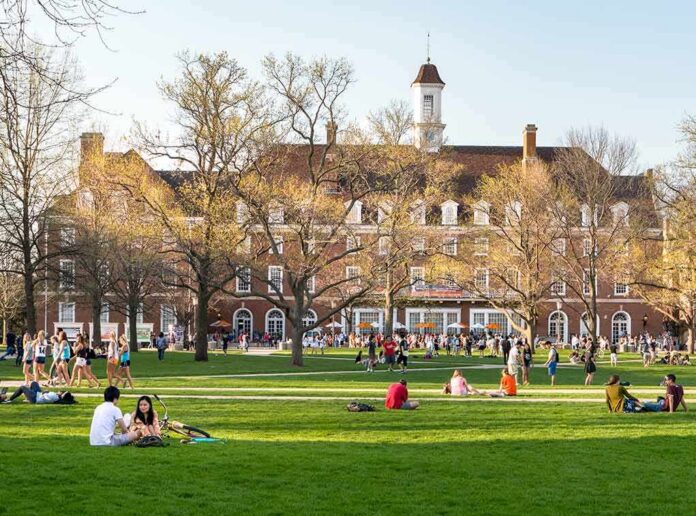
One number from a new campus survey hits like a cold slap: 22% of undergraduates said America “deserved” September 11.
Story Snapshot
- National survey of 803 undergraduates found 22% said America deserved September 11.
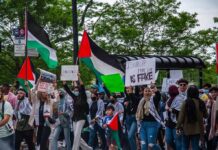
- Nearly half, 45%, said physical violence can be justified to stop what they see as hate speech.
- Liberal students were more likely to endorse justifying violence and the 9/11 view than conservatives.
- The findings continue a yearslong pattern in recurring Buckley surveys on campus speech and violence.
What the new survey actually found
The Buckley Institute released its 2026 National Undergraduate Student Survey on October 8, 2026. The report says 22% of American undergraduates agreed that America deserved the September 11 attacks. The survey, conducted by Inquire LLC from September 5–14, included 803 undergraduates across the country. The same survey found 45% agreed that physical violence can be justified to stop what they see as hate speech. These are the headline figures driving intense reaction on and off campus.
The institute also shared ideological splits. It reported that 54% of liberal students, 36% of moderates, and 30% of conservatives said physical violence can be justified. It reported that 28% of liberal students agreed that America deserved September 11. The release added a notable link: 41% of those who endorsed justifying violence also endorsed the 9/11 statement. These crosstabs help show how these views cluster among a share of students.
How this fits a larger campus speech pattern
The physical-violence number did not appear out of nowhere. Buckley’s national surveys have tracked related views for years. In 2023, 45% said physical violence could be justified to stop hate speech or racially charged comments. In 2025, the share was 39% on a similar measure. The current 45% returns to that prior high, suggesting this attitude has stubborn roots on campus and is not a one-off spike.
Secondary coverage echoed the toplines and used the “one in five” frame. A Ground News summary repeated the claim while listing 21% for the 9/11 item and 47% for violence. That differs slightly from the Buckley release. Buckley attributes small net differences to rounding from unrounded figures in underlying tables. Such minor variance is common in survey rollups and does not change the basic picture.
What the numbers mean—and why they matter
These results land in an America still shaped by September 11. Many students were born after 2001, yet twenty-two percent endorsed a statement that shocks older generations. For a conservative audience, the core concern is moral clarity. Terrorists murdered nearly 3,000 people on U.S. soil. Nothing about that crime was justified. When a notable share of students speak as if national policy sins make the slaughter deserved, it signals a moral drift that demands correction through education, not censorship.
College Students in U.S. Prefer Socialism to Capitalism, Survey Finds | Eliana Johnson, Washington Free Beacon
A nationwide survey of undergraduate students conducted by Yale University’s Buckley Institute, a conservative student group, found that the popularity of socialism is… pic.twitter.com/nuZBmCX1gr
— Owen Gregorian (@OwenGregorian) October 9, 2026
The violence result adds a second alarm bell. A free society holds the line on political violence. Speech we hate must be met with more speech, not fists. The data suggest too many students confuse hurtful words with harm that calls for force. That breaks with American tradition, the First Amendment, and common sense. Adults who run campuses must restore basic norms: clear rules, viewpoint-neutral enforcement, and civic education that teaches how liberty survives strong disagreement.
What to watch next on campuses and in policy
Colleges can do several concrete things now. Teach the history and facts of September 11 in first-year seminars. Bring in survivors, first responders, and scholars of terrorism to anchor moral judgment in lived truth. Reaffirm policies that bar violence and disruption, while guarding peaceful protest rights. Support debate programs that practice hard conversations without threats. These steps reduce heat and build civic muscle, even when students strongly disagree on war, speech, or justice.
Policymakers and donors should ask for transparency and accountability. Track whether campus leaders enforce rules equally across viewpoints. Fund civic literacy, constitutional studies, and programs on nonviolence. Tie public support to actual results: fewer shout-downs, more debates, safer events. This respects freedom while defending order. Americans can demand that institutions raise citizens, not partisans, who meet bad ideas with better ones rather than with blame for our dead or with clenched fists.
Sources:
redstate.com, buckleyinstitute.com