

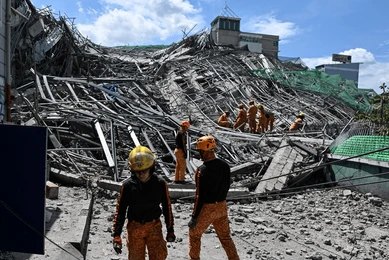
A Venezuelan father did dig through earthquake rubble for 11 days for his daughter—but every credible report says he found her dead, not alive.
Story Snapshot
- A powerful earthquake in Venezuela led to many dramatic rescue stories.
- One father searched by hand for 11 days for his 12-year-old daughter and reached her body, not a living child.
- Social media turned that tragic scene into a “miracle rescue” story that does not match the facts.
What Really Happened After The Earthquakes
Two massive earthquakes ripped through northern Venezuela, crushing homes, offices, and whole neighborhoods under concrete and twisted steel. Thousands died and tens of thousands went missing. Families did not wait for the government. Parents, children, and neighbors grabbed shovels, buckets, and sometimes only their bare hands and started to dig. They dug for voices. They dug for bodies. Most of all, they dug for their own.
Rescue teams, both local and foreign, worked around the clock in La Guaira and nearby coastal cities. United States rescue workers pulled a father and his son from the rubble four days after the quakes. Video shows the pair lifted out alive, dusty but breathing, after a twelve-hour effort. Their survival past the so-called “72-hour window” proved that people can live longer than experts expect when pockets of air, water, and sheer luck line up.
How Long Can People Survive Under Rubble
Disaster experts say the first 72 hours after a quake are the narrow window when most trapped people can still be rescued alive. After that, the search usually shifts from saving lives to recovering bodies. Yet Venezuela delivered several exceptions. A two-year-old boy named Kleiber Moran was found alive and taken to a hospital six days after the quake. Rescue crews pulled a security guard and father of two from a collapsed basement eight days after the earthquakes.
Babies also beat the odds. In La Guaira, an eighteen-day-old baby was pulled from the rubble of a collapsed building and handed to his father, with the child’s mother rescued shortly after. Another reel showed a nine-month-old baby and the child’s mother brought out alive around the 72-hour mark, a rare bright moment in a sea of grief. These cases prove that survival beyond three days is possible, but they cluster around three to eight days, not eleven.
The Eleven-Day Father And The Daughter He Could Not Save
The most haunting story does not come from a viral clip but from a wire report carried by a major American news network. That report describes a Venezuelan father who refused to stop digging for his family. He had already pulled out other relatives. For eleven days, he kept searching for the last missing member of his family—his twelve-year-old daughter. When he finally reached her, she was dead, her body decomposed but still intact.
Every detail in that report points to a father’s endurance and love, but not to a miraculous live rescue after eleven days. There is no evidence he found her alive. No hospital record, no interview with the girl, no footage of a living father-daughter reunion. The only confirmed eleven-day story is a father recovering his child’s corpse. That is tragic, heartbreaking, and heroic. It is not the miracle survival story that some social posts now claim.
Where The “Father Finds Daughter Alive After 11 Days” Story Comes From
Hero stories move faster than fact in the chaos after disasters. Research on social media and misinformation shows that false or exaggerated narratives spread quickly, boosted by users, influencers, and even automated bots. Emotional videos and posts often outrun careful reporting. When people see a clip of rubble, a crying parent, and a rescue team, they may fill in the gaps with hope. A father who reaches his daughter’s body after eleven days can easily become, in retelling, a father who “rescued her alive.”
Major outlets that took time to check names, dates, and hospitals describe father–son rescues at four days, babies at three days, a toddler at six days, and a security guard at eight days. None document a father–daughter pair both surviving after eleven days. On the other side, the detailed report that mentions eleven days clearly says the girl was dead. For anyone who cares about truth, especially conservatives who value personal courage and honest reporting, the pattern here is plain: the bravery is real; the “miracle” claim is not.
What This Teaches About Trust And Truth In Disasters
The Venezuelan earthquakes show how regular people, not just officials, carry the burden when government response is slow or weak. Families dug with their hands for those they loved, sometimes for days, and in one case for nearly two weeks. That deserves respect. But disasters also attract rumor, manipulation, and sloppy storytelling. When we turn a father’s grim recovery of his daughter’s body into a feel-good survival tale, we steal both the hardness of his reality and the public’s ability to think clearly.
Disasters should bring out courage and charity, not fantasy. The true story here is powerful enough on its own: a nation shattered, neighbors taking up the work themselves, and one father who would not stop digging until he reached his child, even when the outcome was death. We honor that kind of sacrifice best not by decorating it with false miracles, but by facing the facts head-on and demanding better preparedness and honest reporting next time.
Sources:
youtube.com, aljazeera.com, washingtonexaminer.com, bbc.com, facebook.com, instagram.com, pmc.ncbi.nlm.nih.gov