A Chinese student’s weekend hobby of photographing military planes landed him in federal custody, exposing a dangerous intersection between aviation enthusiasm and national security at one of America’s most sensitive nuclear command centers.
The Witness Who Sounded the Alarm
Someone near Offutt Air Force Base noticed something troubling. A young man stood outside the perimeter fence with a telescopic camera lens pointed directly at the flightline, where some of America’s most sensitive aircraft sit between missions. That witness report triggered an investigation that would culminate in an arrest at JFK Airport days later. Federal investigators traced the photographer to Tianrui Liang, a Chinese national studying at Glasgow University in Scotland, who had entered the United States through Canada with an itinerary that raised immediate red flags among counterintelligence officials.
When Planespotting Crosses Into Federal Territory
Aviation photography occupies a gray zone in American law. Enthusiasts legally photograph aircraft from public areas daily, sharing images on dedicated websites and forums. Offutt Air Force Base presents a different situation entirely. Home to U.S. Strategic Command since 1992, the Nebraska installation houses nuclear command and control operations alongside reconnaissance aircraft that monitor global threats. Federal law 18 U.S.C. § 795 explicitly prohibits unauthorized photography of defense installations. Base commander approval is required even when shooting from public vantage points. Liang received no such permission, operating instead from information gathered on planespotter websites that catalog military aircraft movements.
The Doomsday Plane in His Viewfinder
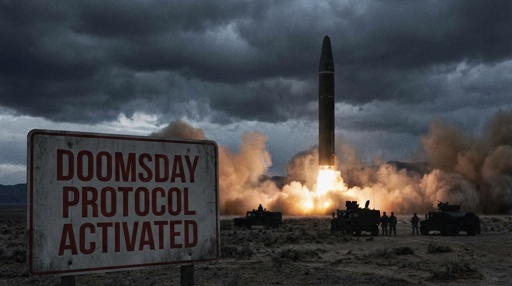
The specific aircraft Liang targeted elevated the security concerns exponentially. His camera contained numerous photographs of RC-135 reconnaissance planes and the E-4B Nightwatch, colloquially known as the “doomsday plane.” The E-4B serves as the airborne command post for the President and Secretary of Defense during nuclear war, designed to survive electromagnetic pulses and coordinate American forces if ground command centers are destroyed. Only four exist in the entire U.S. military inventory. Photographing this aircraft from any angle provides potential intelligence value to foreign adversaries seeking to understand its capabilities, vulnerabilities, or operational patterns.
A Pattern or an Isolated Incident
Liang’s admission to federal agents revealed planning that extended beyond simple curiosity. He told investigators he used planespotter websites to identify aircraft locations and admitted he knew the photography violated federal law. His travel pattern through Canada before entering the United States, combined with his stated intention to photograph additional military aircraft at Tinker Air Force Base in Oklahoma, suggested a methodical approach rather than opportunistic tourism. The federal affidavit filed in the Eastern District of New York established probable cause for prosecution, citing both the unauthorized photography and Liang’s acknowledged awareness of its illegality.
National Security or Hobbyist Overreach
The distinction between innocent aviation enthusiasm and intelligence gathering becomes razor-thin when foreign nationals photograph nuclear command aircraft. Liang’s defense that he was building a “personal collection” strains credibility given his deliberate targeting of Strategic Command assets and his admission that he knew the activity was illegal. Common sense suggests that someone genuinely interested in legal aviation photography would seek proper permissions or photograph commercial aircraft instead. The timing matters too, occurring against a backdrop of documented Chinese espionage efforts targeting U.S. military capabilities and heightened tensions between Washington and Beijing over technology theft and military intelligence.
Federal prosecutors now hold Liang in custody pending further legal proceedings. The case remains in its early stages, with no trial date announced. His status as a non-citizen substantially complicates his position, potentially facing deportation regardless of criminal prosecution outcomes. For Chinese students studying abroad, the incident casts an uncomfortable shadow, potentially triggering increased scrutiny of routine activities near sensitive installations. Aviation enthusiasts operating legally may also face heightened suspicion from base security personnel understandably vigilant about foreign intelligence threats. The broader implications extend to U.S.-China relations, where each incident feeds existing narratives about espionage and national security vulnerabilities.
Sources:
Chinese national arrested at JFK after allegedly photographing US military aircraft at Nebraska base