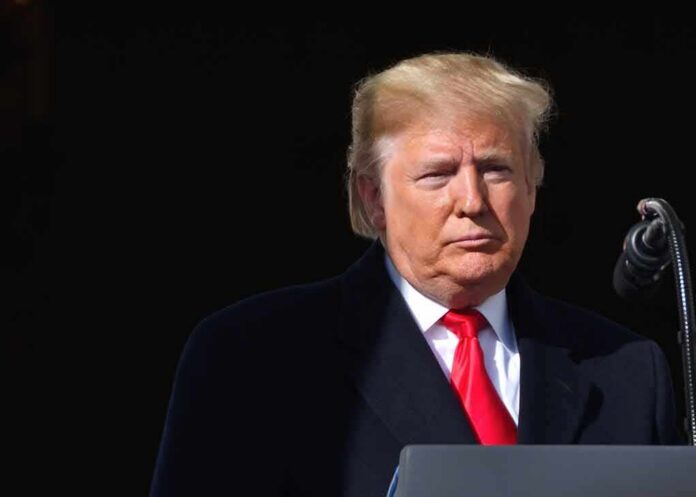
A federal judge just ordered President Trump to answer questions under oath about a BBC edit that the broadcaster admits gave a “mistaken impression” he called for violence.
Story Snapshot
- The court set a deadline for Trump’s deposition in his $10 billion defamation suit.
- The BBC apologized for an edit that created a misleading impression of Trump’s January 6 speech.
- The broadcaster denies defamation, citing no malice and no harm.
- The documentary spliced speech excerpts from far-apart moments into one sequence.
What the Judge’s Order Signals About the Stakes
The court’s directive to depose President Trump by a set date means the case is moving into formal discovery, not just press releases and threats. That matters because discovery can surface emails, edit logs, and producer notes that reveal how and why the clip was cut. Defamation against a public official requires proof of “actual malice.” That is a high bar and often fatal to suits like this. But when edit decisions sit in writing, intent becomes easier to test against the record.
The judge’s schedule also shifts leverage. Trump must explain damages under oath or risk sanctions, even dismissal for noncompliance. The BBC will want him pinned down on what the edit changed in people’s minds and what it cost him. If he clears that hurdle, the fight turns to what the BBC team knew and when. If he dodges, the story becomes his conduct rather than the cut.
The BBC’s Concession—and Its Firm Line Against Liability
The BBC publicly apologized for an “error of judgment,” acknowledging the edit unintentionally created the impression of a direct call for violent action. The chair also issued a personal apology and letter, signaling this was not a small slip buried in a correction box. Yet the broadcaster rejects the legal claim and any payout, saying the program aimed to convey the speech’s broader message and did not act with malice. That stance draws a bright line between editorial error and defamation.
The network also argues that viewers did not see one continuous quote in full context, and that the show was not distributed on its United States platforms. That defense targets two elements: defamatory meaning to a reasonable viewer and jurisdiction or reach. The court will still focus on what the sequence conveyed on screen. If the cut fused separate moments into one, the question becomes whether that fusion asserted a new fact that damaged Trump’s reputation.
The Edit at Issue: What Was Shown Versus What Was Said
Reports describe a sequence made from three pieces taken many minutes apart in Trump’s January 6 speech, presented as a tight run that looked like one passage. The BBC’s own statement accepts that viewers could take from the edit that Trump directly urged violent action, which he disputes he did. That is the reputational heartland. The documentary’s stitching matters because it may have turned pauses and caveats into a single, harder-edged line—something courts have scrutinized before in edited-broadcast disputes.
On the other side, the BBC says the goal was to reflect how supporters received the speech in real time, not to claim an exact transcript. Editors often compress for pacing and clarity. Courts tend to protect that as opinion or fair summary, unless the cut asserts a new and false fact. The fight will likely hinge on expert testimony about how ordinary viewers interpret jump cuts and whether the narration or captions cured any misleading impression.
The Hard Road Ahead: Actual Malice and Proving Real Harm
Trump must prove that the BBC either knew the edit produced a false message or recklessly ignored that risk. The apology calls it unintentional. So far, no public record shows internal warnings or emails flagging the danger before air. That leaves discovery to fill in the gaps. If depositions and edit logs show awareness, the claim strengthens. If the record shows only haste and poor judgment, the law usually protects the press from liability.
**D-4. [new] Judge orders Trump deposition in BBC defamation lawsuit by December 11**
**Frame — what people think:** Trump is using a massive lawsuit to punish the BBC for a misleading edit of his January 6 speech while the BBC fights discovery delays to expose the suit as… https://t.co/ZYKWLD1iQO
— GrumpyNews, emotionally clean news. (@GrumpyNews_) October 23, 2026
Damages will also be a test. The BBC notes Trump won re-election soon after the broadcast, arguing no harm followed. Courts expect more than broad claims of injury. They want proof that the edit caused measurable loss—polling shifts tied to air dates, canceled deals, or other traceable hits. Expect defense counsel to press Trump on names, numbers, and timelines. If he brings experts who can link audience impact to the clip, the damages case gets traction; if not, the dollar figure fades.
Sources:
cbsnews.com, nbcnews.com, wrtv.com, bbc.com