
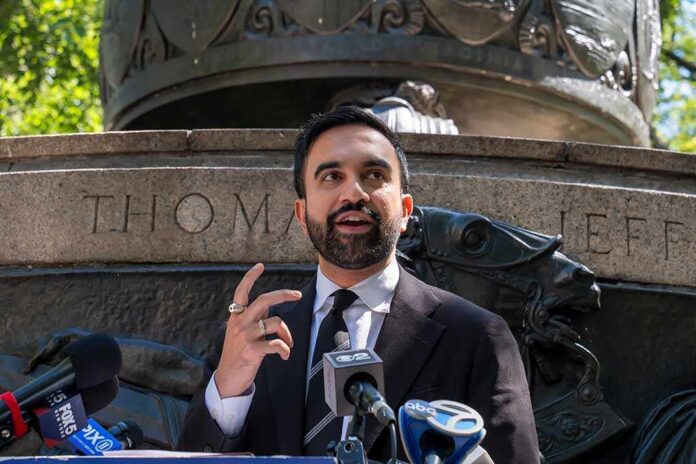
A mayor told New Yorkers to bring nothing to vote, while a Bronx poll watcher says she was shown the door as machines sat unlocked.
Story Snapshot
- Mayor Zohran Mamdani told voters they do not need identification at the polls.
- A Bronx poll watcher, Lulu Friesdat, says staff ordered her out before machines were sealed.
- New York City rules allow watchers to observe openings and ballot handling steps.
- No claim of changed vote totals, but custody gaps raise trust issues.
What Mamdani Told Voters, And Why It Hit A Nerve
Mayor Zohran Mamdani released a message saying most New Yorkers do not need identification to vote and that elections are secure. That part is largely true under state law for most registered voters, though first-time voters who did not provide identification when registering may face checks. The message drew fire because security depends on steps after check-in, not just voter eligibility rules. Chain of custody, seals, and watcher access decide whether the count stays clean.
Critics argue the mayor blurred two different issues. Voter identification rules decide who can cast a ballot. Custody and verification rules decide whether ballots get handled and counted right. A strong system needs both. Saying “bring nothing” may be legally correct for many voters. It does not prove the machinery of counting is tight. Voters hear “secure,” then see chaos clips online, and trust drops. That gap is where this story now lives.
What A Bronx Poll Watcher Says She Saw At Closing Time
Poll watcher Lulu Friesdat says staff began leaving a Bronx site while machines sat open, unlocked, and unsealed with ballots still inside. She says a coordinator told her to leave, called police when she stayed, and a technician then handled machines without her watching. She adds she has watched since 2021 and never saw that before. She did not claim any ballot or total changed; she flagged a break in procedure that weakens confidence.
A separate write-up of her account says the number of voters who signed in matched the number of ballots scanned, and that ballots were bagged and sealed in front of her. But it also says she was not shown the seal numbers and was asked to leave before shutdown finished. On video, she insists watchers can stay through removal and sealing of ballots and that ballots should remain in plain view on the table. She presents this as normal practice, not a special request.
What New York City Rules Actually Promise Watchers
The New York City Board of Elections publishes a poll watcher guide. It allows watchers to arrive before the machines are unlocked to confirm no votes appear and that ballot boxes are empty. The guide establishes watchers as part of the eyes on the process. The aim is simple: show that machines start clean and that ballots remain in control. That is the trust bargain. If a watcher gets sent out before seals go on, the bargain frays, even if no totals change.
That same framework explains why the Bronx scene sparked concern. A watcher’s lawful presence is not a courtesy; it is an accountability layer the public can see. If a site chief or police remove a watcher while ballots are unsecured, they remove the public’s witness. Election officials often say equipment is secure. They should welcome the witness who proves it, not push them outside the door while the crucial steps happen.
What To Make Of The Claims, And What To Fix Before November
Friesdat’s account is one woman’s record, not a court finding. But her video is specific and names the steps that should have happened. Officials elsewhere have pushed back on broad “machine” claims and say ballots and equipment are secure. They have not, so far, given a site-specific answer to this Bronx account. The right answer is not spin. The right answer is the paperwork: seal logs, chain-of-custody forms, and a statement that matches times, numbers, and names.
American conservative values favor simple rules, equal treatment, and visible checks. Keep the voter identification debate honest and separate. Still, harden what really matters on closing: show watchers the seals, read the numbers out loud, record them, and let watchers compare logs. If someone tells a watcher to leave before that, they break trust. If leaders say “secure,” they should point to procedures that any citizen can watch from start to finish, not just to speeches on camera.
Sources:
thegatewaypundit.com, fox.com, vote.nyc, foxnews.com