
The same administration that praises military families has quietly locked up more than 50 of them.
Story Snapshot
- At least 51 spouses and parents of active-duty troops have been detained under Trump’s immigration crackdown.
- For years, both parties treated military service as a strong reason to spare families from deportation.
- Trump-era policy changes stripped those protections, making military families “fair game” in mass enforcement.
- Detentions have disrupted deployments, hurt readiness, and sparked a congressional investigation.
How Military Families Landed In The Middle Of A Mass Deportation Drive
President Trump’s second-term immigration crackdown has swept up a group most Americans assumed was off limits: the parents and spouses of men and women in uniform. An Associated Press review found at least 51 immediate family members of active-duty service members detained since Trump returned to office, and at least six deported. That number is almost certainly low, because the federal government does not even track how many military families land in immigration custody.
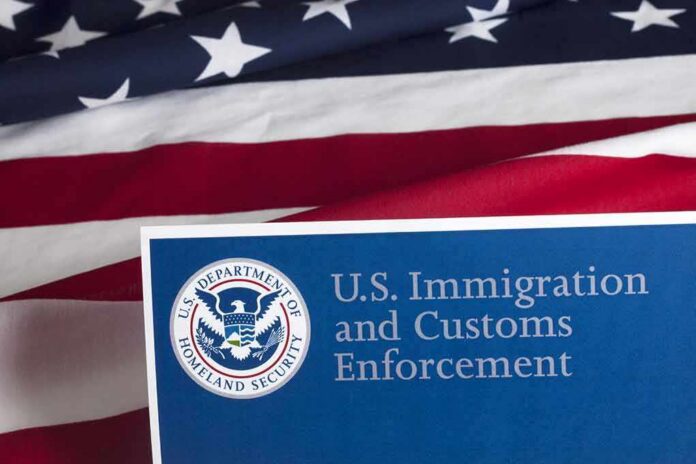
These are not headline-grabbing cartel bosses or terror suspects. Many are people with no criminal record who tried to fix their status using programs the military itself advertises as a benefit of service. Immigration and Customs Enforcement officers have detained some of them at routine appointments: green card interviews, parole-in-place meetings, even visits to get a military ID on base. For families who believed the country “had their back,” the shock hits as hard as the handcuffs.
The Longstanding Promise: Service Should Shield Families From Deportation
For roughly a decade, both Republican and Democrat administrations treated military service as a serious reason to grant mercy in immigration cases. The Department of Homeland Security used tools like “parole in place” and deferred action to let undocumented spouses and parents of troops stay while they pursued legal status and supported the service member. Recruiters pointed to these protections when they urged noncitizens to enlist, and when they told citizen troops that their loved ones would be safer if they signed up.
Policy memos made that promise concrete. A 2013 directive instructed officers to consider granting parole in place to spouses, children, and parents of active-duty members, saying the program would help “minimize the stress and anxiety” that immigration problems cause service members. Later guidance said military service by the individual or an immediate family member was a “significant mitigating factor” when deciding whether to arrest or deport. In plain terms, the message was simple: if you fight for the United States, the government will not casually rip your household apart.
The Trump Shift: From Special Protection To “No Exceptions”
Trump’s broader immigration agenda has been defined by more arrests, more detentions, and fewer carve-outs. His administration announced it would “no longer exempt classes or categories” of migrants from enforcement, explicitly including military families and veterans. In April 2025, the Department of Homeland Security revoked the policy that treated military service as a mitigating factor and replaced it with language stating that “military service alone does not exempt aliens from the consequences of violating U.S. immigration laws.”
That shift did not just tweak legal phrasing. It told front-line officers that a military uniform in the family no longer weighs heavily on the scale. The Associated Press found that, under the new approach, immediate relatives of troops are now “routinely” detained for months while they try to adjust status through the very programs the government promotes to them. Legal experts argue this abandons a hard-earned norm of leniency for military households and instead treats them as just another statistic in a mass deportation campaign.
Real Families, Real Readiness Costs
Behind each case is a unit that suddenly loses a caregiver, a parent, or a spouse. Service members whose loved ones are detained report delayed deployments, forced leave, and distracted soldiers worrying more about immigration court than combat training. One widely reported case involved a newlywed Army staff sergeant whose wife was arrested on a Louisiana base when she went to get a military ID; under prior policy, experts say her case “would have been easy to resolve.” Instead, the couple was split as he prepared to deploy.
Trump admin trucking crackdown lands 51 immigration detentions, 36 English language proficiency violationshttps://t.co/HJDYb7NP6h
— Karoline Leavitt (@PressSec) August 5, 2026
From a common-sense conservative view, this raises a blunt question: does detaining the non-criminal spouse of a deploying soldier make America safer, or weaker? Law-and-order principles demand that laws mean something, and that illegal entry has consequences. But national defense depends on trust between the government and those it sends into harm’s way. Congressional critics, including more than 60 lawmakers in a 2025 letter, argue these detentions “betray promises” to troops and erode military credibility at a time of global strain.
Congressional Scrutiny And The Battle Over Discretion
As stories piled up, dozens of Democrats launched a formal investigation into how and why traditional protections for military families were crumbling. Their letter pressed the Department of Homeland Security and the Pentagon for basic numbers: how many noncitizen service members, veterans, and family members had been detained or pushed into deportation since January of Trump’s second term. They also demanded an explanation for why benefits long offered to troops and their families were being ignored during aggressive enforcement sweeps.
Trump officials defend the policy shift as a move toward equal treatment under the law. In their view, carving out special classes undermines deterrence and suggests that some violations “do not count.” Many conservatives agree that predictable rules matter more than emotional exceptions. Yet the core dispute is not about whether the law exists; it is about how much discretion the executive branch should use when it collides with other vital interests like military readiness and moral commitment to those who serve.
A President Who Courts Military Families While His Agencies Detain Them
At the same time these detentions are happening, Trump is working hard to brand himself as a champion of military households. The White House recently announced an executive order creating the President’s Military Spouse Commission, a body meant to give spouses a direct line to the Oval Office on quality-of-life issues and readiness. On paper, that sounds like strong support for the families behind the force.
The tension is hard to ignore. One arm of the administration invites military spouses to advise the president on child care, job moves, and deployment strain, while another arm sends some of those same spouses to immigration jail when they walk into a federal office seeking legal status. For aging readers who have watched Washington for decades, this may feel familiar: lofty promises on stage, cold policy in the back office. Whether Congress can force a recalibration that both honors the law and protects the families who stand behind our troops remains one of the quiet tests of this immigration crackdown.
Sources:
military.com, americanimmigrationcouncil.org, nbcnews.com, vera.org, en.wikipedia.org, brookings.edu, cnn.com, reuters.com, congress.gov, padilla.senate.gov, ilrc.org