
Donald Trump has approved a U.S.–Saudi nuclear agreement that opens a legal path for uranium enrichment on Saudi soil, under a framework that quietly drops some of the toughest global safeguards.
Story Snapshot
- Trump approved a 30-year civil nuclear deal with Saudi Arabia that could allow domestic uranium enrichment.
- The agreement is built on a formal “123 Agreement” framework for peaceful nuclear cooperation and U.S. technology transfer.
- Key “gold standard” nonproliferation safeguards, including strict limits on enrichment and stronger United Nations inspections, are loosened or missing.
- Supporters see energy, jobs, and leverage over China and Russia; critics see a new nuclear risk in the most volatile region on earth.
Trump’s approval and what the deal actually enables
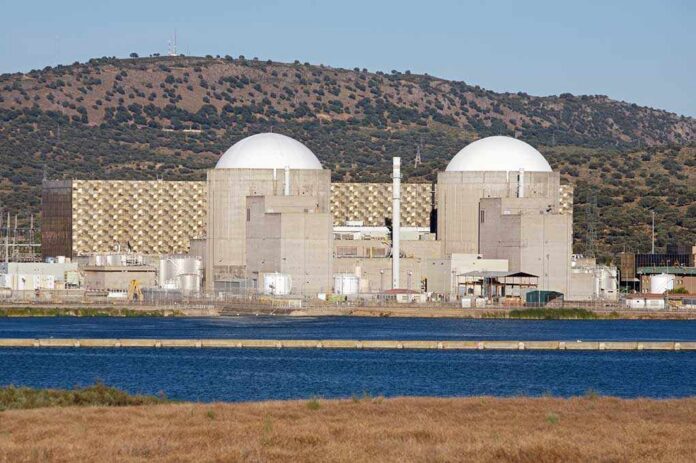
President Donald Trump has now signed off on a civil nuclear agreement with Saudi Arabia that U.S. officials say could allow the kingdom to enrich uranium domestically in the future. The deal is expected to run for about 30 years and be worth tens of billions of dollars, putting American firms at the center of Saudi Arabia’s nuclear energy buildout. Under this framework, U.S. companies may even construct a uranium enrichment facility on Saudi territory if a joint study later finds it commercially necessary.
The agreement sits under Section 123 of the U.S. Atomic Energy Act, the standard legal tool for civil nuclear cooperation deals. That “123 Agreement” structure lets the United States share reactor designs, fuel services, and other peaceful nuclear technologies, as long as both sides follow set rules on security and nonproliferation. In public, both governments still describe this as a peaceful energy partnership focused on electricity, jobs, and long-term strategic ties.
The quiet break from America’s nuclear “gold standard”
The big shift is what the deal does not do. Past U.S. policy pushed new nuclear partners toward a “gold standard” model: no uranium enrichment, no plutonium reprocessing, and stronger inspection rights for the International Atomic Energy Agency. That standard was used with the United Arab Emirates and championed by many Republicans and Democrats in Congress. Reporting and expert analysis say the Saudi framework drops all three pillars: there is no outright enrichment ban, no reprocessing ban, and no requirement to adopt the stricter inspection protocol.
Some Trump officials argue that Saudi Arabia will still face safeguards, but they will be shaped mainly by Washington and Riyadh rather than by the United Nations agency that usually oversees nuclear agreements. From a common-sense conservative viewpoint, that trade looks risky. It swaps clear, treaty-based guardrails for a bilateral promise, with a monarchy that has openly mused about matching Iran “nuclear for nuclear” if Tehran ever gets a bomb. That is not a theoretical worry; it is a stated Saudi position.
Saudi goals, U.S. commercial interests, and fuel cycle ambitions
Saudi leaders have made it clear they want a full civilian fuel cycle, not just imported reactors. Their officials have pressed for a U.S.-built enrichment plant on Saudi soil capable of making low-enriched uranium fuel, which also sits one engineering step away from producing weapons-grade material if controls fail. The new deal creates a legal pathway across that fuel cycle, including enrichment, with a joint research phase to decide whether a domestic plant makes commercial sense.
Supporters inside and outside government point to big potential upsides. The deal could lock in Saudi Arabia as a major buyer of American nuclear reactors and services, support U.S. uranium supply chains, and pull Riyadh away from Russian or Chinese nuclear vendors. One analysis even suggests Saudi Arabia could become “a critical supplier of enriched uranium to the U.S. nuclear industry” if everything goes as planned. That kind of long-term energy partnership fits a classic conservative priority: stronger ties with a key Middle East ally and more reliable fuel for U.S. power plants.
Nonproliferation fears and what critics say is at stake
Arms control experts and many lawmakers see the same facts and reach a very different conclusion. Their concern centers on dual use: the exact same enrichment technology that powers reactors can, with higher levels of processing, produce the core material for nuclear weapons. When a new nuclear state insists on domestic enrichment and rejects the toughest inspection rules, watchdogs treat that as a flashing red light.
President Trump has formally approved a nuclear energy 123 agreement between the US and Saudi Arabia.
Congress will have 90 days to review it. Derailing the agreement would require signed legislation that is likely to require a 2/3 majority to overcome an expected veto.
The…
— Rod Adams (@Atomicrod) July 22, 2026
Analysis of congressional and administration documents indicates the Trump–Saudi framework opens the door to “some type of Saudi uranium enrichment program” and does not require the more intrusive International Atomic Energy Agency monitoring usually sought for sensitive activities. A detailed arms control study goes further, arguing the draft deal offers U.S. help for Saudi fuel cycle capabilities while replacing global safeguards with a custom bilateral system at the most sensitive points. That kind of bespoke oversight may please diplomats, but it weakens clear, enforceable lines ordinary Americans understand.
Balancing energy goals, Iran strategy, and conservative values
Supporters of the deal say America needs to stay engaged or watch Russia and China dominate the nuclear market in the Gulf. They argue that if Washington refuses to cooperate unless a partner gives up enrichment forever, Riyadh will simply buy reactors and know-how elsewhere, with even fewer safeguards. That claim has some logic: walking away does not make Saudi ambitions disappear; it only changes whose flag is on the plant gate.
Still, American conservative values stress peace through strength, clear rules, and distrust of unchecked international promises. Allowing a volatile monarchy to gain enrichment capability while loosening global guardrails cuts against that instinct. It hands a future Saudi ruler a latent nuclear option in a region already bristling with missiles and proxy wars. On the facts available, critics who warn this deal erodes decades of nonproliferation practice have the stronger case, because they align both with long-standing U.S. policy and with the hard-learned lesson that nuclear shortcuts in the Middle East rarely stay “civil” for long.
Sources:
houseofsaud.com, armscontrol.org, brookings.edu, saudigazette.com.sa, reuters.com, thebreakthrough.org, tftc.io, pbs.org, whitehouse.gov, washingtoninstitute.org, heritage.org