

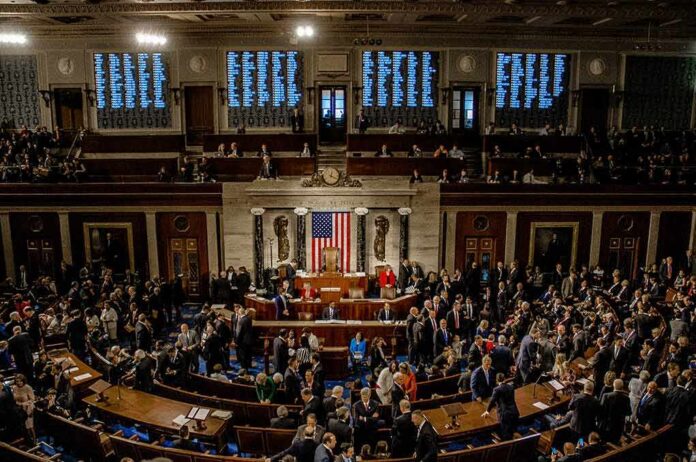
Democrats won control of both the House and the Senate in the 2026 midterms, marking the GOP’s worst showing since Watergate-era 1974.
Story Snapshot
- Democrats secured House and Senate control, crossing both majority thresholds.
- Key Senate wins flipped multiple Republican seats and sealed control.
- Live trackers from major outlets showed Democrats clearing the bar for both chambers.
- The outcome sets up hard bargaining with President Trump over the next two years.
Control Called: What Flipped, What Held, What Mattered
Major news organizations reported that Democrats gained the House majority and took the Senate. National Public Radio listed Democrats with 222 House seats, above the 218 needed to control the chamber. The same tracker showed Democrats at 52 Senate seats, clearing the 51-seat control mark. The Associated Press also reported Democrats clinched both chambers as states finished counting, with calls in several Republican-held Senate seats moving blue.
Individual races explain the math. The Associated Press highlighted Democratic victories in pivotal Senate contests, including North Carolina and Georgia, while noting a cascade of Republican-to-Democrat flips across multiple states. Reason magazine’s roundup named additional Democratic wins in Ohio, Texas, Maine, Michigan, and Kansas, reinforcing the path to a Senate majority and fortifying the narrative of a broad shift in control.
House Map: The Scale Of The Loss
The House scoreboard told a simple story. National Public Radio’s seat count showed Democrats at 222, which placed them above the majority with room to spare. The Associated Press described more than two dozen Democratic pickups across districts, a spread large enough to push Republicans deep into the minority. The exact final tally will settle after certifications, but the threshold was crossed clearly on election reporting desks on November 4.
The loss cut across suburban and swing districts where cost of living, healthcare, and political fatigue shaped choices. The Associated Press voter survey pointed to economic stress and frustration with Washington as top concerns that weighed on Republican candidates down the stretch. The pattern fits a century of midterms where the president’s party often loses ground, but this time Republicans bore the brunt while Democrats capitalized on turnout and candidate recruitment.
Senate Math: The Deciding Races And Why They Broke
Senate control hinged on a handful of states. The Associated Press called decisive Democratic wins in several Republican-held seats, including a marquee pickup in Iowa that pushed the chamber over the top. Add holds in places like Georgia, and the majority took shape. National Public Radio’s 52-seat tally underscored that Democrats did not just scrape by; they built a margin that gives leaders breathing room on routine votes and nominations.
🚨 THE GLOBAL RIPPLE EFFECT: HOW THE 2026 U.S. MIDTERM "BLUE WAVE" IS RESHAPING INTERNATIONAL TRADE, MIDDLE EASTERN CONFLICTS, AND FOREIGN DIPLOMACY! 🚨
As international capitals digest the stunning "blue wave" results that handed control of both the House and Senate to the… pic.twitter.com/EmviA81Jbb
— Boardroom Patriot (@nwmsound) November 4, 2026
Media outlets framed the outcome as a wave, but the label depends on the final seat swings. Ballotpedia’s historical study shows “wave” elections are the top slice of cycles with the largest shifts against the president’s party, not just years when one side holds both chambers. Even so, the functional result is plain: Democrats run both chambers, committees change hands, and the legislative calendar now runs through Democratic priorities.
What It Means For Policy, Markets, And 2027’s Agenda
Unified Democratic control in Congress will collide with President Trump’s agenda. Expect fast oversight moves, a budget reset, and a fight over regulatory rollbacks. Big bills will still need negotiation, but committee chairs now decide what gets a hearing and a vote. Businesses should prepare for shifts on energy, healthcare pricing, and antitrust. The Harvard Business School policy brief notes that divided government slows major laws; unified congressional control often accelerates them.
Campaign spending reached eye-popping levels this cycle, yet results showed message, candidate quality, and turnout strategies still decide close races. Estimates put total midterm spending in the eleven billion dollar range, with record sums poured into contested states. That money bought exposure but not immunity. Late-deciding voters responded to prices at the pump, insurance premiums, and a promise to “make Washington work,” themes Democrats pressed relentlessly across airwaves and doorsteps.
The Conservative Read: Lessons Republicans Must Learn Fast
Republicans face a simple choice: adapt to the map and the middle, or keep losing swing seats. Voters punish chaos, ignore inside baseball, and reward competence. The facts show Democrats cleared both majority thresholds cleanly, with enough Senate padding to control committees and confirmations. Common sense says rebuild candidate pipelines, retire losing messages, and refocus on kitchen-table economics. Voters handed down a verdict; the only smart move now is to study it and change.
Sources:
reason.com, apnews.com, 2news.com, npr.org, aljazeera.com, wfmj.com, journals.plos.org