
A hospice provider operating out of a burrito stand in California somehow passed Medicare certification with no staff, no patients, and no legitimate medical operations—exposing a regulatory failure so egregious it brought a CEO to Congress demanding answers.
When Burrito Stands Become Hospice Centers
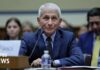
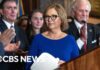
Sheila Clark stood before the House Ways and Means Committee with a question that should never need asking: How does a hospice provider operate out of a burrito stand with full Medicare certification? As President and CEO of the California Hospice and Palliative Care Association, Clark brought receipts to her testimony. She referenced specific providers listed on Medicare’s website with legitimate National Provider Identifiers and addresses that led investigators to strip malls, tire shops, and yes, burrito stands. These locations had no medical staff, no patients receiving care, and in some cases, nothing but piles of undelivered mail stacked at vacant addresses. Yet somehow, these operations passed certification surveys conducted by multiple oversight agencies.
The regulatory failure Clark exposed reveals a bureaucratic nightmare where state licensing boards, federal certifying agencies, and accreditation organizations all rubber-stamped applications without meaningful verification. These fraudulent operators secured National Provider Identifiers, passed site surveys, and gained full access to Medicare and Medi-Cal billing systems. The vetting process that should protect vulnerable end-of-life patients and safeguard taxpayer dollars collapsed completely. Clark’s vivid examples highlighted not just isolated incidents but a systemic breakdown enabling criminal enterprises to masquerade as legitimate medical providers while siphoning millions from public health programs designed for the dying.
California Fights Back While Federal Oversight Crumbles
California launched a full-scale counteroffensive against hospice fraud even as federal protections weakened. Governor Gavin Newsom and Attorney General Rob Bonta announced criminal charges on April 9, 2026, against a Los Angeles organized crime operation that used stolen identities to bill Medi-Cal for non-existent hospice services. The scheme bilked millions from state coffers without providing a single legitimate patient encounter. California’s Department of Health Care Services deployed advanced data analytics, pre-payment fraud flags, and coordinated audits with the Department of Justice’s Division of Medi-Cal Fraud and Elder Abuse. The multi-agency Hospice Fraud Task Force stopped payments, suspended provider enrollment, and initiated license revocations before fraudsters could drain additional funds.
The state’s aggressive enforcement yielded staggering numbers: over 280 hospice licenses revoked in just two years, 300 providers currently under investigation, and 284 arrests. California implemented a moratorium on new hospice licenses to halt the influx of fraudulent applications while investigators worked through the backlog. Enhanced safeguards rolling out in July 2026 include multifactor authentication for provider enrollment and expanded site verification protocols. This state-level crackdown occurred against a troubling national backdrop where President Trump pardoned a key figure in America’s largest health care fraud scheme, triggering federal regulation rollbacks that created wider gaps for fraudsters to exploit. California’s response demonstrated what determined enforcement could accomplish when political will aligned with adequate resources.
The Economics of Organized Medical Theft
The financial mechanics behind hospice fraud reveal sophisticated criminal operations targeting programs meant for society’s most vulnerable. Organized crime groups obtained legitimate-appearing credentials, established shell companies at commercial addresses, and submitted billing claims for hospice services never rendered to patients who never existed. These operations exploited the fee-for-service reimbursement model, understanding that Medicare and Medi-Cal systems prioritized payment speed over verification. The fraudsters banked on bureaucratic delays between billing and detection, extracting maximum cash before authorities could investigate. California officials characterized the schemes as “deliberate fraud” rather than administrative errors, emphasizing the calculated nature of these criminal enterprises.
Taxpayers bore the direct costs through drained Medi-Cal and Medicare funds, while legitimate hospice providers faced unfair competition from fraudulent operators undercutting prices without overhead for actual patient care. The broader economic impact extended beyond stolen dollars to eroded public trust in end-of-life care systems. Patients and families who depend on genuine hospice services confronted a marketplace polluted by fake providers, making it harder to identify quality care during emotionally vulnerable periods. The fraud also strained California’s health care budget, diverting resources needed for legitimate medical services to fraud investigation and prosecution. Long-term implications include potential barriers for authentic providers navigating heightened scrutiny implemented to catch criminals.
Regulatory Gaps Demand Federal Action
Clark’s congressional testimony exposed fundamental flaws in the certification pipeline that no state can fix alone. Federal agencies grant National Provider Identifiers and Medicare certification based on applications that fraudsters easily manipulated. Accreditation organizations conducted site surveys that somehow validated burrito stands and empty strip malls as operational medical facilities. The disconnect between federal certification processes and on-the-ground reality created a regulatory no-man’s land where criminal operators thrived. Clark’s pointed questioning—”How did that happen?”—demanded accountability from oversight bodies that failed their basic function. The House Ways and Means Committee hearing, involving a fraud task force led by Vice President Vance, signaled congressional awareness, but awareness alone won’t plug the leaks.
Hospice CEO asks Congress how a provider can operate 'out of a burrito stand in California' with no oversight https://t.co/ifiMfwaGDg pic.twitter.com/snbF9xLPbZ
— New York Post (@nypost) April 23, 2026
California’s enforcement success proves that coordinated, data-driven oversight works when agencies commit resources and political leaders demand results. The state’s use of advanced analytics to flag suspicious billing patterns, combined with rapid payment suspension and license revocation, created a model other states could replicate. However, the surge in hospice and home health provider applications nationwide suggests California’s problem represents a fraction of a larger epidemic. Without federal reforms matching California’s intensity—strengthened NPI vetting, mandatory site verification before certification, and real-time billing pattern analysis—fraudsters will simply migrate to states with weaker enforcement. The contrast between California’s crackdown and federal rollbacks following the Trump pardon illustrates a dangerous divergence where state efforts combat fraud while federal policy inadvertently enables it.