
At a Texas truck plant, President Trump spotted Dennis Rodman in the crowd and turned a routine stop into a headline about sports, friendship, and North Korea.
Story Snapshot
- Trump praised Rodman as a longtime friend and one of basketball’s greatest rebounders.
- Trump linked Rodman’s rare access to Kim Jong Un to his own outreach with North Korea.
- Rodman joined Trump’s swing through Texas as the president eyes another Kim meeting.
- The moment showed how celebrity ties can serve as informal diplomatic backchannels.
Trump’s Texas Shout-Out Ties Sports Fame To Statecraft
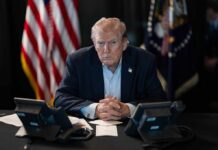
President Trump addressed workers at the Peterbilt factory in Denton, Texas, and suddenly waved to Dennis Rodman. He introduced Rodman as a basketball legend, the greatest rebounder in the sport, and a personal friend. He then drew a straight line from Rodman’s time in Pyongyang to his own efforts to read Kim Jong Un. “The one who knew him best was Dennis Rodman,” Trump told the crowd. The remark set off cheers and cameras in a setting built for torque and steel, not diplomacy.
Reporters traveling with the president noted that Rodman’s presence came as Trump works to secure another face-to-face with Kim. The schedule paired factory-floor remarks in Texas with a rally across the Red River in Oklahoma. Rodman traveled in the broader entourage, which only added curiosity. Trump framed the connection as practical: use the person who has met Kim many times to help open the next door. The logic was plain. Access beats guesswork when stakes run high.
Rodman’s Unusual Access And What It Buys
Dennis Rodman visited North Korea several times between 2013 and 2017, met Kim Jong Un, and staged exhibition games. Those trips built a relationship that few Americans have with the regime. Analysts have long debated how much value such access holds. The Center for Strategic and International Studies said celebrity sports diplomacy tends to work best when political winds already shift, not when they blow head-on. Symbolic wins draw attention but do not replace hard talks and verifiable steps.
Trump’s onstage praise did not claim Rodman could sign a treaty. It cast him as a useful reader of Kim’s habits, tastes, and red lines. That kind of read can help a leader shape tone, timing, and asks. It cannot decide missile counts. Still, presidents use backchannels when official lines stall. Business leaders use them too. Knowing who picks up the phone matters. A White House can respect that truth without handing over the keys to a celebrity emissary.
What Trump Said, And Why It Lands With Voters
Trump’s words traveled fast because they were simple and specific. He said he and Kim “get along,” but when he wanted to know Kim better, he asked the man who knew him best. Then he called Rodman the greatest rebounder and a special friend. That cadence fits how many people think: find the expert who knows the person, not the theory. It also matched the setting. A truck plant values results, not jargon. Trump sold a practical angle, not a seminar.
Conservative voters tend to judge diplomacy by clear outcomes, a strong posture, and peace through strength. They also back unconventional tools if those tools work. Rodman is not a career envoy. He is a five-time champion with rare access to a hostile capital. If his presence helps secure a meeting that lowers risk to American troops and allies, that aligns with common sense and national interest. The method matters less than the mission and the result.
The Ceiling And The Floor Of Celebrity Diplomacy
History gives guardrails. Celebrity visits can soften images and open doors, but they rarely move missiles. The floor is soft power: a warmer room, a better read on the other side, and fewer chances to misread signals. The ceiling is narrow: no sanctions relief, no inspection deals, no enforceable promises. That is why responsible leaders use celebrity access as a supplement, not a substitute. Trump’s remarks placed Rodman exactly in that lane: a helpful bridge, not the bridge itself.
Did we send Dennis Rodman to North Korea once? Was that a fever dream? https://t.co/SPbygZIgUD
— Kiki Rose (@Macandcheese239) October 2, 2026
Rodman, for his part, did not deliver a policy speech on the factory floor. He stood out in bold clothes as always and let Trump do the talking. Coverage noted his prior travel to North Korea and the years-long connection with Kim. The scene ended as it began: a president working a plant crowd, a sports icon waving back, and a clear message sent to Pyongyang. The door is open if talks serve American security and lead to real, testable steps.
Sources:
youtube.com, basketballnetwork.net, news.sbs.co.kr, reuters.com, ground.news