

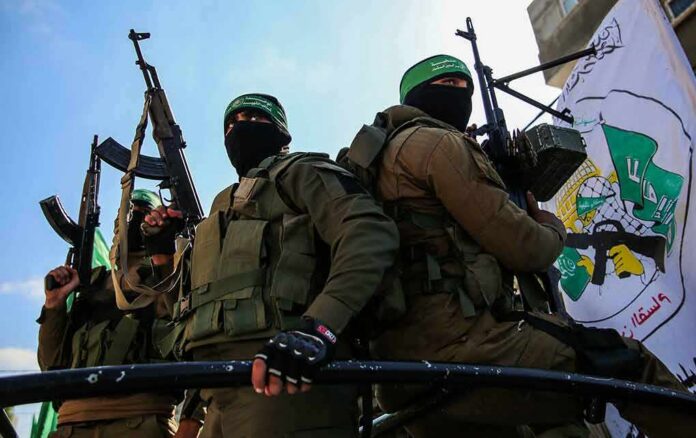
Federal agents say two Louisiana brothers turned social media into a cash pipeline for Hamas, and they traced the money trail.
Story Snapshot
- FBI and New York Police Department joint probe led to two arrests in Louisiana.
- Court records describe donation drives on Snapchat, Instagram, and WhatsApp.
- Prosecutors allege more than $83,000 moved through PayPal, plus other transfers.
- Funds allegedly flowed to a Gaza-based fundraiser linked to Hamas.
What investigators say the brothers did and how they did it
Federal complaints unsealed after the arrests say Omar and Abdel Adhami used Snapchat, Instagram, and WhatsApp to raise money under the banner of helping “the poor and orphans in Gaza.” Prosecutors say the posts mixed charity appeals with Hamas imagery and propaganda. The narrative describes a public funnel to Telegram, where donors got payment details. The case charges material support, wire fraud, and money laundering. The complaints were filed in the Eastern District of Louisiana.
NBC News reports the government traced direct transfers by Abdel Adhami, including almost $35,000 to one PayPal account and $46,600 to another over several months. Other reporting places the PayPal total above $83,000, with about $2,000 via Western Union. The figures come from the newly unsealed filings and supporting records. Amounts vary by outlet, but the core claim is clear: substantial funds moved to recipients tied to Gaza.
Who received the money and why it matters
Multiple reports name Saleem Alzaq as a Gaza-based fundraiser who promoted Hamas while asking for donations as charity. Prosecutors say the brothers channeled money to him or at his direction. That detail matters because Hamas is a designated foreign terrorist group under United States law. Sending money to a person tied to that group triggers the material support statute if the sender knew the connection. That statute has long treated money as fungible in terror finance cases.
Reporters also describe an encrypted group chat and a broader funding web. A federal warrant cited in local coverage says agents traced an online channel tied to Hamas that pointed people to a fundraising site that used rotating cryptocurrency addresses. The warrant materials allegedly identified thousands of contacts who reached out to donate online. That pattern matches how modern terror finance often blends social media, peer-to-peer payments, and digital assets.
How the case was built and why that approach works
The investigation drew on a joint team from the Federal Bureau of Investigation and the New York Police Department, according to several outlets. That kind of partnership lets agents follow money across platforms and states. Local reporting also notes communications between Abdel Adhami and an undercover New York Police Department officer about moving funds. Undercover approaches and platform records can tie accounts to real people, which is central when activity moves across apps and aliases.
🚨 Two Louisiana men were charged in an alleged $1M+ Hamas fundraising scheme disguised as Gaza “humanitarian aid,” prosecutors say.
The NYPD says its investigation helped expose the operation. https://t.co/KKcM3VN3q3
— Johnsen mark (@Johnsenmarsiqu) October 2, 2026
Past cases show why prosecutors focus on the sender’s knowledge and the recipient’s true role. Juries have convicted when evidence showed money reached fronts that served Hamas, even if labeled as charity. The Department of Justice says the law treats money in a terrorist group’s hands as support, no matter the stated purpose. That view tracks conservative common sense: do not bankroll groups that kill civilians, and do not hide behind hashtags to do it.
Charges, stakes, and the road ahead
Abdel Adhami faces counts for material support to a foreign terrorist organization, wire fraud, and money laundering, per the complaint. Outlets report both brothers were arrested in Louisiana after the cases were unsealed. All defendants are presumed innocent until proven guilty. Still, the described evidence—public posts, payment logs, chats, and named intermediaries—gives prosecutors multiple lanes. If the government proves knowledge and direction, sentencing can be severe under terror finance laws.
Americans should take two lessons. First, online charity pleas can be a mask for terror fundraising. Do not give to people you meet in encrypted chats. Vet the group, the platform, and the payment. Second, cross-agency policing works. The Federal Bureau of Investigation and New York Police Department teamed to map social posts to banked money. That blend of digital forensics and old-school undercover work protects communities without new laws or heavy speech policing.
Why this case fits a larger post-October 7 pattern
Congress and federal agencies describe a shift from traditional bank wires to layered online systems tied to social media and crypto. The government has already charged people who help convert cryptocurrency into cash for designated groups. The Adhami case shows how a simple pitch—help the needy—can sit on top of a network that routes funds to Hamas-linked actors. That is why money trails, not slogans, decide these cases in court.
Sources:
nypost.com, nbcnews.com, wwltv.com, southernjewishlife.substack.com, wdsu.com, justice.gov, jns.org, fraser.stlouisfed.org, i24news.tv