

Search crews found a confirmed debris field from the missing Bermuda-to-Boston medical flight off Nantucket, and the hunt now shifts from sky to sea floor.
Story Snapshot
- The U.S. Coast Guard confirmed debris from the missing Gulfstream G100 air ambulance off Nantucket.
- Six people were aboard during the Bermuda-to-Boston mission, including crew and medical passengers.
- Coast Guard teams expanded searches across more than 1,600 square miles and worked overnight.
- Federal timing marks place the loss of contact around 1 to 2 a.m. early Saturday.
Debris Confirmation Sets The Search Direction
The United States Coast Guard said crews located a debris field off Nantucket that they confirmed was from the missing medical transport aircraft. Officials and multiple outlets identified the jet as a Gulfstream G100. The flight departed Bermuda’s L.F. Wade International Airport for Boston. Authorities shifted resources to the debris location and prepared to map the spread. That early debris fix is the key marker that often moves an air search into a maritime recovery phase.
Reporting across several agencies and outlets stated that six people were on board. Accounts described four crew members and two passengers, or a patient and a family member along with the crew. That range is common in first reports from complex missions. The core fact stands: this was a medical flight on a defined route with a professional crew and medical passengers. That matters because the mission profile affects how investigators think about fuel, altitude, and diversion choices.
Overnight Search And A Race Against Time
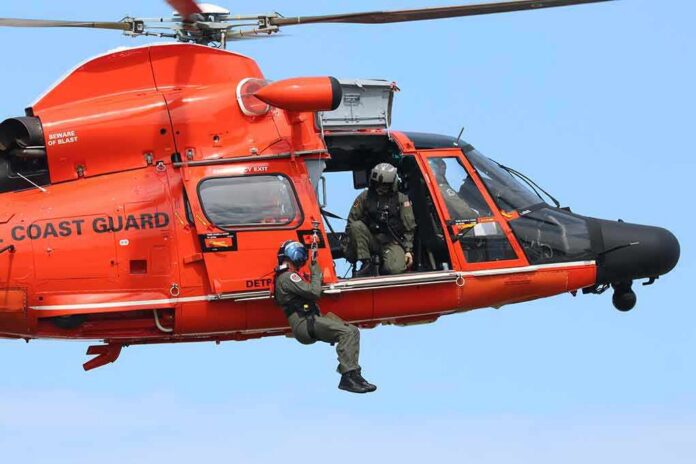
Coast Guard aircraft and boats kept working through the night after the debris find. The search tracked a grid that spanned roughly 1,600 square miles with helicopters, planes, and a fast response cutter. Crews managed sea states, currents, and darkness to guard any chance of rescue. That persistence lines up with the Coast Guard’s standard for life-saving missions in near-shore waters, where wind and tide can push wreckage and people quickly across miles.
The Federal Aviation Administration timeline placed the alert in the early hours. Reports described a search-and-rescue notice around 1:20 a.m. and a loss of contact between about 1:00 and 2:00 a.m. local time. That window helps planners backtrack drift and radar traces. It also guides sonar targets when teams start scanning the sea floor. The tighter the time box, the more accurate the current models and the higher the odds of finding core wreckage fast.
Why The Type Of Flight Shapes The Response
Medical transport flights carry unique risks and constraints. Crews balance speed, altitude, and patient needs. The Gulfstream G100 platform offers range and performance that fit ocean legs, but it still depends on careful fuel and weather planning. Search leaders know that aircraft structure, weight, and impact speed change how debris scatters. That is why teams seize the first debris position and then widen the map to model how currents spread lighter parts away from heavier sections like engines or landing gear.
Investigators from the National Transportation Safety Board (NTSB) typically follow a set path after the search phase. They secure wreckage, collect flight track data, and compare mapped debris to expected break patterns. Prior air-ambulance cases show that cause findings come later, after component exams, not during the first coastal sweep. This case will likely follow that timeline once recovery teams finish their ocean-floor scans and lift key parts to the surface.
What The Facts Support Today
The facts now point to four anchors. First, the Coast Guard confirmed debris tied to the missing aircraft off Nantucket. Second, the jet was a Gulfstream G100 on a medical mission from Bermuda to Boston. Third, six people were aboard, including a trained crew and medical passengers. Fourth, the Coast Guard kept searching overnight with a large footprint to maximize rescue chances. Those points fit the standard arc of an offshore aviation emergency and a coordinated federal response.
Debris Found, 6 Still Missing After Medical Plane Vanishes Off Nantucket — debris was located but the six people aboard the medical flight remain unaccounted for. https://t.co/Hfk8ctXVJj
— Zark News (@ZarkNewsHQ) October 4, 2026
Some outlets noted slight differences in the exact contact-loss time. That happens in the first hours of any fast-moving case and does not change the core record of the debris find and the ongoing search. The strongest public signals remain the Coast Guard’s confirmation at sea and the sustained deployment of ships and aircraft. Common sense says back the rescuers, track the official updates, and let the investigative process do its job with patience and care.
Sources:
abcnews.com, nytimes.com, cnn.com, boston.com