Al-Qaeda’s praise for the FlyDubai cockpit attack is not a footnote; it is a blueprint for copycats eyeing U.S. and Israeli flights.
Story Snapshot
- United Arab Emirates prosecutors called the FlyDubai cockpit assault a terrorist attempt involving an axe inside the flight deck.
- FlyDubai confirmed its Dubai-to-Tel Aviv flight diverted to Tabuk after a “safety incident” in the cockpit.
- A pro–al-Qaeda outlet praised the assault and urged attacks on planes carrying Americans and Israelis, invoking 9/11.
- Officials and analysts say no public proof shows al-Qaeda directed the attack, which may have been a lone-actor case.
What Investigators Say Happened On Flight FZ1073
United Arab Emirates prosecutors said the co-pilot on FlyDubai flight FZ1073 tried to carry out a terrorist attack on September 30. They said he attacked the captain with a crash axe inside the cockpit and attempted to seize control. Saudi authorities received the diverted jet in Tabuk, where it landed safely. Reuters identified the co-pilot as Hammam al-Hammami, an Omani national, citing a source with direct knowledge of the matter. The United Arab Emirates foreign ministry summarized the event and the ongoing probe.
FlyDubai’s own update confirmed the route and the diversion. The airline said the Dubai-to-Tel Aviv flight diverted after a “safety incident” in the flight deck. It reported crew injuries and care for passengers, while security agencies took over the case. That plain statement anchors the core timeline: departure from Dubai, a cockpit struggle, diversion to Tabuk, and a safe landing. The airline did not assign motive. Prosecutors later did.
The Speed Of Propaganda: From Cockpit Assault To Global Incitement
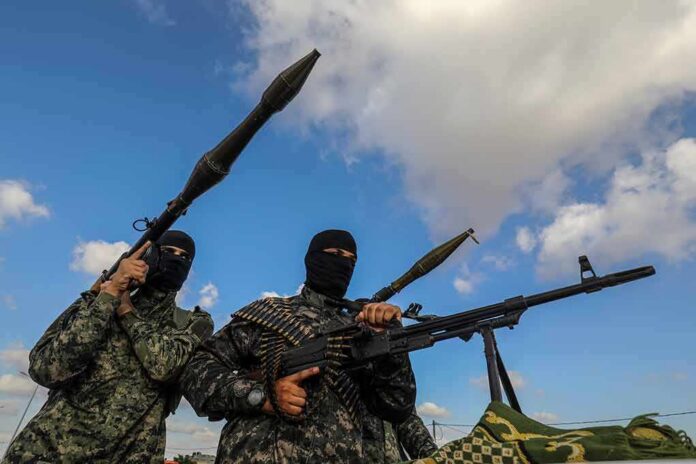
Within days, a pro–al-Qaeda publication celebrated the attack and called for more assaults on aircraft carrying Americans and Israelis. Reports say it linked the cockpit fight to the September 11 attacks and framed planes as open-season targets. That rhetoric matters more than bluster. It turns one event into a recruiting ad and a how-to signal for extremists who already crave a cause. Propaganda does not need to train a pilot to spark a wave; it only needs to inspire the next attempt.
Some coverage adds caution. One report says Israeli security officials assessed that the co-pilot likely radicalized on his own and acted independently. It also says there is no public evidence he followed al-Qaeda orders. A terrorism analyst made a similar point, saying al-Qaeda appears to be leveraging the case rather than proving command over it. Both claims fit a familiar pattern: lone actors act locally; networks exploit the story globally.
The Suspect’s Red Flags And Why They Matter
U.S. media reported the suspect had been flagged earlier for extremist materials and removed from flying by a previous employer in 2024. Sources described him as a security risk whose background drew warnings before FlyDubai hired him. If accurate, that trail shows the risk of soft screening and weak follow-through. Airlines live on trust and process. When threat flags do not move through the system with force, cockpits get weaker. That is not fear-mongering. That is lessons-learned common sense.
[Take 11/15 · 𝕏-1]
### 𝕏-1. FlyDubai co-pilot identified as Omani Hamam al-Hammami; axe attack on Tel Aviv flight foiled
*(as of 2026-10-03)***1. The Frame**
**What people think this is about:** A radicalized Omani co-pilot, Hamam al-Hammami, attempted to hijack and crash a…
— GrumpyNews, emotionally clean news. (@GrumpyNews_) October 4, 2026
The route—Dubai to Tel Aviv—also tracks with the message al-Qaeda-linked media pushed. They framed the target as “Zionist” and tied it to past aviation terror. Israel treated the event as a major security scare, while the United Arab Emirates labeled it terrorism. Multiple outlets placed the flight’s destination and the cockpit assault front and center. The symbolism is not subtle: a commercial jet bound for Israel, a co-pilot inside the armored door, and an axe. That is the nightmare scenario every training drill tries to prevent.
What The Facts Support—And What They Do Not
The record supports four firm points. First, a violent cockpit attack happened, and prosecutors called it a terrorist attempt. Second, the airline confirmed the diversion after a flight deck incident. Third, a pro–al-Qaeda outlet praised the attack and urged copycats, with clear 9/11 allusions. Fourth, no public proof shows al-Qaeda directed or ordered the assault, and credible voices say it appears independent. That is the box we must reason inside.
Policy should match those facts. Harden cockpits against insider threats. Improve hiring checks, data-sharing, and real-time risk alerts across carriers and borders. Treat propaganda that names U.S. and Israeli targets as operational warning, not mere speech. Free societies cannot ban every bad idea, but they can move resources when the threat picture sharpens. That aligns with conservative priorities: secure borders, tough screening, accountability for institutions, and peace through strength.
Why This Moment Demands Urgency, Not Panic
A single co-pilot with an axe nearly forced a tragedy. That is not 9/11, but it rhymes with it. The lesson is simple. Lone actors do not need a green light from a cave in the mountains. They need motive, means, and a moment. Propaganda provides motive. Gaps in screening provide means. Complacency provides the moment. Close those gaps now, or the next bulletin will not be about a safe diversion to Tabuk—it will be about a crater and a list of names.
Sources:
pjmedia.com, aljazeera.com, reuters.com, news.flydubai.com, jpost.com, abcnews.com, rvmnews.com, mofa.gov.ae, aol.co.uk