

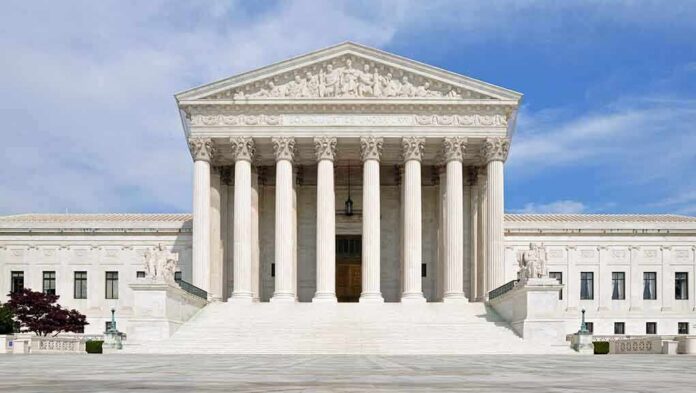
Justice Samuel Alito says he thinks about retiring every term, but he is staying for now.
Story Snapshot
- Alito said he considered retiring at the end of the last term but chose to remain.
- He confirmed he will revisit retirement every year going forward.
- He stated he will serve at least through the next Supreme Court term.
- Reports say he has hired clerks and plans to serve into at least 2027.
Alito’s Own Words Set The Timeline
CBS News interview excerpts show Justice Samuel Alito weighing retirement each term. He said, “It’s something that I think that somebody at my age has to think about every term,” and added, “I thought that I could still make a valuable contribution,” explaining why he stayed after the last term. He also answered “Yeah, I think I have to,” when asked if he would keep considering retirement each year. This frames the matter as annual prudence, not a sudden exit plan.
Alito has also been clear on the near future. He told interviewers he is staying for “another term,” which removes guesswork about an immediate vacancy. ABC News reported he was hiring law clerks and intended to continue into at least 2027, which matches that message of continuity. One brief caveat applies: he has made no formal retirement announcement. The point is stability now, with a yearly check-in later, which is normal for a senior justice.
What Annual Reassessment Means In Practice
Supreme Court justices often decide changes around the end of a term. Pensions, health, and workload drive much of that timing. Research shows retirements usually cluster at term ends because that is how the Court’s calendar works and how benefits accrue. Since the postwar era, most vacancies have come from retirements, not deaths, as justices tend to serve long and step down when ready. Alito’s “every term” lens fits that pattern. It signals care, not chaos, and gives the Court time to plan.
Vacancies remain rare yet consequential events. Across modern history, a vacancy has opened, on average, every 2.4 years, which keeps public focus sharp when any justice raises the topic. The stakes always feel high because one seat can shift outcomes on law that governs every home, school, and business. But rarity cuts both ways. It argues for patience with process and for letting the Court’s term rhythm guide decisions instead of the daily political cycle.
The Politics Everyone Talks About, And The Facts That Matter
Coverage tied Alito’s remarks to who might fill a future seat and when the Senate would act. That is a familiar script because presidents pick nominees and the Senate votes. Yet the current facts are simple: Alito considered retirement, decided to stay, and will reassess after future terms. That aligns with common sense and conservative values about duty, prudence, and continuity. He kept serving because he believes he still adds value. That is a plain standard worth respecting on its face.
READ NOW: Alito Reveals He Considered Retirement, Will Revisit Decision Each Term — Justice Samuel Alito said he considered retiring this year but decided to stay because he believed he could still contribute to the…https://t.co/Y160uRI3Kp
— Top News by CPAC (@TopNewsbyCPAC) October 3, 2026
Speculation will keep buzzing, but the record is steady. He said he is here for the next term. He said he will think again next year. He prepared his chambers as if he will be there into 2027. Those three points match the reporting footprints from interviews and court-adjacent details. Voters and readers do not need to chase rumors when the justice has laid out a simple plan: serve now, reassess later, repeat.
Why This Matters For The Court And The Country
Clear signals from a sitting justice calm markets for law. Lawyers plan cases. Agencies set rules. States write bills. Certainty about the bench, even for one term, helps all of that move with fewer shocks. History backs the slow-and-steady model. Most justices depart on their own timeline, often after weighing age, health, and institutional needs more than short-term politics. Alito’s approach fits that model and gives the public what it needs most from the Court: predictability over drama.
Sources:
feedpress.me, politico.com, washingtonexaminer.com, ground.news, theblaze.com, washingtonsun.com, cnn.com, brennancenter.org