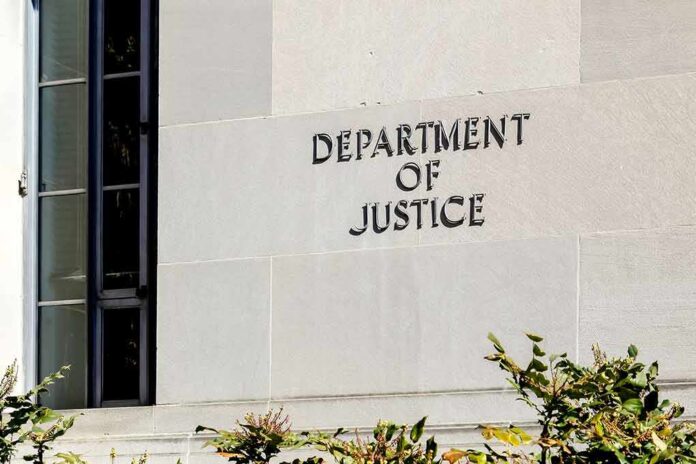
Federal prosecutors are examining whether Corey Lewandowski personally profited from Department of Homeland Security contracts after a criminal referral from the department’s watchdog, according to multiple reports.
Story Snapshot
- Justice Department inquiry reportedly followed a Department of Homeland Security watchdog referral.
- Allegations center on personal financial gain tied to contracts during Kristi Noem’s tenure at the department.
- Coverage cites a high-dollar aircraft deal and Lewandowski’s influence over contracting as areas of scrutiny.
- Lewandowski denies wrongdoing and has not been charged.
What DOJ Is Reportedly Probing, And Why It Matters
CBS News and CNN reported that the Department of Justice opened an inquiry after the Department of Homeland Security Office of Inspector General shared findings and made a criminal referral. The reports say prosecutors are looking at whether Lewandowski, a senior adviser who functioned as an informal chief of staff, steered or influenced contracts and then personally benefited. The question is simple and serious: did access and authority at a security agency cross into private gain? That line defines public trust in a system that must be fair to all vendors.
The New York Times highlighted a $108 million payment for a converted Boeing 737 as a prominent transaction under review in the broader contracting picture. The article described luxury features and linked the vendor to a political donor, which gives investigators a specific, traceable deal to test against emails, approvals, and procurement rules. That figure is big enough to command review. High-dollar awards often leave a paper trail that reveals who pushed, who signed, and who gained.
Lewandowski’s Role And The Contracting Crossroads
Reporting from CNN said Lewandowski operated as a de facto chief of staff during Kristi Noem’s tenure, giving him proximity to decisions and vendors. That seat near the switch matters because influence can be exercised without a formal signature block. Federal acquisition rules draw bright lines around conflicts of interest and the appearance of favoritism. When a senior aide shapes priorities, meetings, and timelines, contracting officers feel that pressure. The inquiry is testing whether that pressure became improper advantage.
To be clear on status, outlets reporting on the investigation noted that Lewandowski denies wrongdoing and has not been charged. Denial is not proof, but it establishes the other stake: reputational damage if no charges result. Conservative readers know the standard here. We expect limited government, clean books, and equal rules. If a political ally bent those rules, that betrays taxpayers. If not, a clean bill should land fast and publicly. Speed and clarity serve everyone.
The Paper Trail Investigators Will Hunt
Investigators will aim for contract numbers, evaluation records, approval chains, and modifications. They will map emails, text messages, calendars, and vendor ownership. They will ask whether Lewandowski or associates received fees, equity, or promises. They will compare claimed roles against actual authority. Senate oversight letters already demanded records from the department about an alleged pay-to-play setup, which shows the matter has climbed beyond rumors into formal scrutiny. That demand expands pressure for documentation and timelines.
VIDEO – Trump Says He ‘Heard Something About’ DoJ Probe into Corey Lewandowski @realDonaldTrump https://t.co/OTmUGzGDVM
— Grabien (@GrabienMedia) October 23, 2026
The larger pattern offers context without excuse. Many ethics and procurement reviews do not end in charges. Inspectors general often flag conduct that breaches policy while falling short of criminal statutes. A past sample of federal ethics matters shows many referrals declined and only a fraction accepted, underscoring how rare criminal cases are relative to administrative issues. That history sets expectations: the law draws a tighter circle than bad optics, but both still matter to public confidence.
How This Touches Policy, Politics, And Principle
This story mixes national security procurement, campaign-era relationships, and the core test of fair competition. The reported aircraft deal functions as a stress test: was value delivered at a fair price, and did the process meet the rules? The Department of Justice inquiry backed by a watchdog referral suggests the bar for review was met. That does not pre-judge guilt; it does confirm the stakes. When a single connected vendor wins big, the process must be transparent enough to stand heat.
The public deserves two outcomes, whichever way the facts cut. If the Department of Justice finds criminal conduct, charges should be swift and specific. If not, the department and the inspector general should explain what they saw and why it did not meet the standard for prosecution. That is not about spectacle. It is about respect for the line between public duty and private gain. Every taxpayer has skin in that game, and every honest contractor does too.
Sources:
cbsnews.com, nytimes.com, yahoo.com