
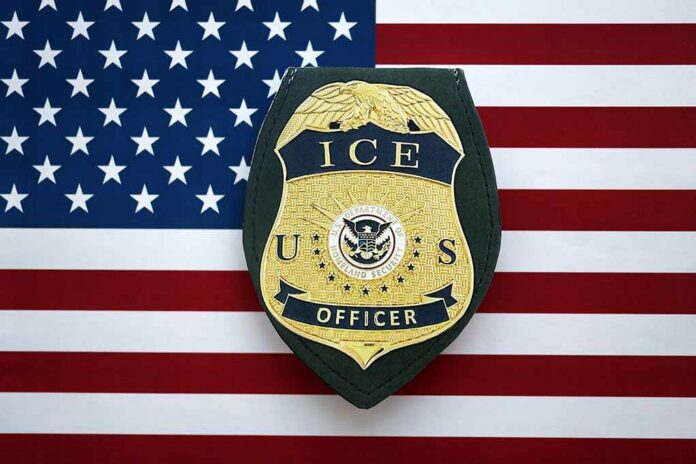
Prosecutors say synchronized videos show an officer steering toward a fleeing man, and a Texas grand jury agreed there’s a felony case to answer.
Story Snapshot
- A Harris County grand jury indicted ICE officer Mario Alberto Morales for aggravated assault with a deadly weapon.
- Prosecutors presented synchronized body-camera and bakery surveillance video they say shows Morales hitting a man on foot.
- The injured man, Miguel Parra-Hernandez, suffered leg fractures and remains in custody while receiving care.
- Immigration and Customs Enforcement rejects claims of intent and calls the case political.
Grand Jury Indictment And The Charge
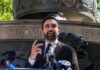
Harris County District Attorney Sean Teare announced that a grand jury returned an indictment against Immigration and Customs Enforcement officer Mario Alberto Morales for second-degree aggravated assault with a deadly weapon. The alleged weapon was his unmarked 2025 Jeep Grand Cherokee. The incident occurred on October 10 on the 16200 block of Clay Road in west Harris County. A grand jury vote does not decide guilt; it finds probable cause to proceed to trial under Texas law.
Teare and Sheriff Ed Gonzalez outlined the charge at an October 30 press event. They said evidence included body-camera footage and a nearby business camera. The office synchronized the videos to show one timeline. The state argued that the footage shows Morales steering toward Miguel Parra-Hernandez, who was running on foot. Prosecutors framed the case as about conduct, not agency. They stressed that a badge does not permit force that violates the law, even during a pursuit.
What The Videos And 911 Call Reportedly Show
Coverage of the surveillance video described two men jumping from a pickup and running. Reports say Morales drove over a median in pursuit. The synchronized clips, according to prosecutors, then show the Jeep strike Parra-Hernandez’s legs while he was on foot. Teare said the steering looked aggressive and directed. The office also played parts of Morales’s 911 call. On the call, Morales said he tried to go around the man and that the man hit his car, and he also said, “I hit him with the car”.
Prosecutors say the contrast between the video timeline and the 911 account will matter at trial. The body-worn camera places Morales at the wheel and near the point of impact. The bakery camera adds a fixed angle from the curb. Together, the state argues, they support the charge that a person—not another vehicle—was the target. That claim will likely be tested with frame analysis, speed estimates, and steering path evidence once full discovery is available.
Injuries, Custody, And The Stakes
Reporting states that Parra-Hernandez suffered multiple leg fractures and received hospital care. He remains in federal custody at a rehabilitation facility, according to accounts of his status following the crash. Those injuries support the harm element for a serious assault. The defense may still contest causation details, such as exact contact points, vehicle speed, and whether evasive options existed in the seconds before impact. Those issues often drive expert testimony in vehicle-force cases.
🚨 ICE OFFICER INDICTED IN TEXAS!
Mario Alberto Morales, 33, faces up to 20 years in prison after allegedly driving his SUV into Miguel Parra Hernandez, 48, in Houston. The victim suffered serious injuries. Morales denies intentionally striking him.https://t.co/vsCvlSHQKF pic.twitter.com/PXR8o3UWyi
— Marco Watts (@MarcoWatts_) October 31, 2026
Morales faces a second-degree felony, which in Texas can bring a lengthy prison term if convicted. The government’s case leans on video, 911 audio, and pursuit context near a busy roadway. Jurors will hear about the location, the median crossing, and the distance between the fleeing man and the vehicle. They may also hear about pursuit policies, training, and when a vehicle may be used as force. Those topics set the standards for what counts as reasonable in the moment.
Competing Accounts And The Politics Around Them
Immigration and Customs Enforcement disputes the state’s claim of intent and says Parra-Hernandez ran in front of the vehicle. The agency called the allegation that Morales struck him on purpose “reckless and false.” It also characterized the prosecution as a political stunt by local officials. That is a sharp counter, but it does not erase the videos and 911 audio the jury will see and hear. The courtroom will test both stories under Texas law and common-sense standards.
The defense can argue accident, split-second judgment, and pursuit dynamics. The prosecution will point to steering input and the man’s position on foot. The decisive factor will be whether jurors believe the driver aimed at a person. That is where synchronized cameras, angles, and timing are powerful. If the video shows what the state says, the case is strong. If it leaves room for doubt about intent, the defense has leverage. That is the core fight ahead.
Why This Case Resonates Beyond Houston
Police and federal vehicle pursuits often produce two stories: one of necessary action, and one of preventable harm. Research shows many pursuits end in crashes. But the narrower question here is intent and use of a vehicle as force. Jurors do not grade policy in the abstract; they decide if this driver broke the law. That decision will signal how Texas juries read videos, weigh officer statements, and judge force on a city street in real time.
Sources:
houstonpublicmedia.org, upi.com, milenio.com, ojp.gov