

Deputies spent more than 90 minutes trying to talk an armed Army veteran out of suicide before shots ended his life in a Boca Raton plaza.
Story Snapshot
- Four agencies opened parallel investigations; deputies were placed on leave.
- Negotiations stretched roughly from 9:55 p.m. to 11:29 p.m., according to officials.
- Sheriff said the veteran aimed the gun toward deputies and took an aggressive stance.
- Florida training includes crisis instruction; specialized courses exist beyond basics.
A tense standoff ends after extended negotiations
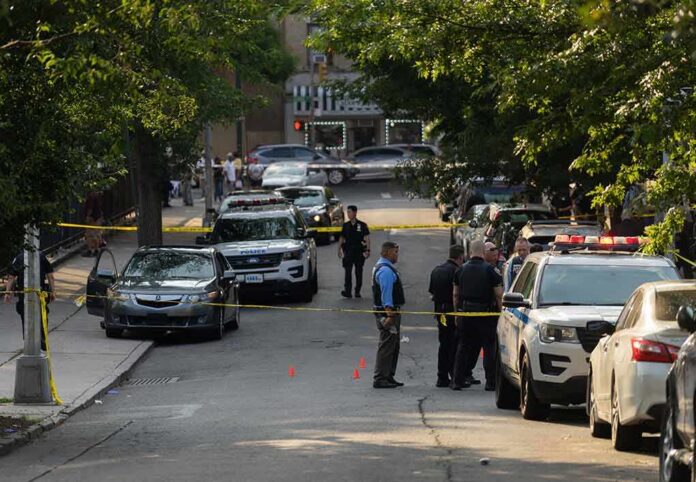
Palm Beach County Sheriff’s Office deputies responded to Sandalfoot Square, a shopping plaza near Boca Raton, on a report of an armed, suicidal man on the night of October 28. Officials identified him as Army veteran Brett Senfeld. The sheriff’s office said deputies negotiated with him for more than 90 minutes, from about 9:55 p.m. until 11:29 p.m. The talks aimed to get him to disarm and accept help. The encounter ended when deputies fired, and Senfeld died at the scene.
Sheriff Ric Bradshaw said Senfeld held a gun and took what deputies read as an aggressive stance. He said deputies believed they were in immediate danger. The agency stated that the firearm was pointed toward deputies just before the shooting. Bradshaw also said Senfeld did not fire at deputies, while investigators worked to confirm the source of rounds that struck a sheriff’s vehicle during the event. That detail remains part of the technical review.
Multiple investigations and administrative leave
The Florida Department of Law Enforcement opened a review, joined by the Palm Beach County State Attorney’s Office and the sheriff’s own Violent Crimes Division. The Palm Beach County Sheriff’s Office launched an internal investigation as well. The agency placed the involved deputies on administrative leave, which is a standard step after a deadly force event. These reviews examine the facts, law, policy, and tactics used during the response.
Officials have not released the deputies’ names or their individual training records. The agencies have not yet issued a final legal finding on the shooting. That step follows the completion of forensic work and interviews. The State Attorney’s Office will publish a memorandum once the review closes. That document typically outlines evidence, timelines, and the legal analysis behind any decision.
What the timeline says about crisis response
The official timeline highlights a classic crisis playbook: contain, buy time, and talk. Negotiators try to shrink threats and build trust. Time often lowers adrenaline and opens a path to safe surrender. That approach aligns with modern crisis guidance used nationwide, especially when a gun is present. Research on police roles in suicide calls notes the difficult balance between a subject’s welfare and public safety when lethal means are at hand.
When a person keeps a firearm in hand, the margin for error shrinks. Movement, distance, and backdrop all change the risk calculation in seconds. Deputies at Sandalfoot Square faced a public setting with many potential bystanders. The sheriff’s description suggests they judged the gun’s orientation and the stance as the key trigger for lethal force. That sequence matches many real-world cases where a sudden shift ends long, careful talks.
How Florida and the sheriff’s office train for these calls
Florida’s basic recruit curriculum includes instruction on mental health, crisis intervention, veterans, and other vulnerable groups. Specialized Crisis Intervention Team courses run for about 40 hours and go deeper on de-escalation, communication, and linkage to services. These training tracks set a baseline, then agencies add their own advanced modules. The goal is clear: slow the encounter and steer it away from force whenever it is safe to do so.
Palm Beach County’s sheriff’s office has a behavioral-health division that pairs detectives with clinicians. Leaders say they train deputies, dispatchers, jail staff, and corrections officers in verbal de-escalation and signs of mental illness. Trainers emphasize language, tone, and time to reduce risk. These programs reflect a larger push to equip first responders for mental health calls that used to fall mostly to hospitals or families.
Why an armed-suicidal call is uniquely hard to resolve
Armed-suicidal calls create a paradox. The subject is a danger mainly to himself, yet the gun forces police to treat the scene like a potential ambush. Negotiators must keep rapport while containment teams watch hand movement, foot position, and spatial angles. A single pivot of the muzzle can convert a welfare check into a force decision. That is why agencies preach patience but also plan for a sudden break in the pattern.
Crisis Intervention Team training can help, but research shows mixed results across cities and designs. Some studies link training to choosing lower-force options and more verbal negotiation. Others find little change in overall force rates. The evidence base keeps growing, yet one truth holds across reviews: training works best when backed by policy, supervision, and real partnerships with mental health care.
What to watch as the case moves forward
Ballistics analysis will map shots and angles. Dispatch and radio records will firm up the minute-by-minute flow. Any body-camera video could confirm the timeline and show the final movements before deputies fired. The Florida Department of Law Enforcement file and the State Attorney’s memorandum will address whether the use of force fit Florida law and agency policy. Those records guide public understanding more than any early press briefing.
Policy makers will likely weigh two tracks at once. First, the tactical review: did deputies follow training, read the threat right, and act within the law. Second, the systems view: do dispatch rules, clinician access, and on-scene leadership give negotiators every tool to land a safe surrender. Communities want both safety and mercy. The hardest calls demand both at the same time.
Sources:
military.com, palmbeachpost.com, wptv.com, cbs12.com, tapinto.net, wpbf.com, sun-sentinel.com, delraybeachnews.org, tandfonline.com, college.police.uk, pmc.ncbi.nlm.nih.gov